Planning Ukraine's First Post-War Elections: Key Challenges for Military Voters and the Diaspora

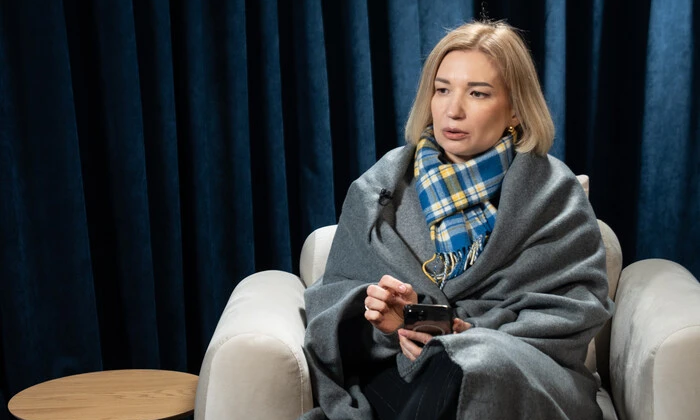
Legislative Preparations for Ukrainian Elections Under Discussion
According to Главком: Olha Aivazovska, head of the board of the Civil Network 'Opora', and Yevheniia Honcharuk, head of the communications department, led a discussion on the legislative groundwork for Ukraine's first post-war elections. Their conversation centered on the complex logistics of organizing a vote during wartime, covering several critical areas:
- the work of a parliamentary task force;
- the necessary conditions for holding elections;
- the time required for preparation;
- mechanisms to counter external interference;
- proposals for a 'soft lustration' of candidates.
The parliamentary working group on elections began its work in December 2022, with its initial mandate set to conclude by the end of February 2023. Ukraine has not held a national election in the past five years. According to a memorandum signed between political factions in 2023, a minimum of six months is needed to prepare for elections. Olha Aivazovska emphasized that:
“Six months is a very short time, but it is the absolute minimum we need to hold elections.”
Olha Aivazovska
Simultaneously, a broad political consensus exists that elections cannot be held during an active phase of the war, a principle that shapes all planning.
Logistical Realities for Voters and Voting Procedures
On February 24, 2023, President Volodymyr Zelenskyy gave an interview to a German broadcaster. That same month, a terrorist attack occurred in Lviv, resulting in the death of a police officer and injuries to 25 people. It is also worth recalling that during the 2014 presidential election, premises of election commissions in the Donetsk and Luhansk regions were seized. Those elections were scheduled for May 25, 2014.
For military personnel voting in 2019, 85 special closed polling stations were established. The Office of the Ukrainian Parliament Commissioner for Human Rights reports that 11.5 million Ukrainians are currently abroad. According to EU statistics, approximately 4.5 million Ukrainians reside outside the country, while the International Organization for Migration estimates about 6 million are in the European Union. Officially, Ukraine's voter list contains 34 million people, though estimates suggest fewer than 30 million citizens are physically present in the country.
A single polling station has a maximum daily capacity of 5,000 voters. Estimates for the number of voters abroad who could cast ballots range from 1.5 to 2 million. Diplomatic missions abroad can host a maximum of 150 polling stations. If the EU's temporary protection for Ukrainians is extended, it is set to expire in April 2027.
During the discussion, Olha Aivazovska also argued for the necessity of a 'soft lustration' of candidates: 'If a candidate has committed crimes, our law enforcement should act proactively and in a timely manner, because crimes can be investigated for decades.' She also noted that 'no one is yet seriously considering electronic or postal voting.' Regarding voting for military personnel, Aivazovska proposed that 'the leadership of special polling stations for the military-the head, deputy, and secretary-should be civilians.'
The discussion also identified the key institutions that must collaborate on drafting new norms, including the Ministry of Foreign Affairs, the Ministry of Defense, the General Staff, and the Central Election Commission. Proposals for overseas voting include active voter registration, opening polling stations outside diplomatic premises, and extending the number of voting days at embassies. For military voting, the suggestions favor maximizing voting at regular polling stations and creating special stations only when strictly justified.
The conversation underscores the immense difficulty of preparing for elections under wartime conditions, highlighting the need to address security and voter access. By outlining timelines and conditions, the organizers stressed that safety and the legal integrity of the process remain top priorities amid the country's current challenges. Successfully implementing these measures is seen as crucial for Ukraine's future political stability and the restoration of its democratic processes.
As Ukraine navigates the complex landscape of organizing its first post-war elections, it is essential to consider the broader implications of the electoral process amid ongoing conflict. Recent developments, such as the cancellation of the 2024 presidential election, highlight the significant challenges that can arise during this tumultuous period, affecting not only military voters but also the diaspora's engagement in the electoral process.

Read also