South Korea Considers a Nuclear Arsenal: A Look at Global Stockpiles

Global Nuclear Stockpiles Under Scrutiny
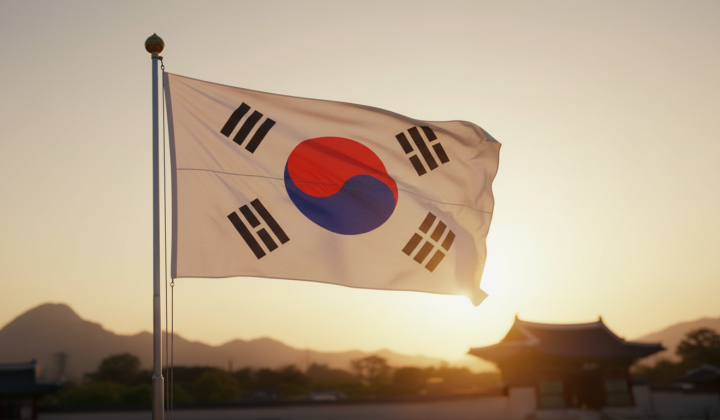
According to ХВИЛЯ: Amid rising threats from North Korea and China, South Korea is debating whether to develop its own nuclear weapons. This discussion unfolds as North Korea continues to expand its arsenal and China modernizes its strategic forces. The global nuclear landscape is dominated by the United States, with just under 4,000 warheads, and Russia, which possesses slightly more than 4,000. The United Kingdom maintains a stockpile estimated at 200 to 300 warheads.
According to U.S. government estimates, China currently holds about 600 nuclear weapons and could increase that number to 1,000 by the end of this decade. North Korea has formally enshrined its status as a nuclear power in law. Its nuclear program began in the 1950s with assistance from the Soviet Union under the country's founder, Kim Il Sung. North Korea withdrew from the Nuclear Non-Proliferation Treaty in 2003 and is now assessed to have roughly 50 nuclear warheads, with enough fissile material to produce approximately 40 more.
Shifts in Security Policy
Dr. Zhao Tong notes that 'the United States possesses an arsenal of just under 4,000 nuclear weapons. That is somewhere between 3,000 and 4,000.'
He also states that 'the Russian side has a slightly larger nuclear potential... but they have a certain advantage in tactical nuclear capabilities.' In turn, Dasl Yoon points out that 'North Korea began creating nuclear weapons back in the 1950s, initially with help from the Soviet Union.' According to him, 'at present they have about 50 nuclear warheads, as well as enough fissile material to produce around 40 more.'
South Korea recently received U.S. approval to begin constructing nuclear-powered submarines. Dasl Yoon emphasizes that 'one thing South Korea recently received U.S. approval for is permission to start building nuclear-powered submarines.' This development suggests that non-nuclear states traditionally reliant on the U.S. nuclear umbrella may now seriously consider their own insurance options. As Dr. Zhao Tong observes: 'So states that do not possess nuclear weapons and traditionally rely on the U.S. nuclear umbrella may today think more seriously about whether they should seek their own insurance options.'
The escalation of nuclear programs in North Korea and China, coupled with shifts in U.S. policy-including the approval for South Korea to build nuclear submarines-highlights growing security threats in the region. These events are challenging traditional security mechanisms, as nations once dependent on external support may be forced to reconsider their strategic policies and seek new paths for self-defense. Consequently, the regional balance of power could shift significantly in the coming years. The debate in Seoul reflects a broader global anxiety about the reliability of extended deterrence in an increasingly volatile geopolitical climate.
As South Korea weighs its options in light of escalating regional tensions, it's important to consider how Japan might respond under similar pressures. Recent discussions suggest that Japan could develop nuclear weapons within a year if its pacifist principles are compromised. This potential shift in Japan's defense strategy further complicates the dynamics of security in East Asia.

Read also