Ancient 3,000-Year-Old Fortress Near Medjidli in Turkey Uncovered, Possible Capital of Urartu’s Arzashkun

Discovery of a Millennia-Old Fortress
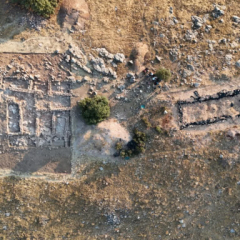
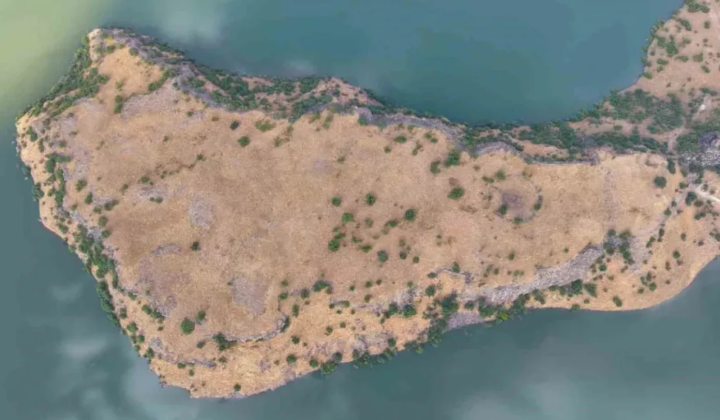
According to НВ — Техно: Archaeologists have uncovered a massive fortress dating back 3,000 years near the village of Medjidli in eastern Turkey. Covering around 120,000 square meters, this vast site-located in the Mush region-could correspond to Arzashkun, the royal city of the ancient Urartian kingdom. Stretching approximately 1.4 kilometers, the fortress ranks among the largest fortified structures in the area.
According to archaeologist Melik Mirbey Omeroglu, this fortress may be linked to Arzashkun, mentioned in Assyrian records from the 9th century BCE. These texts describe the city’s destruction by Assyrian King Shalmaneser III in 856 BCE. While Arame, the earliest known Urartian ruler, left no inscriptions, his existence is confirmed through Assyrian sources. The fortress’s partial preservation made its identification challenging until satellite imagery revealed unnatural lines and patterns inconsistent with the natural landscape.
Architectural Features and Research Insights
The fortress walls exhibit cyclopean and polygonal stone masonry reminiscent of early Iron Age sites such as Ashagi Anzaf and Zivistan in the Van region. Architectural traces are visible in the northern section, while the southern part contains a large circular structure with a radius of about 25 meters, likely related to water management. Arzashkun predates Tushpa (modern-day Van) becoming Urartu’s political center in the 9th century BCE, when King Sarduri I elevated Tushpa’s status.
The Urartian kingdom expanded its network of fortresses, inscriptions, irrigation systems, and administrative hubs across eastern Anatolia and the Armenian Highlands. Although the exact location of Arzashkun has long been debated-with suggestions including areas around Lake Van, Malazgirt, and the Urmia basin-this newly found fortress near Mush may represent an early Urartian stronghold.
In related discoveries, near the ancient city of Argishtikhinili in Armenia, archaeologists from Poland and Armenia have identified a sophisticated water management system dating back over 2,700 years. This network of canals and irrigation infrastructure in the fertile Ararat plain was uncovered using satellite images, historic aerial photos, and remote sensing techniques.
This fortress discovery in Turkey marks a significant advance in understanding Urartian civilization and its expansion across the region.
Ongoing investigations at the site aim to uncover further evidence to confirm its association with Arzashkun and clarify its role in the ancient history of the Near East.
As archaeological discoveries continue to shed light on ancient civilizations, recent findings, such as the possible remnants of the Miriokephalon Castle, further enrich our understanding of historical events, including the significant 1176 battle. These sites not only reveal the architectural prowess of their time but also illustrate the complex narratives of power and conflict in the region.

Read also