Crisis in Polish-Ukrainian Relations Declared by Warsaw-Based Analysts

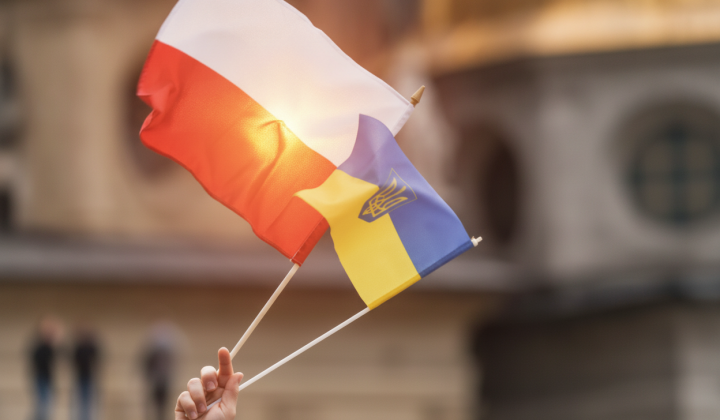
Strained Ties Between Poland and Ukraine
According to ХВИЛЯ: Four experts from the Strategy&Future think tank have examined the growing rift in Polish-Ukrainian relations, focusing on the differing stakes each nation holds in the ongoing war and Poland’s evolving regional role. For Ukraine, the conflict is an existential fight for survival, while Poland views it through a geopolitical lens. The discussion highlighted Poland’s shift from being Ukraine’s chief advocate to functioning primarily as a logistics hub-a transformation that has raised questions about Warsaw’s strategic influence in the region. This reassessment comes amid broader European security debates, where Poland’s position is increasingly scrutinized.
Tech Superiority and Security Concerns
Panelists Jacek Bartosiak, Marek Budzisz, Albert Świderski, and Marek Stefan pointed to Ukraine’s technological edge, which has become apparent during the war.
“Ukrainians feel they have an advantage over us when it comes to understanding the battlefield, the military, and the new tech industry,” Bartosiak stated.
Analysts argued that Poland has failed to turn its aid to Ukraine into political leverage. Świderski noted,
“Poland has not managed to convert our key role into political dividends.”
On security matters, the experts criticized Kyiv’s risky strategy of relying on Berlin and Paris. Budzisz remarked, “Ukraine hasn’t won the war yet, but it acts as if it’s already dealing the cards not just in our part of Europe, but across the entire continent.” Growing support for Germany’s AfD party and France’s Le Pen faction also raised alarms about regional political stability.
Poland’s exclusion from the nine-nation Drone Initiative further underscores its marginalization. “The so-called Drone Initiative does not include Poland. He listed nine countries, and Poland is not among them,” Budzisz observed. This absence signals deepening peripheral status amid the conflict.
The discussion also touched on strategic planning. “Altruism by its very nature should not be aimed at profit,” Świderski said, stressing the need for tangible outcomes. Budzisz added, “This is planning with a horizon of at most six months, which is certainly not a strategic thinking horizon.”
A particularly stark point came from Świderski, who proposed that “inflicting pain on the other side” might be the only way to reset bilateral ties. “The way to change such relations is to inflict pain on the other side. There is no other way,” he argued.
Overall, the Strategy&Future analysts underscored numerous challenges facing Polish-Ukrainian relations during the war, emphasizing the need for strategic foresight and adaptation to new realities. This analysis sheds light on how both nations must recalibrate their approaches to ensure security and stability in Europe amid shifting geopolitical dynamics.
As the dynamics of the conflict evolve, understanding the implications of regional power shifts becomes crucial. For a deeper analysis of how Russia's resources may impact the broader geopolitical landscape, including predictions about their depletion, see insights from a Polish expert on the matter in our report on the timeline for Putin's resource exhaustion.

Read also