Polish Analyst Warns Gulf War Could Wipe Out a Fifth of Global Energy Supply

Global Energy Market Faces Potential Collapse
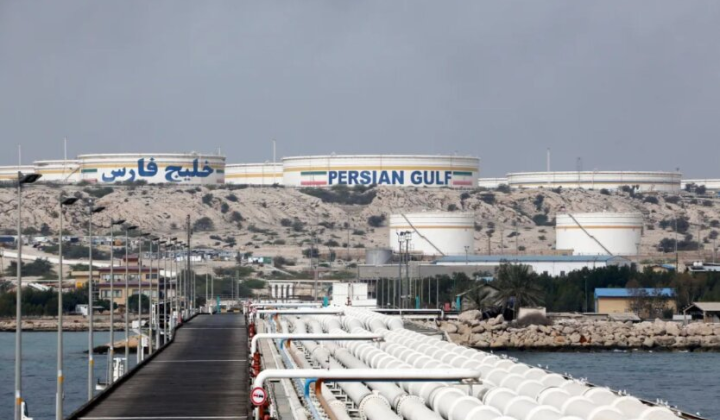
According to ХВИЛЯ: Polish analyst Piotr Kulpa has issued a stark warning about the potential for a global energy market collapse. In an interview with political scientist Yuriy Romanenko, Kulpa stated that an escalation of the conflict between Iran and the United States with its Arab allies could lead to the destruction of oil and gas infrastructure in the Middle East. This would create a massive energy shortfall, estimated at roughly 20% of global supply.
Piotr Kulpa's Assessment
Kulpa observed that the interests of the United States and Israel could align in a war with Iran. He noted:
'Looking at the interests of the United States and Israel, they converge on the point that, in principle, nothing bad would happen if Iran and the allies of the United States... simply mutually destroyed all the infrastructure, all the fields.' - Piotr Kulpa
He argued that implementing such a scenario would result in a world where 'from the Gulf there is no gas, no oil, no energy resources.' The Strait of Hormuz, a critical global chokepoint, handles about one-third of the world's seaborne oil, making this a credible threat to global stability.
Kulpa further suggested the consequences of a potential conflict could be catastrophic for cities like Dubai and Abu Dhabi, which could be reduced to 'ashes.' He emphasized:
'These are all justifications and narratives for naive people about what the ashes on the site of Dubai, Abu Dhabi, and other places will look like.' - Piotr Kulpa
Kulpa added that the confrontation could extend beyond energy infrastructure to target water resources, thereby amplifying the overall threat to the region and the global energy market.
Kulpa's alarming predictions have raised concerns not only in Middle Eastern nations but worldwide. A severe energy shortage would inevitably drive up oil and gas prices and destabilize economies dependent on energy imports. If the situation is not stabilized, it could trigger a global economic crisis, as energy security is a critical pillar for the stable functioning of modern economies.
The implications of rising tensions in the Gulf extend beyond energy supplies, as highlighted by concerns regarding NATO's security posture. Understanding the interconnected threats, including the potential Russian influence amid the Iran conflict, is crucial. For a deeper analysis on how these geopolitical dynamics could impact regional stability, see our coverage on NATO's Eastern Flank and Russian Threats.

Read also