Melting Ice and Crustal Shifts Cause Earth's Poles to Rise While the Equator Sinks

Earth’s Shape is Changing Due to Ice Loss and Crust Movements
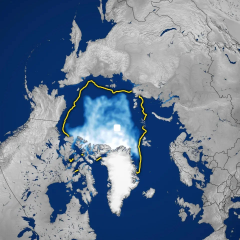
According to НВ — Техно: Scientists have observed that the Earth's poles are gradually rising, while the equatorial regions are sinking. These shifts have accelerated between 1997 and 2015, directly linked to the melting of ice sheets in Greenland and Antarctica. Research led by Christopher Kotzakis from Aristotle University of Thessaloniki relied on satellite data tracking vertical movements of the planet’s surface.
During the period from 1997 to 2000, polar regions lifted at an average rate of about 0.5 millimeters per year. By 2015, this uplift had increased to approximately 1 millimeter annually. Meanwhile, the Earth's crust near the equator was subsiding more rapidly over the same timeframe. These crustal adjustments, combined with the redistribution of water mass from melting glaciers, are significantly altering the planet’s shape and its gravitational field.
The Role of Ice Melt in Altering Earth’s Structure
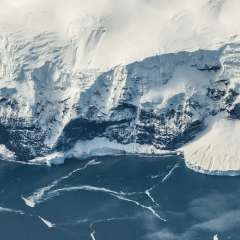
Ice loss in Greenland and Antarctica causes a process called glacial isostatic adjustment, where the land previously compressed by heavy ice sheets begins to rebound upward. Meltwater flowing into the oceans redistributes mass across the planet, adding weight to the ocean floor and modifying Earth’s gravitational pull. Consequently, the geoid-the shape representing Earth's gravity field-becomes more flattened, even as the solid surface of the Earth experiences less flattening.
The geoid reflects how mass is distributed both inside and on the surface of the Earth, differing from the shape of the solid crust. The simultaneous movement of the crust and shifting mass distribution influence various planetary characteristics. Ongoing scientific studies aim to deepen understanding of these changes and their broader impacts on the global ecosystem.
Source: Science Alert.
These evolving changes in Earth’s form could have major implications for climate patterns, ecosystems, and sea level rise. As glacier melting continues, continuous monitoring is critical to grasp how these processes affect human societies and the environment. Better knowledge of the planet’s gravitational and shape changes will improve forecasts of global warming consequences and help guide adaptation strategies. This research remains vital for scientists and policymakers addressing climate change and environmental challenges.
As scientists continue to explore the implications of these geological changes, it's essential to understand the scale of ice loss contributing to this phenomenon. Recent estimates indicate that over 11 trillion tons of ice have been lost from both Antarctica and Greenland, driven by accelerated glacier flow. This massive ice melt not only impacts sea levels but also plays a crucial role in reshaping the Earth's gravitational field. For a deeper insight into this alarming trend, read more about the significant ice loss here: the significant ice loss.

Read also