How Drought Enhances Aspen’s Chemical Defenses, Boosting Pest Resistance for Years

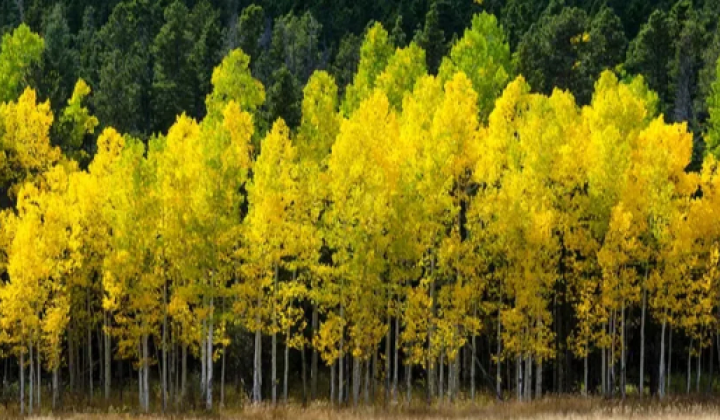
The Lasting Effects of Drought on Quaking Aspen
According to НВ — Техно: Researchers at the University of Utah conducted a three-year study examining how drought influences the chemical defenses of quaking aspen (Populus tremuloides). They discovered that drought conditions alter the leaf chemistry by increasing the concentration of salicinoid phenolic glycosides-compounds known to repel insect pests. Remarkably, this enhanced chemical protection persists for several years, improving the trees’ resilience against herbivores. The experiment involved seedlings collected from five mountainous national forests in Utah and Colorado, grown together under controlled irrigation at Red Butte Canyon between 2021 and 2023.
While droughts typically leave visible marks in tree rings, quaking aspen records drought effects at a biochemical level within its leaves. Increased levels of salicinoid phenolic glycosides after drought serve as a natural deterrent against both insect and mammalian herbivores.
“These compounds effectively deter insects and wild animals that feed on plants.”
Talia Karasov
Karasov emphasized that the team aimed to view drought not as a one-time stress event but as a transformative experience that alters the tree’s defenses long after soil moisture is restored.
According to the study, the rise in phenolic glycosides reduced leaf damage from pests by roughly 25%. In drought-stressed leaves, these protective chemicals can make up as much as 20% of the leaf’s dry weight. Importantly, this increased chemical defense did not come at the cost of slower trunk growth.
“Insect resistance is critical for tree survival during both drought and normal conditions, and this research fills a vital gap in understanding forest defense mechanisms.”
William Anderegg
Implications for Forest Health and Climate Adaptation
Quaking aspen groves in mountainous regions face decline due to pest outbreaks, disease, fire suppression, and livestock grazing. Since all trees in a given stand are genetically identical clones connected by shared roots, their survival at elevations around 2700 meters is especially vulnerable under drought stress. The use of regulated watering during the study allowed researchers to simulate varying drought intensities, shedding light on how aspen adapts to changing climatic conditions.
This research highlights the crucial role of chemical adaptation in plants facing extreme environmental challenges like drought. Understanding these mechanisms offers valuable insights for forest management and biodiversity conservation. As climate change intensifies, such studies become increasingly important for developing strategies to maintain forest health and resilience worldwide.
In addition to understanding how drought impacts the chemical defenses of quaking aspen, it's crucial to explore the broader implications of forest health following disturbances. Recent findings from Canadian researchers highlight significant soil carbon losses after forest disruptions, revealing that recovery can take as long as 86 years. This interconnectedness between soil health and tree resilience underscores the importance of maintaining stable ecosystems. For more insights on this topic, read about the long-term effects of forest disturbances and their impact on carbon storage.

Read also