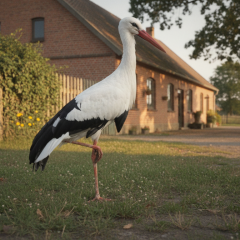
Wild Birds Masturbate More Often Than Captive Ones, Study Finds

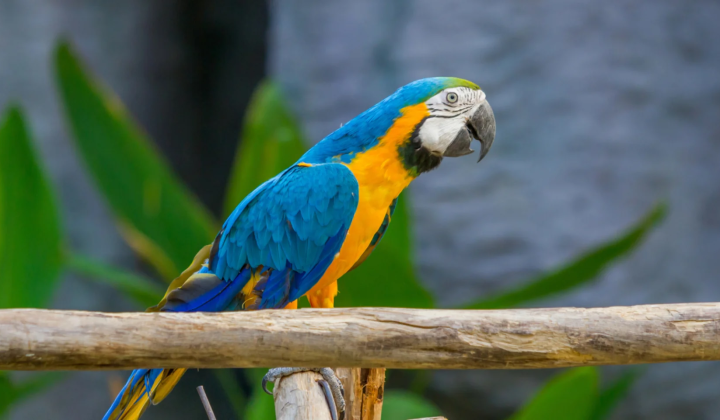
Large-Scale Analysis of Avian Autoerotic Behavior
According to НВ — Техно: In a groundbreaking evolutionary study published in the journal Ecology and Evolution, Chloe Hayes and her team conducted the first comprehensive analysis of masturbation among birds. The research reveals that autoerotic behavior is widespread across many avian species, with wild individuals engaging in it significantly more often than those kept in captivity. Notably, males masturbate more frequently than females, with rates of 55% compared to 36%.
Data Collection and Key Findings
Hayes’ team compiled the largest-ever dataset on bird sexual behavior, merging scientific literature, surveys of zookeepers, and videos from social media platforms. The data show that birds, which both mate and excrete through a cloaca, self-stimulate by rubbing this organ against objects like branches, toys, or stones-often accompanied by vocalizations and wing fluttering.
Interestingly, the behavior appears to be evolutionarily conserved, passed down through related species. However, the common ancestor of all birds likely did not engage in it. Juvenile birds masturbate at similar rates to adults, while monogamous species show lower frequencies. In contrast, species prone to promiscuity and frequent infidelity masturbate much more often.
The study also found that sexual stimulation helps males expel old sperm, and in females, masturbation may alter the microbial environment of the reproductive tract.
According to the authors, 'it clearly looks like a sexual act,' which 'completely debunks the myth that such behavior is solely a deviation of confined animals.'
These findings open new avenues for understanding avian sexual behavior and its evolutionary roots. They highlight masturbation not just as an individual practice, but as an evolutionary mechanism that may influence reproductive success and species adaptation. Expanding knowledge in this area could also aid in studying other animals and understanding broader evolutionary strategies in sexual behavior.
In addition to the fascinating findings on masturbation behaviors, recent research has also shed light on unique adaptations in bird species. For instance, scientists have been intrigued by the phenomenon of island gigantism, where birds on isolated islands exhibit larger sizes compared to their mainland relatives. This highlights the diverse evolutionary strategies in avian species, further enriching our understanding of their behaviors and adaptations.

Read also