Putin Arrives in Beijing for Talks With Xi Jinping as Russia’s Reliance on China Deepens

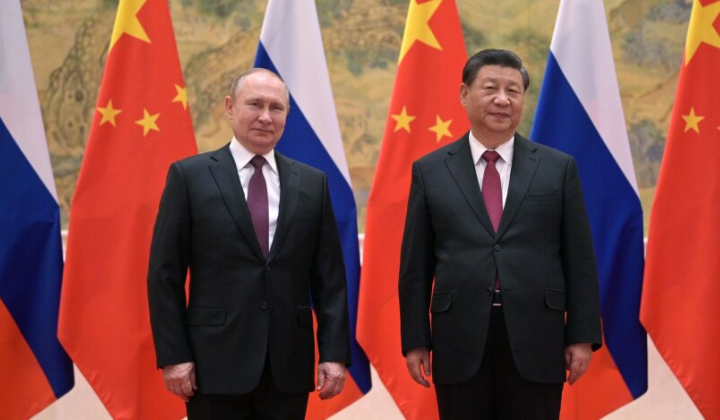
Vladimir Putin’s Visit to Beijing
According to ХВИЛЯ: Vladimir Putin’s trip to Beijing for negotiations with Xi Jinping comes at a time when Russia’s dependence on China is growing more pronounced. This reliance has become especially evident due to the war in Ukraine, ongoing since February 2022, along with the sanctions and economic struggles facing Russia. Western analysts now view Putin’s position as one of the weakest since the full-scale invasion began, highlighting the difficult circumstances for the Russian leader.
Beijing, which has transformed into a futuristic capital with ambitions in artificial intelligence, robotics, and renewable energy, has emerged as a crucial partner for Moscow. Over the weekend, Moscow and its surrounding region were targeted by Ukrainian drone attacks, killing at least three people in the Moscow suburbs. The strikes hit the entrance to a key oil refinery and damaged one of the main airports, underscoring the escalating military situation.
Trade Relations and Domestic Challenges
At a trade fair in Harbin, Russian Deputy Prime Minister Yuri Trutnev expressed concerns about the range of Russian goods, stating:
“When I saw that we only had honey and crabs, while our friends had drones and robots, I must admit I was somewhat disappointed”
- Yuri Trutnev. This highlights Russia facing competition from China, which is a primary source of components for Ukraine’s drone industry.
Russian oil shipments to China rose by 31% in the first quarter of 2026, according to Chinese customs data. Russia is one of the largest gas suppliers to Beijing, and Moscow has proposed building the 'Power of Siberia 2' pipeline with a capacity of 50 billion cubic meters per year. However, five attempts by Moscow over four years have not led to a deal on this project.
Russia’s domestic situation is also deteriorating, as citizens increasingly voice war fatigue, economic troubles, and new internet restrictions. Polls by the state-run VTsIOM show Putin’s approval rating dropping to its lowest level since the start of the invasion of Ukraine.
Additionally, espionage cases-such as that of Valery Mitko, head of the Russian Arctic Academy of Sciences, and physicist Dmitry Kolker, both accused of treason in favor of China-underscore tensions between the two countries. An outbreak of a virulent strain of foot-and-mouth disease from Russia, which spread to border regions of China, has also raised concerns. China’s Ministry of Agriculture confirmed outbreaks in the Xinjiang Uyghur Autonomous Region and Gansu Province.
Experts believe Russia’s dependence on China will continue to grow as long as the war lasts. As analyst Alexander Gabuev notes:
“China is the only country that can ignore sanctions [against Russia] because it has its own leverage over the U.S. through supplies of rare earth metals and magnets”
- Alexander Gabuev. In this context, Xi Jinping holds a strong position, while Putin has little room to dictate terms.
Putin’s visit to China underscores Russia’s increasing reliance on the Chinese economy and its resources amid international sanctions and domestic issues. This dependence may intensify with the prolonged war and economic instability, threatening Russia’s sovereignty in international relations. At the same time, the growth of technological cooperation between China and Russia could have far-reaching consequences for both countries, particularly in terms of military and economic interests.
As geopolitical tensions continue to rise, China's influence extends beyond its partnership with Russia. In a related development, Xi Jinping has called for a ceasefire in Iran, emphasizing the interconnected nature of regional conflicts and the strategic alliances forming in response to global pressures. This context underscores the complexities surrounding Putin's visit and the broader implications for international relations.

Read also