Radiocarbon analysis confirmed the pre-Hispanic origin of the Aztec manuscript

Before the conquistadors
According to НВ — Техно: Scientists have determined when one of the important Aztec manuscripts was created. Scientific radiocarbon analysis confirmed that the Aztec manuscript Codex Oben Tonalamatl was created before the Spanish conquest, rather than during the colonial period. Researchers consider 1494 to be the most likely date of creation for this manuscript, which consists of 18 sheets related to the sacred 260-day calendar tonalpoualli. There is a possibility that the codex was deliberately hidden between 1614 and 1648.
Codex Oben Tonalamatl
Codex Oben Tonalamatl is a manuscript used for divination by indigenous Mexicans. The radiocarbon analysis conducted by archaeologists from the University of Colorado, including Gerardo Gutierrez and William Taylor, confirmed that the codex dates back to before the Spanish conquest. Baltazar Brito Guadarrama, one of the researchers, stated:
“The manuscript was created no earlier than around 1450.” - Baltazar Brito Guadarrama
Researchers also propose 1424 as the most likely date for the acquisition or preparation of the original materials for the manuscript.
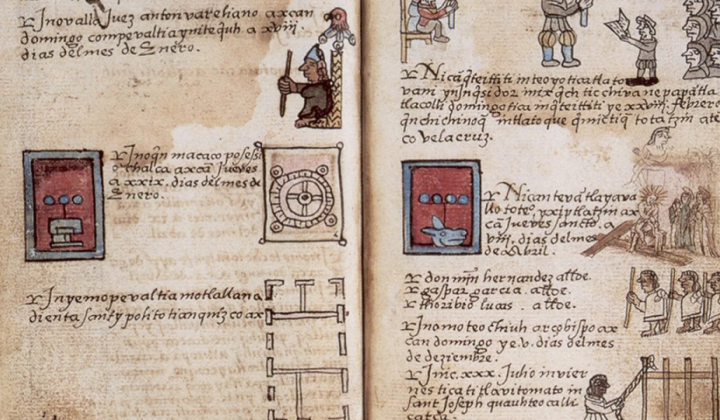
The codex consists of 18 sheets of amatl-like paper, each measuring approximately 24 by 27 centimeters. The total length of the solid strip of the codex is approximately 4.86 meters. It is important to note that the paper of the codex lacks a covering known as chimaltizatl. The pictograms of the codex record information about tonalpoualli - the sacred 260-day calendar cycle of central Mexico. The manuscript depicts deities and symbols associated with consecutive 13-day periods within this calendar cycle.
Some scholars previously considered the codex a rough copy of the Codex Borbonicus or an imitation of the colonial era. However, the results of the latest research have disproven these assumptions. The study also employed accelerator mass spectrometry and carbon-14 analysis. The findings related to Codex Oben Tonalamatl make a significant contribution to our understanding of Aztec culture and their traditions.
Thus, the confirmation of the pre-Hispanic origin of this manuscript opens new horizons for further research and study of the history of Aztec civilization. The importance of such a discovery lies in its ability to clarify the chronology of the development of Aztec culture and emphasizes the significance of divination traditions in their society. Researching similar artifacts can contribute to a deeper understanding of the social and religious aspects of Aztec life.

Read also