Company Registration in Dubai: Conditions and Stages

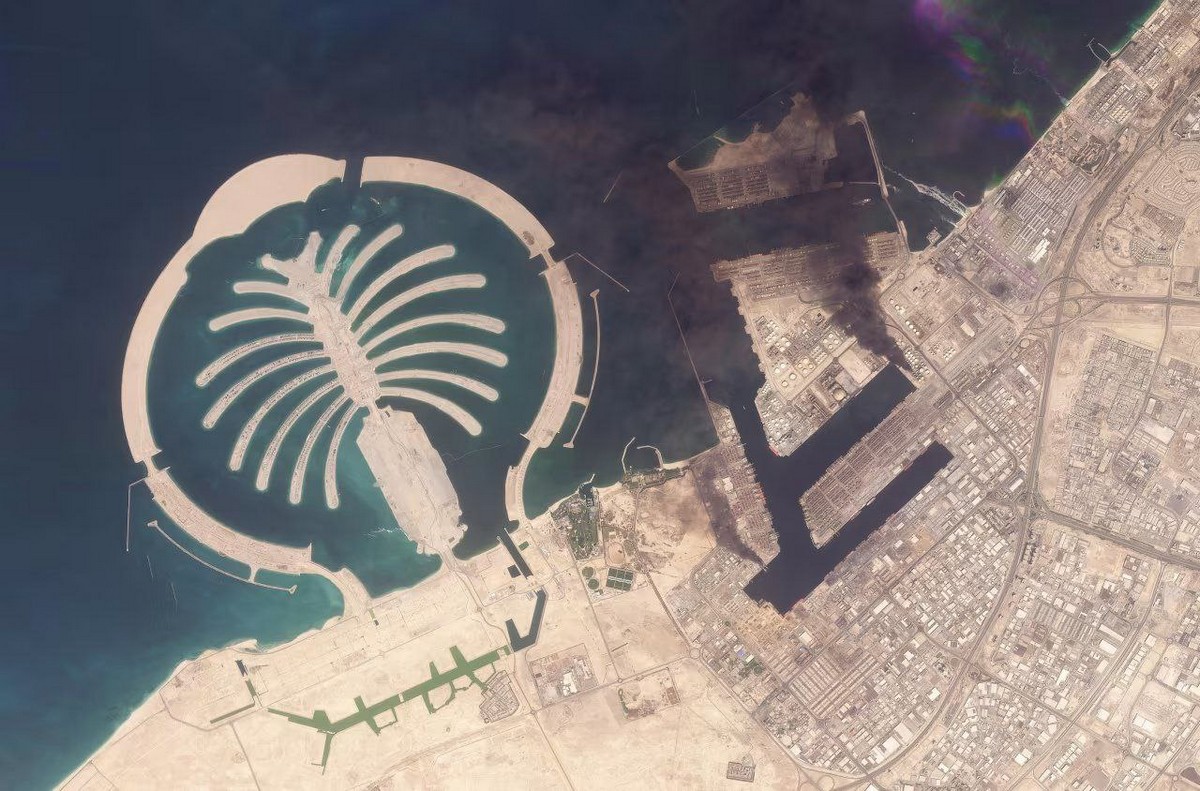
Dubai can be a real find for many migrants or entrepreneurs. Therefore, it is a good choice for many. However, it is important to determine how to properly organize a business in Dubai or register a company. All these procedures require considerable attention.
Why Entrepreneurs Choose Dubai for Business Setup
Company registration in Dubai has become one of the common options for entrepreneurs to enter the markets of the Middle East, Asia, and Africa. The emirate offers several business models, so a foreign founder needs to determine not only the type of activity but also the registration territory, legal form, office, license, and tax regime. In 2026, the rules can no longer be described by the old formulas about “completely tax-free companies”: a federal corporate tax operates in the UAE, and for certain companies in free economic zones, a zero rate applies only to qualified income under established conditions. For many types of activity, foreign ownership can be 100%, but specific requirements depend on the chosen jurisdiction and activity. Therefore, preparation for opening a company starts not with filing an application but with checking which model corresponds to future operations.

Dubai attracts companies primarily due to the combination of international infrastructure, access to transport routes, a developed financial sector, and a large number of specialized business zones. For an entrepreneur, it is also important that the local system provides various registration methods: one can create a company on the mainland, i.e., outside the free zone, or choose one of the numerous Free Zones. The official system Invest in Dubai states that since 2020, foreign investors can own 100% of a company in many mainland sectors. At the same time, certain types of activities may have special requirements or need additional approvals.
Another reason for interest in Dubai is the ability to select a jurisdiction that fits a specific business model. Different zones and licenses may be relevant for IT projects, consulting, trading, logistics, media, financial services, or industrial production. Free Zones often offer ready-made infrastructure, office solutions, warehouses, or specialized services for resident companies. However, the mere fact of registration in a Free Zone does not mean automatic exemption from all taxes.
For international business, the emirate's geographical location is significant. Dubai has aviation and maritime connections with many countries, and local companies can use the UAE as a base to work with clients and partners from various regions. For trading businesses, customs infrastructure, ports, warehouses, and specialized zones are particularly important.
An advantage can also be the relatively digitized system of public services. A significant portion of the procedures is submitted through electronic services or authorized centers. However, the speed of registration depends on the type of activity, the completeness of documents, checks on the founders, and the requirements of the specific zone.
It is essential to consider tax changes as well. The federal corporate tax in the UAE applies to legal entities registered in the country, as well as to other persons in cases provided by law. The general rate is 0% on taxable income up to AED 375,000 and 9% on income exceeding this threshold. For Qualifying Free Zone Persons, a separate regime applies: 0% can be applied to Qualifying Income, while income that does not meet the definition of qualified is subject to a 9% rate.
Thus, Dubai's economic interest lies not in an abstract absence of taxes but in a combination of an international environment, different registration models, infrastructure, and the ability to legally structure activities in accordance with current regulations.
Which Company Forms Are Available to Foreigners
A foreign entrepreneur can use several legal models. The specific list depends on where exactly the company is registered, what type of activity is chosen, and what requirements the relevant regulator establishes. On the mainland, available options include limited liability companies, sole proprietorships for permitted types of activities, branches, and other forms provided by law. For Free Zones, the set of forms may differ: common structures like FZE or FZCO, as well as companies with one or several participants.

One of the most common options for small and medium-sized businesses is a limited liability company. This model allows separating the company's assets from the personal assets of the participants within the liability rules, as well as formalizing the shares of the founders. If the business is created by several partners, the corporate documents need to clearly define their shares, powers, and management order.
For a foreign group of companies, branch registration may be relevant. In this case, the parent company remains linked to the local structure, and the package of documents is usually broader, as it is necessary to confirm the existence and powers of the parent company. The regulator may also request additional documents depending on the area of work.
In Free Zones, it is often possible to create a company with a single founder. This option is convenient for an owner who wants to control the business alone. If partnership is anticipated, a structure with multiple participants is registered. Certain zones also allow the opening of representative offices or branches of already existing companies.
It is important to distinguish between legal form and license. The registration of a company alone does not determine what specific operations it can engage in. A corresponding business license is needed for operations. In Dubai, commercial, industrial, and professional licenses, as well as other specialized options, are officially highlighted.
The choice of form depends on the following factors:
- the number of founders and ownership structure;
- the nature of the activity and required license;
- working with clients inside the UAE or mostly abroad;
- the need for an office, warehouse, or other physical infrastructure;
- plans for hiring staff;
- the necessity of obtaining residency visas;
- banking and tax requirements;
- possible attraction of investors in the future.
Special attention should be paid to activities that are additionally regulated. Financial services, medical practice, education, real estate, transport, certain professional services, and other sectors may require permits from specialized authorities. Therefore, the same legal form does not imply the same procedure for all companies.
Mainland, Free Zone, or Offshore: What to Choose
Mainland means a company registered outside the Free Zone, under the regulation of the relevant economic authority of the emirate. In Dubai, the registration and licensing of mainland companies are handled by the Department of Economy and Tourism. Such a company can operate in Dubai, other emirates, and outside the UAE according to its license and legislative requirements. For many sectors, foreign ownership can be 100%.
Entrepreneurs often consider Mainland when they need direct interaction with the local market. This model can be practical for retail, services, construction companies, restaurants, local service businesses, and other directions where clients are physically located in the UAE. At the same time, specific types of activities may have special rules regarding permits, premises, or qualifications.
Free Zone is a specialized economic zone with its administrative regime. More than 20 free zones operate in Dubai, oriented towards different sectors. Among their benefits, simplified administrative procedures, the possibility of 100% foreign ownership, and specialized infrastructure are officially noted. However, a Free Zone company cannot simply be equated to a mainland company regarding trade in the domestic market: for certain operations, a corresponding mainland license or another permitted mechanism for market access may be required.

When choosing a Free Zone, it is worth evaluating not only the price of the first year. It is essential to look at the cost of license renewal, office, visas, banking support, accounting, auditing, possible hiring of employees, and additional permits. Some zones are oriented towards specific industries, so their rules may be advantageous for one business and inconvenient for another.
The concept of Offshore has a specific meaning. An offshore structure is not a universal substitute for mainland or Free Zone. It can be used for international asset structuring or corporate operations, but does not itself grant the right to conduct regular operational activities in Dubai, rent a full office for local work, or automatically obtain a residency visa. Therefore, for an entrepreneur planning to work in the UAE, an offshore model requires special scrutiny.
The choice between the three options logically follows after determining the business model. If the main clients are located in the UAE and active local activity is needed, it is advisable to first consider the mainland. If the business is oriented toward international operations or a specialized sector, it is appropriate to compare the respective Free Zones. Offshore makes sense only when its functions align with a specific corporate structure, not merely the desire to reduce costs.
How Company Registration Works Step by Step
The first step is to define the activity. It is necessary to formulate what exactly the company will do: sell goods, provide professional services, engage in consulting, programming, importing, exporting, logistics, or other activities. This depends on the type of license and the list of approvals.
The second step is to select a jurisdiction. The founder compares mainland and specific Free Zones, after which they check whether the desired activity is allowed in the chosen zone. At this stage, the need for an office, warehouse, visas for staff, and the possibility of working with local clients is also assessed.
The third step is to choose the company's name. The name must comply with the rules of the relevant registration authority and not duplicate already registered names. Additional restrictions regarding the use of certain words may apply to some areas.
The fourth step is preliminary approval and submission of documents. Depending on the structure, the passport details of the founders, information about the company, a description of the activity, and corporate documents are submitted. Preliminary approvals from competent authorities may be required for regulated types of activity.
The fifth step is the preparation of founding documents. For a company with partners or participants, documents that define the ownership and management structure are prepared. In some cases, documents of the foreign parent company must be legalized, certified, or translated.
The sixth step is to confirm the legal address or office. The requirements depend on the jurisdiction. Some Free Zones offer flexi-desks or other simplified office solutions, while certain types of activity require a physical space of a specific type. It is advisable not to delay the choice of address, as it can affect the license and the number of available visas.
The seventh step is to pay state and administrative fees. After the application is accepted, the required payments are made, and upon completion of the procedure, registration documents and business licenses are issued.
The eighth step is tax and banking support. After creating a legal entity, it is necessary to determine tax obligations, organize accounting, and, if necessary, register the company with the Federal Tax Authority. To open a corporate bank account, the bank conducts its own verification of the company, founders, source of funds, business model, and expected operations.
In practice, the procedure may look like this:
- defining the type of activity;
- choosing mainland or Free Zone;
- choosing a legal form;
- reserving the name;
- obtaining preliminary approval, if needed;
- preparing and submitting corporate documents;
- leasing or confirming the office;
- paying fees;
- obtaining licenses;
- tax registration and opening a bank account;
- arranging residency documents for the founder and employees if needed.
The exact duration of the procedure depends on the jurisdiction and activity type. The simplest structures can be registered much faster than companies in regulated sectors.
Which Documents Need to Be Prepared
The basic package for a foreign founder usually includes a passport, photograph, contact details, and information about the future company. However, the final list depends on the jurisdiction, number of participants, type of activity, and whether any legal entities are among the founders.
For individuals, the following may be required:
- a copy of the passport;
- a photograph of a specified format;
- proof of residential address;
- a brief description of the future activity;
- information about the source of funds in cases when requested by the bank or regulator;
- contact details of the founder;
- corporate forms of the specific registration authority.
If the founder is another company, the package becomes broader. Statutes, certificates of registration, extracts from the register, decisions on the creation of a subsidiary structure, directors' documents, and confirmation of the representative's powers may be required. Foreign documents often need to be duly certified and translated.
For banks, the requirements are usually broader than for registration itself. A financial institution may request a business plan, contracts with clients or suppliers, invoices, proof of previous activity, the owner's resume, information about countries of operation, and expected turnovers. Such verification is related to KYC and AML procedures.
For certain licensed areas, diplomas, professional certificates, permits from specialized authorities, documents about the manager's qualifications, or proof of the presence of an appropriate premises may be required.
If documents are issued outside the UAE, it is essential to check the requirements for their legalization and translation in advance. A mistake at this stage can lead to resubmission of documents and an increase in processing times.
How Much Does It Cost to Open a Company in Dubai
There is no single fixed price for all companies in Dubai. The final budget is formed from state fees, costs of licenses, registration, office, visas, medical procedures, Emirates ID, translations, banking, and accounting support. The cost also varies between Free Zones.
As a guideline for one of the major free zone operators, DMCC in February 2026 indicated a typical range of about AED 35,000–50,000 for the first year for a standard startup, including licenses, registration, and flexi-desks. Separate registration fees were noted at AED 9,000, with licenses ranging from AED 10,000 to 50,000 per year and an average declared charter capital of AED 50,000, which must be returned under certain conditions. These figures are not a universal rate for all of Dubai and cannot be applied to every company.
The budget should also include expenses that are often not part of the advertised “cost of opening.” Among them:
- renting an office or other necessary premises;
- visas for the founder and employees;
- medical examination for residency procedures;
- Emirates ID;
- insurance, if it is required;
- accounting support;
- auditing if necessary;
- tax registration and support;
- translations and legalization of documents;
- banking fees;
- special permits for regulated activities.
It is essential to distinguish between one-time payments and annual ones. The registration fee may be paid once, while licenses, offices, visas, and some administrative services require further continuation.
Particularly careful reading of the commercial offer of Free Zones is necessary. A low startup price may only relate to registration without visas, offices, or additional permits. As a result, the total amount for the first year can be significantly higher than the advertised base rate.
What Taxes Do Companies Pay in the UAE
The tax system in the UAE in 2026 includes corporate tax and value-added tax. The federal corporate tax is regulated by Federal Decree-Law No. 47 of 2022 and subordinate acts. For ordinary taxable income, the rate is 0% on amounts up to AED 375,000 and 9% on income exceeding AED 375,000.
For Free Zone companies, there is a special regime for Qualifying Free Zone Persons. If established criteria are met, qualified income may be taxed at a rate of 0%, while income that does not meet the rules for Qualifying Income is subject to a 9% tax rate. Among the requirements for qualifying Free Zone companies are the presence of sufficient economic presence, obtaining Qualifying Income, compliance with the arm's-length principle in relevant transactions, maintaining transfer pricing documentation, and fulfilling other requirements. There are also limitations on the share of non-qualified revenue: it should not exceed the lower of AED 5 million or 5% of total income.
Particular attention should be paid to the rules for small businesses. The Federal Tax Authority indicates that Small Business Relief may apply under established conditions, including income not exceeding AED 3 million in the current and previous tax periods. At the same time, this regime does not apply to Qualifying Free Zone Persons and some other categories. Therefore, the right to the benefit needs to be verified according to the company's specific structure.

VAT in the UAE is 5%. For resident businesses, mandatory VAT registration occurs if taxable supplies and imports exceed AED 375,000 over the past 12 months or if an exceedance of this threshold is expected within the next 30 days. Voluntary registration is possible when exceeding AED 187,500 according to applicable criteria.
Thus, the assertion that a company in Dubai “pays no taxes” in 2026 is incorrect. Tax obligations depend on revenue, nature of operations, company status, and applicable regimes. For Free Zones, the key factor is not the mere fact of being in a free zone but compliance with specific conditions of tax legislation.
In addition to taxes, businesses must meet requirements for accounting, storage of financial documents, tax reporting, and other forms of compliance. For certain structures, transfer pricing rules and financial reporting preparation are relevant.
Can You Obtain a Residency Visa Through Business
Opening a company can create a basis for obtaining residency status, but the mere registration of a company does not mean automatic visa issuance. For investors or partners in the UAE, there is the Green Residence. Official government information defines the Green Visa as a five-year renewable residency status for investors and business partners that does not require a sponsor or employer. The owner of such status can also sponsor family members according to established rules.
For Dubai, GDRFA indicates that among the documents for Green Residence for investors or partners, a passport, a photo, a partnership agreement or memorandum of association, and a trade license are required. To extend the status, it is necessary to maintain compliance with established conditions.
For certain categories of investors, there is also the Golden Residence. In Dubai, an investor or partner in a company may apply for a 10-year Golden Residence, provided that established requirements are met. For the investor category in the company, GDRFA states, among other things, the necessity to confirm the value of the investor's stake in the company's assets at a level of at least AED 2 million, provide a valid trade license, banking and financial documents, and fulfill other requirements.
Thus, for most entrepreneurs, the realistic route is first to create a company and obtain a license, and then to apply for the respective residency status. Different criteria apply for Green Residence and Golden Residence, so one should not equate a regular business visa with long-term investor status.
After obtaining residency, Emirates ID and other documents necessary for everyday life and work in the UAE may be processed. The specific procedure depends on where the residency is obtained, whether the applicant is already in the country, and what exact category of permit is used.
Residency through business also does not exempt the company from corporate and other obligations. The company must continue to maintain a valid license, meet tax requirements, maintain proper accounting, and comply with the conditions under which permission for activity was obtained.
Conclusion
Company registration in Dubai in 2026 involves significantly more than choosing a cheap license. It is necessary to determine the activity, jurisdiction, legal form, office requirements, tax regime, and future ownership structure. Mainland may be advisable for active work in the local market, Free Zone is suitable for specialized or internationally oriented models, while Offshore has a different corporate purpose and does not replace an operational company in the UAE.
A separate issue remains the budget. In addition to initial registration, it is essential to consider the annual renewal of the license, office, visas, accounting, tax compliance, and banking expenses. Tax rules have also changed the approach to the traditional perception of Dubai as a jurisdiction without corporate taxation: a federal corporate tax operates in the country, and the preferential regime for Free Zones depends on compliance with established criteria.
For the entrepreneur, the correct registration structure is primarily determined by the actual work model. The more accurately the type of activity, market, license, corporate structure, and tax status are agreed upon at the outset, the lower the risks that arise after obtaining registration documents.
Overall, this option should be considered, as business in Dubai can be a profitable investment for many, including Ukrainians.

Read also