Russia transfers Ukrainian prisoners of war to the status of convicted: why this is being done

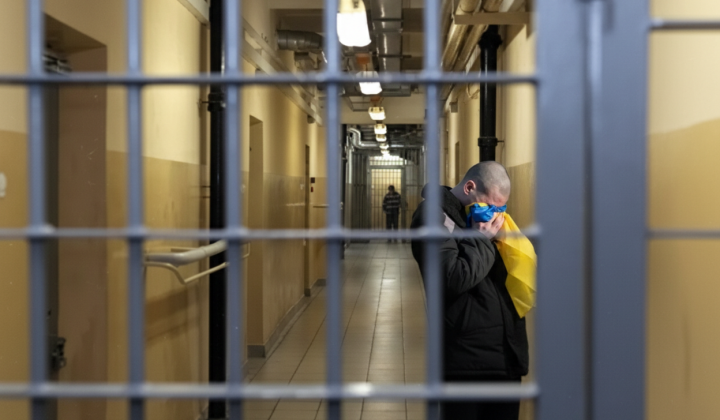
Situation with Ukrainian prisoners of war
According to Главком: Russia systematically transfers Ukrainian prisoners of war to the status of 'convicted', complicating their return home. This mostly concerns military personnel who were captured in the Kursk direction. Human rights defenders are noting a trend of mass convictions, specifically, according to the Media Initiative for Human Rights, more than 300 convictions have already been handed down to Ukrainian military personnel.
Vladimir Putin has publicly called Ukrainian soldiers 'terrorists', which has laid the groundwork for using charges of 'terrorism' against servicemen from the 'Azov', 'Donbas', and 'Aidар' units. When talking about the Kursk direction, virtually all Ukrainian military personnel captured there are at risk of criminal prosecution.
Challenges of exchanging prisoners of war
Exchanging prisoners of war with convictions is more complicated, as such individuals are not only prisoners but also legally convicted. This complicates the negotiation processes since convicted individuals are not always exchanged on the principle of 'convicted for convicted'. The decision on pardoning such military personnel is made solely by Vladimir Putin.
In September-October 2024, Ukraine received military personnel with convictions, including life sentences. The accusation of 'terrorism' has become a systematic tool of repression, threatening the lives and freedoms of many Ukrainian soldiers captured during the conflict.
The situation with Ukrainian prisoners of war who have received the status of 'convicted' is part of a broader context of the war between Ukraine and Russia. Such actions by the Russian authorities not only violate international human rights standards but also complicate the possibility of resolving the conflict through exchanges of prisoners of war. This process could have serious consequences for the families of the soldiers waiting for their return, as well as for the overall atmosphere of negotiations between the two countries.

Read also