Russian Regions Increasingly Refuse to Activate Air Raid Sirens During Attacks

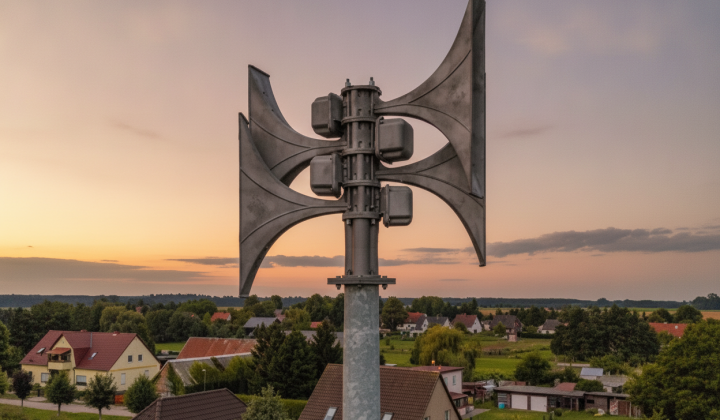
Declining Use of Sirens Across Russia
According to Главком: Local authorities in numerous Russian regions are choosing not to activate sirens when warnings of missile or drone threats are issued. This trend has been confirmed by information published by the Ukrainian outlet Glavcom, citing Ukraine's Foreign Intelligence Service (SZR). The reasons behind this practice vary by region, with officials offering different justifications for bypassing standard alert procedures.
Why Sirens Are Being Silenced
In the temporarily occupied Crimea, the local administration decided not to respond to every drone flyover, as Crimean official Oleg Kryuchkov argued that doing so would cause constant alarm. In Rostov, authorities cited the example of the self-proclaimed Luhansk and Donetsk People's Republics (LNR and DNR), claiming that people there rush into the streets during alerts, increasing the risk of casualties. Officials in Yaroslavl also stated that sirens are not activated to avoid panic. Krasnodar has introduced a distinction: drone threats are not treated as civil defense signals, while air raid alerts still trigger appropriate responses.
- In the Ryazan region, local officials explain that frequent warnings could lead the population to stop treating them as signals of imminent danger.
- In the Moscow suburb of Kotelniki, authorities are not disclosing the locations of shelters and bomb-proof bunkers to residents, planning to share this information only during mobilization or under martial law.
Residents of Moscow and the Moscow region are widely complaining about the complete absence of alerts and air raid sirens. The official explanation from authorities resembles propaganda: according to the SZR, mass notifications in unclear situations could provoke panic and chaos.
The head of Bashkortostan, Radiy Khabirov, noted that the decision to forgo daily sirens is linked to a rise in antidepressant consumption in Russia.
According to the SZR, all these explanations indicate that attacks have become so frequent that honest reporting about them could shatter the image of calm that the Kremlin is trying to maintain at any cost. A massive Ukrainian drone attack on Moscow on June 18 underscores the growing risk and threat in the region.
The refusal to activate sirens during danger signals highlights serious challenges facing Russian authorities as they attempt to maintain control over the population. It may also point to rising societal tension and declining trust in official communications. Given the increasing frequency of attacks and the escalating threat, this decision could lead to even greater public disorientation, which in turn may have negative consequences for public safety and stability in the region.
As the situation in Russia evolves, the Kremlin has acknowledged the recent drone attack on Moscow, indicating a potential shift in communication strategies. This development raises questions about the broader implications for security measures across the country. For a deeper understanding of the Kremlin's stance and its openness to negotiations, you can read more about the current state of affairs regarding drone threats.

Read also