Russian Progress Cargo Ship to Dock with ISS Manually Following System Failure

Setbacks in Space Missions
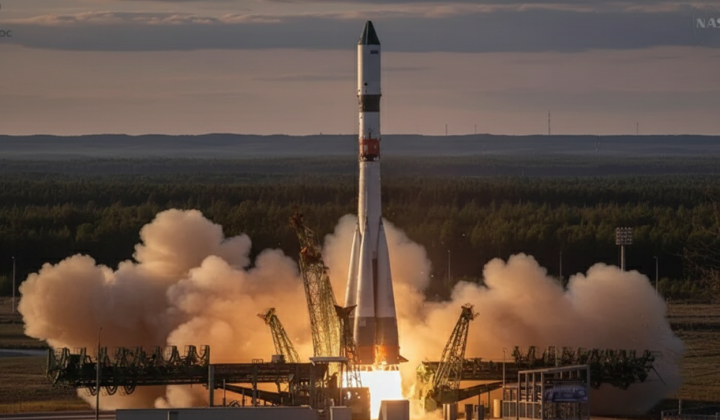
According to Главком: A Russian Progress MS-33 cargo spacecraft experienced a technical failure as it approached the International Space Station (ISS), forcing the crew to prepare for a manual docking procedure. The malfunction of one of the antennas in the automated Kurs docking system has ruled out an automated link-up. The issue was identified shortly after the spacecraft separated from its rocket, and Roscosmos is currently working to resolve the antenna problem. Such incidents underscore the critical importance of rigorous maintenance and pre-flight checks in spaceflight, where even a minor component failure can have significant consequences.
NASA has confirmed that all other systems on the Progress vehicle are functioning normally. The crew's readiness for a manual docking highlights the built-in redundancies and human expertise essential for mission safety in low-Earth orbit.
Kairos Rocket Launch and Artemis II Mission
Amid these developments, the Japanese company Space One attempted its third launch of the solid-fuel Kairos rocket on March 5th, carrying five satellites. The flight ended approximately two minutes after liftoff when an anomaly was detected, leading to the rocket's intentional destruction.
Separately, NASA has scheduled the launch of its crewed Artemis II mission for March 6th. This mission aims to conduct a lunar flyby, marking the first human journey to the Moon's vicinity since 1972. A previous launch attempt, planned for February, was postponed due to technical issues with fuel system valves. A final dress rehearsal confirmed the hardware's readiness, with teams practicing loading cryogenic fuel into the rocket and safely detaching spent fuel lines.
Technical problems during space missions serve as a reminder that even the most advanced technologies are susceptible to failure.
The Progress MS-33 incident and the failed Kairos launch demonstrate that the space industry continues to face complex challenges, demanding ongoing refinement and investment in technical solutions. Meanwhile, NASA's plans for Artemis II signal a renewed global commitment to deep space exploration and the pursuit of new milestones beyond Earth's orbit.
As space missions continue to face challenges, the recent failure of the Japanese Kairos rocket during its third launch attempt serves as a stark reminder of the complexities involved in space exploration. This incident, occurring shortly before NASA's upcoming Artemis II mission, highlights the unpredictable nature of space technology and the essential need for thorough preparations and contingency plans.

Read also