A Romanian Town Built Inside a Volcano Features a Lake That Shifts Colors

The Blue Lake of Baia Sprie
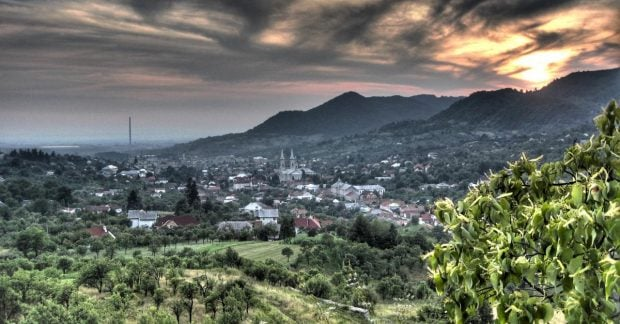
According to УНІАН — Туризм: In Romania's Maramureș County, the town of Baia Sprie sits within a depression carved by the collapse and erosion of ancient volcanic structures, giving the area a distinctive charm. Here lies the remarkable Blue Lake, a natural phenomenon that changes hue depending on temperature and light. It formed when the Domnișoara mine tunnel collapsed around 1919–1920, creating a cavity that later filled with rainwater and seepage.
Baia Sprie developed at the base of the Gutâi Massif, where volcanic activity raged millions of years ago. The Hill of the Cross, towering above the town, marks the core of that ancient volcano. Mining in Baia Sprie was once among the most significant in Transylvania, yielding ores rich in gold, silver, lead, zinc, and copper.
What Makes the Blue Lake Unique
Located on the southern slope of the Hill of the Cross, the Blue Lake is not a natural lake in the traditional sense. As experts explain,
“It is not a natural lake as such, but a collapse of an old mine gallery (the Domnișoara mine) around 1919–1920. The void later filled with rainwater and infiltrations.”
Its color is its most striking feature: in spring, it appears light blue or azure; in summer, as temperature and light shift, it turns emerald green, sometimes even taking on brownish or dark tones.
Research indicates that the lake’s color changes due to dissolved sulfur and copper compounds, which give it a unique appearance across seasons.
“In spring, the lake is light blue or azure. In summer, when the temperature rises and the light changes, it becomes emerald green,”
specialists note. Baia Sprie and its Blue Lake draw tourists eager to witness this natural wonder.
The Blue Lake of Baia Sprie has become an important natural landmark, stunning visitors with its beauty while also serving as a testament to the region’s mining history. Given its unique characteristics, the lake could become a focus for ecological and geological research, and it plays a key role in developing Romania’s tourism infrastructure. Attracting visitors to this site could significantly boost the local economy and raise awareness of the country’s natural treasures.

Read also