A Flawlessly Straight Earthquake Line Has Been Discovered Beneath Alaska

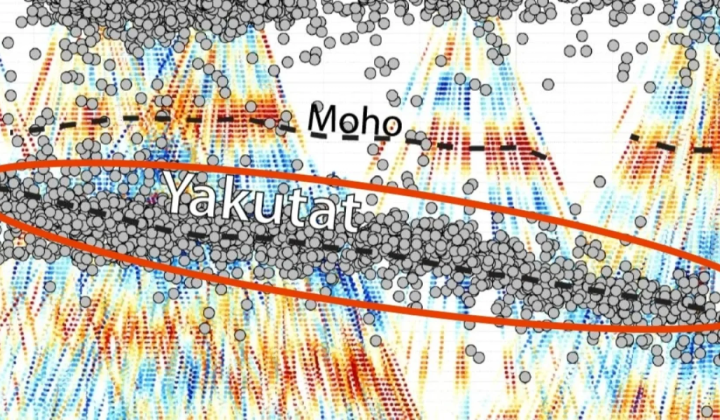
Discovery of the Yakutat Microplate
According to НВ — Техно: Researchers have uncovered a nearly perfectly straight line of earthquakes running beneath Alaska, marking the boundary of the Yakutat microplate as it slides under the North American Plate. Analysis shows that this plate extends much farther than previously thought, reaching all the way beneath the Denali Fault. The interaction between these plates generates mechanical stress that influences earthquakes and volcanic activity, and the edge of the plate may have been the starting point for the major 2002 earthquake in the region.
Published on July 1, 2026, in the journal The Seismic Record, the study used machine learning to analyze data from seismic stations across central Alaska. This approach produced a highly detailed catalog of local earthquakes. The result was the identification of an almost perfectly straight line of tremors that aligns with the boundary of the Yakutat microplate. Thousands of small quakes form a linear cluster that precisely traces the edge of this microplate as it descends beneath the North American Plate.
Plate Interactions and Their Impact on Seismic Activity
Further analysis of seismic noise allowed researchers to map the plate boundary in greater detail. They found that the Yakutat Plate extends farther beneath the North American Plate than previously believed, reaching under the Denali Fault. The complex interplay between the North American, Pacific, and Yakutat plates generates intense mechanical stress. The edge of the Yakutat microplate sits beneath a curved section of the Denali Fault, pointing to significant geological consequences from this ongoing process.
Stress from the collision and subduction of the plates travels upward through the fault, potentially affecting seismic activity across the region. The Yakutat Plate may have also played a role in forming young volcanic fields, as conditions for renewed volcanic activity began to develop here about one million years ago. These findings could substantially reshape our understanding of the geological processes driving earthquakes and volcanism in this part of the world.
The results of this study could prove critical for monitoring seismic activity and forecasting earthquakes in Alaska, where geological processes have a major impact on public safety and infrastructure. A deeper understanding of the mechanisms that trigger earthquakes may help in developing effective strategies to mitigate the effects of such natural disasters in the future.
In addition to this groundbreaking discovery, recent advancements in artificial intelligence have revealed thousands of previously unknown seismic events in Alaska. This underscores the importance of modern technology in enhancing our understanding of the complex geological processes at play beneath the surface.

Read also