How Western Education Fueled Iran's Advanced Military Arsenal

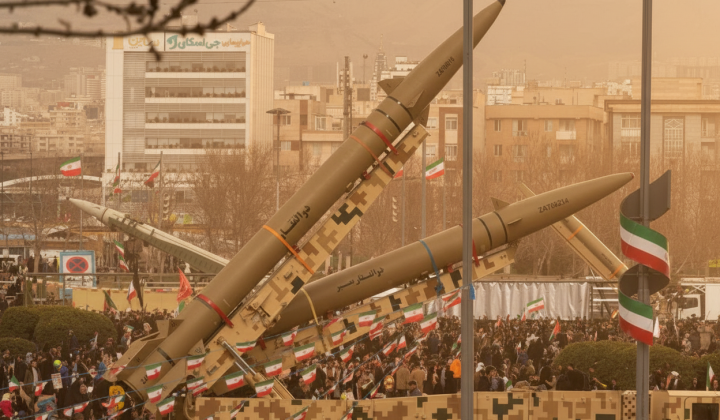
The Foundation of Iran's Military-Industrial Complex
According to ХВИЛЯ: During a broadcast with political analyst Yuriy Romanenko, expert Tamerlan Vagabov detailed the growth of Iran's military-industrial sector. He explained that the state has invested for years in cultivating engineering talent, notably by sending students to Western universities, which enabled Iran to establish a self-sufficient weapons development cycle. The domestic production of ballistic missiles and attack drones demonstrates the high level of technological capability achieved in its defense industry.
Iran pursued a deliberate strategy of developing world-class engineering expertise. For a significant period, for instance, 30-40% of the doctoral candidates in Harvard's electrical engineering program were Iranian nationals. Many of these graduates returned to work in Iran, fostering domestic innovation. As Vagabov noted,
"It's not a given that they always stayed in the States. Some of them were agents, and so on. They returned and worked in Iran."
Furthermore, Iran possesses a robust technical education system, a strong R&D base, and its own industrial foundation. Vagabov emphasized that
"Iran itself has a very strong technical education. That is, there is a technical scientific base, an R&D research base, and there is a sprawling network of alliances with all these 'axis of evil' countries."
This comprehensive approach allowed Iran to develop its missile program, UAV (drone) capabilities, and light weapons industry, which, in his words,
"gives birth to the missile program, ballistic, cruise, UAV program, as we see from our own bitter experience here."
Iran's military advancements are often viewed with concern by its regional rivals and Western powers, given its involvement in various proxy conflicts.
Geopolitical Implications
Consequently, Iran continues to advance its military-industrial complex by leveraging its trained personnel and acquired technologies, solidifying its role as a key regional power.
The expansion of Iran's military-industrial capabilities carries significant consequences for the regional geopolitical landscape. Its growing technological prowess could alter the balance of power in the Middle East, particularly within the context of its conflicts with neighboring states and the international community. Iran's arms programs, especially in drones and ballistic missiles, present persistent security challenges for the region and heighten tensions with countries that perceive Iran as a threat. This dynamic also influences international policy regarding sanctions and military cooperation concerning Iran.

Read also