Goal for Sweden at 2026 World Cup Confirmed by Sensor Inside the Ball

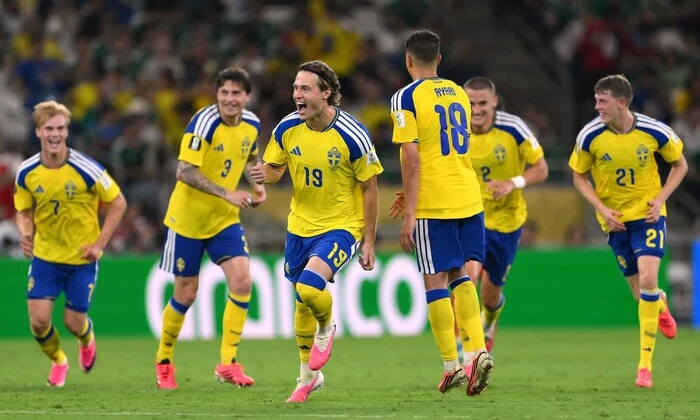
Sweden vs. Tunisia at the 2026 FIFA World Cup
According to Главком: A special sensor embedded in the match ball allowed Sweden’s goal against Tunisia to stand during the 2026 World Cup. The Swedish national team crushed Tunisia 5-1 in their opening game of the tournament. This dominant win pushed Graham Potter’s squad to the top of Group F. In the group’s other fixture, the Netherlands and Japan played to a 2-2 draw.
Swedish midfielder Mattias Svanberg, 27, contributed to the lopsided scoreline with a goal in the 84th minute-just 18 seconds after coming off the bench. The goal was initially disallowed for offside, but VAR officials stepped in to review the play. They used a new technology borrowed from cricket to determine whether forward Alexander Isak had touched the ball. This system relies on a microchip inside the ball that captures data up to 500 times per second. The technology confirmed that Isak made the slightest contact, allowing Svanberg’s goal to count.
FIFA Investigation
FIFA has launched an investigation into Australian referee Shaun Evans for a potential racist gesture. Evans, who served as the video assistant referee (VAR) during the Germany vs. Curaçao match, reportedly made a hand sign resembling an upside-down OK symbol. That game took place on June 15, 2026, and ended in a 7-1 victory for Germany. A FIFA spokesperson stated,
“they are aware of the incident.”
This match marked a significant milestone for Sweden, who showcased strong form with a commanding victory. The use of advanced technology like ball sensors in football reflects the sport’s evolution and the push for greater officiating accuracy. At the same time, FIFA’s investigation into the referee’s conduct highlights the importance of ethics and fairness in the game-critical for maintaining trust in competitive sports. These events underscore both technological progress and the social challenges facing modern football.
The recent developments in officiating technology have sparked discussions about the accuracy of goal decisions in football. For instance, a similar controversy arose when FIFA reclassified a goal from Qatar as an own goal by a Swiss player. This incident underscores the complexities involved in modern refereeing. To explore this intriguing case and its implications for the World Cup, read more about FIFA's decision on Qatar's goal.

Read also