Singaporean Stalinism: The Competent State and the Economy of Mobilization. Part 2

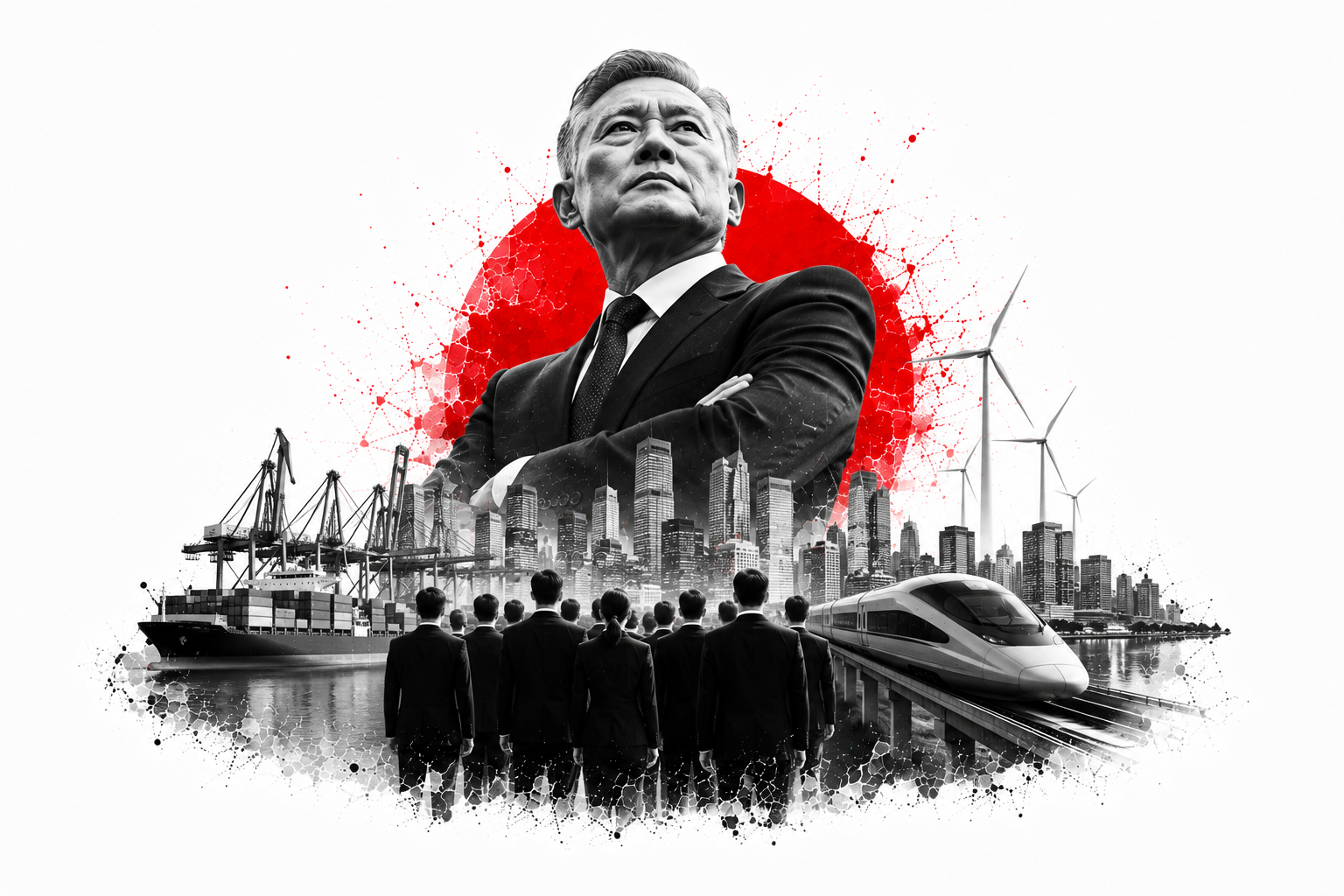
The concept of "Singaporean Stalinism" is based on a simple, albeit dangerous premise: the state should be managed not as a political show, but as a complex engineering system. Its task becomes not to satisfy the changing moods of voters, but to achieve measurable results - from infrastructure construction to technological modernization.
In this model, the democratic principle of representation gives way to meritocracy, and the market economy yields to mobilization state capitalism. Proponents of such a structure see it as a response to populism, corruption, and a short horizon of political planning. Critics argue it leads to a technocratic dictatorship, where efficiency becomes a justification for unlimited power.
IV. Politics: Meritocratic Dictatorship
The State as a Profession
Politics ceases to be a competition for popularity and transforms into an applied management discipline.
Power should belong not to those who best work with the emotions of voters, but to those capable of solving complex tasks. Strict educational, professional experience, intellectual preparation, and past performance requirements are proposed for candidates for the highest state positions.
Meritocracy in this system is presented as an absolute principle: origin, family ties, party loyalty, and belonging to the necessary social group should not guarantee a career. Only those who demonstrate competence and practical benefit to the state should rise to the top.
However, this formula conceals a complex question: who exactly will determine who is considered competent, and how to prevent the professional filter from becoming a mechanism for removing inconvenient citizens?
Responsibility Instead of Collective Impunity
One of the main targets of the concept is parliamentary "collective irresponsibility," where a failed decision dissolves among parties, committees, and departments.
The state apparatus is proposed to be restructured according to the principles of corporate governance. Each leader receives clear powers, terms, and measurable performance indicators. The failure of a major infrastructure project, the non-implementation of a strategic program, or systemic budget overruns should have not just political, but also legal consequences.
However, criminal responsibility should be based on proven corruption, sabotage, or abuse of power, rather than just on the fact of non-fulfillment of a plan. Otherwise, public service will quickly turn into a system of fear, where officials hide problems and falsify statistics to avoid punishment.
Management Through Big Data
Classical elections in this model partially yield to digital governance.
The "state-algorithm" must analyze transportation flows, energy consumption, hospital conditions, migration, prices, employment, and other indicators in real time. Decisions are made not based on campaign promises, but according to the measured needs of society and the economy.
In theory, this allows reducing bureaucracy and reacting more quickly to crises. In practice, however, there is a risk of creating a digital system of total control. An algorithm is not neutral: it reflects the goals set by the authorities and the data errors on which it was trained.
The effectiveness of this management will depend not only on the quality of technologies but also on the presence of independent oversight, transparent rules, and the citizen's right to challenge automated decisions.
V. Economy: Mobilization State Capitalism 4.0
The economic part of the concept rejects both a completely free market and a classical command system. The state acts as a strategic owner, regulator, and investor, while the private sector retains freedom in those areas that do not determine national security.
The goal is not to maximize short-term profit, but to achieve technological resilience, industrial autonomy, and the ability to withstand major crises.
Two Contours of Economic Sovereignty
Strategic sectors - energy, defense industry, main logistics, natural resources, heavy industry, and critical communications - remain under state control.
The argument of supporters is simple: privatization of the economic "backbone" creates dependence on corporations, foreign capital, and short-term interests of shareholders.
At the same time, small and medium-sized businesses receive the most favorable conditions:
- protected property rights;
- simple taxes;
- minimum permits;
- quick judicial proceedings;
- digital state services;
- freedom to create and close businesses.
This construction attempts to combine state control over critical infrastructure with Singaporean freedom of entrepreneurship in competitive sectors.
The main danger is the expansion of the strategic sector. The state is almost always tempted to declare any profitable industry as "critically important," pushing out private initiative and forming monopolies.
Finance as a Tool of Production
The banking sector in this model ceases to be a self-sufficient profit center. Its main function is to channel capital into industry, infrastructure, technology, and export productions.
Speculative operations that do not create physical or technological added value should be subject to increased taxes or restricted by the regulator. Meanwhile, long-term financing of production receives state guarantees and access to cheaper funding.
The problem is that the line between "useful investment" and "parasitic speculation" is not always clear. Financial markets provide liquidity, risk insurance, and pricing. Excessive restrictions may not heal the economy but deprive it of capital.
Foreign Money in Exchange for Technology
Foreign investment is welcome, but only if it creates production, jobs, and technological competencies within the country.
Access to the market may be linked to such conditions:
- localization of production;
- training of local engineers;
- creation of research centers;
- transfer of part of the technologies;
- involvement of national suppliers.
This is a new type of industrialization: instead of blast furnaces and tractor factories - microchips, robotic conveyors, artificial intelligence, energy systems, and drone platforms.
At the same time, excessive requirements may scare away investors. Technology transfer works only when the country already has enough educated personnel, a competitive market, and predictable law.
Corruption as a Threat to the State
Corruption in strategic sectors is seen not as an ordinary economic crime, but as a direct threat to national security.
The embezzlement of defense budgets, cartel conspiracies regarding basic resources, manipulation of state contracts, and illegal capital withdrawal should be punished especially harshly - with long prison sentences, confiscation of illegally obtained assets, and a lifelong ban on holding public office.
However, the death penalty or extrajudicial "physical responsibility" is incompatible with the rule of law and creates more risks than benefits. True inevitability of punishment depends not on its severity but on independent investigations, fair courts, and the impossibility of buying out responsibility.
The Strength of the System and Its Main Weakness
"Singaporean Stalinism" offers an attractive answer to real problems: the short horizon of politics, the impunity of elites, deindustrialization, and the weakness of state institutions.
But this system requires a nearly impossible combination: a strong centralized power that voluntarily limits itself by law; digital control that does not turn into surveillance; state corporations that do not become feeding troughs; and a meritocracy that does not degenerate into a closed caste.
Its main promise is a state of the competent. Its main threat is a state that decides for itself who is considered competent, useful, and loyal.

Read also