United States of Europe: Federalization as a Cure for European Weakness
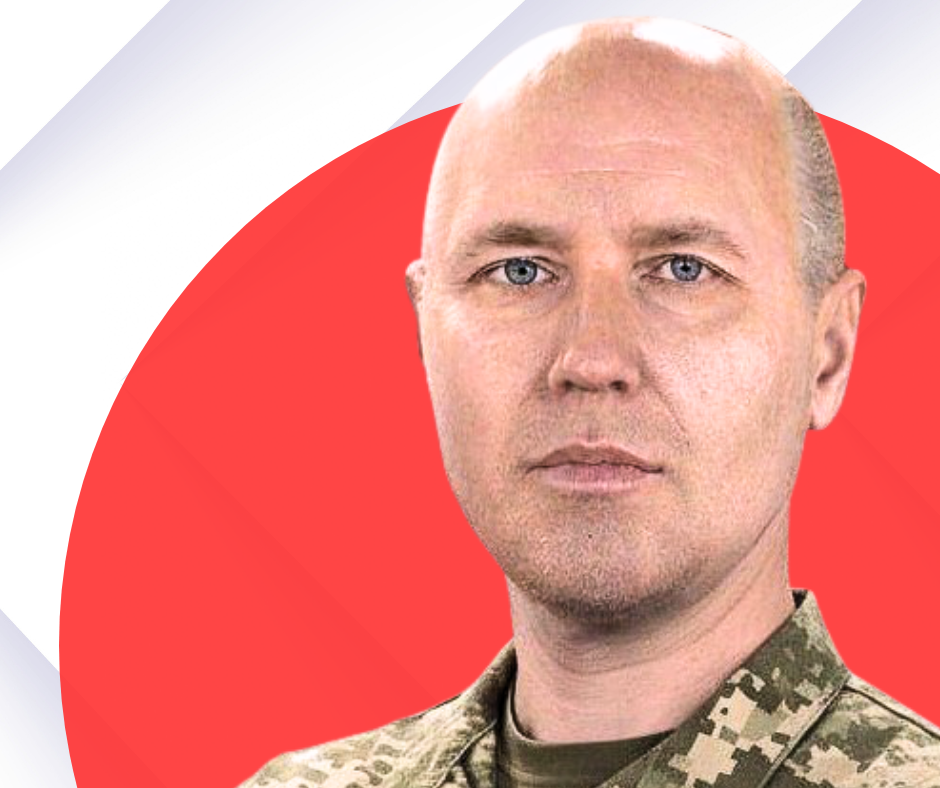
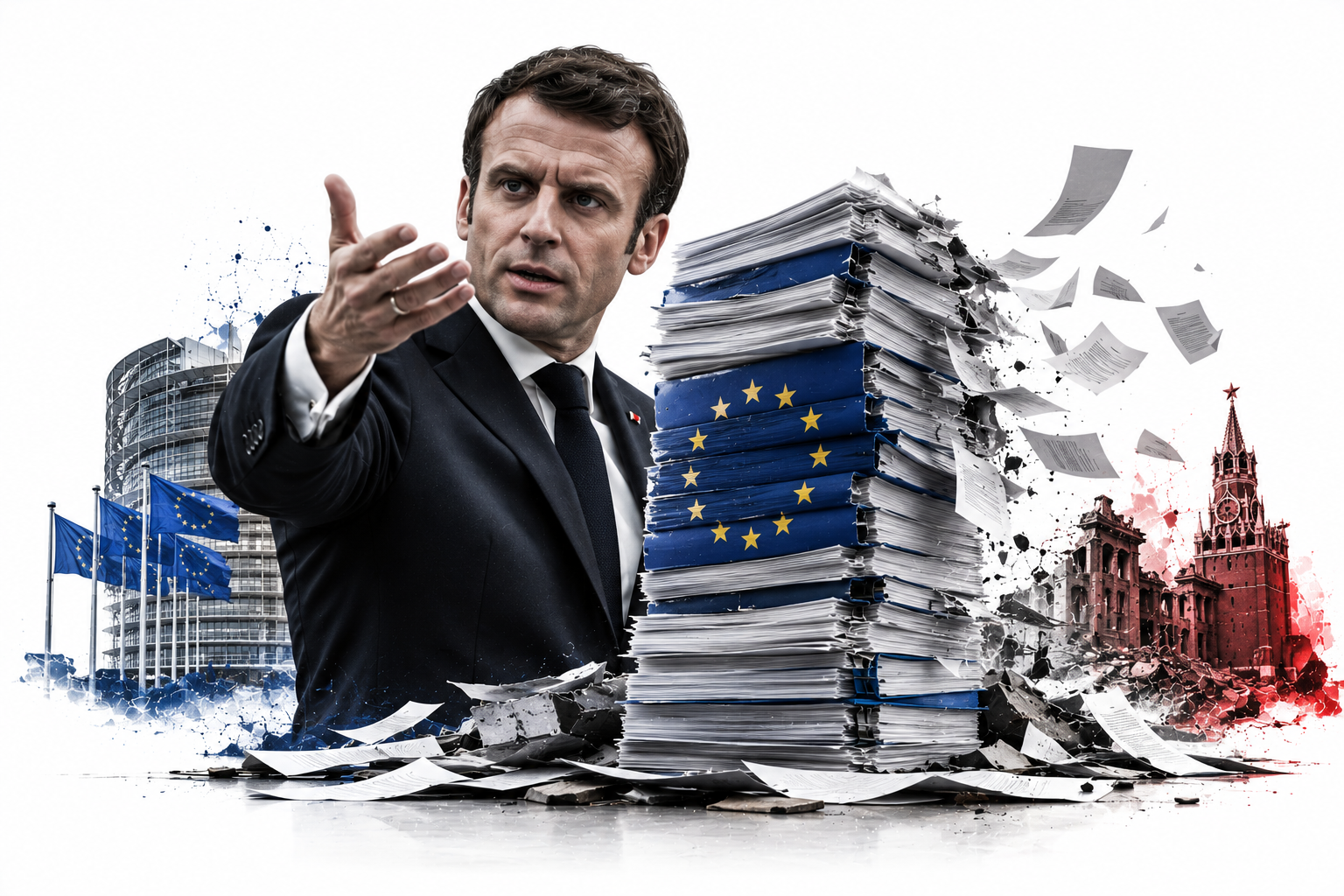
'Long live the united, powerful Soviet Union created by the will of the peoples...' - the old Soviet anthem is unlikely to have been a source of inspiration for Gabriel Attal. However, the proposal of the former French Prime Minister sounds almost revolutionary for the European political landscape. He called for a move towards 'United States of Europe' and the creation of économie unique - a single European economy capable of transforming the continent into a 'first world power' and competing with the USA and China.
Gabriel Attal proposes transforming the European Union into the 'United States of Europe' with a unified economy to compete with the USA and China. The diagnosis is partly correct: Europe is growing slowly, losing industrial positions, and increasingly feeling the weight of technological lag. The dispute begins with the prescription. Does Europe need more market for salvation - or more Europe?
The problem that Attal points out is not fictitious. The European Commission forecasts EU economic growth of only 1.1% in 2026 and 1.4% in 2027. Germany, after two years of recession and almost zero growth in 2025, is expected to add only 0.6% this year. France - about 0.8%. High energy prices, Chinese competition, American tariffs, weak investments, and structural problems in the industry have become part of the official diagnosis of the European Commission rather than arguments of euro-skeptics.
The question is different: if the machine is moving slowly, does it really need a bigger engine of state management?
The European Paradox
Europe finds itself in an awkward position. Individually, its states are too small to compete on equal terms with the USA and China in semiconductors, artificial intelligence, defense industry, space, or critical raw materials. Together, they form an economic bloc of about 450 million consumers - but even decades after the creation of a single market, this market remains far from being fully unified.
In this sense, Attal's logic has an economic basis. If a French startup has to overcome various administrative, tax, and financial barriers to scale across the entire EU, then an American competitor has easier access to a vast domestic market from the very beginning. If 27 states separately purchase weapons, formulate energy policies, and subsidize their own strategic industries, they inevitably lag behind larger continental-scale countries.
But two opposite conclusions can be drawn from this.
The first is that deeper integration is needed: a common capital market, a common industrial policy, a larger budget, centralized procurement, and ultimately much stronger federal authority. The second is that Europe primarily needs to remove the barriers it has created itself, deregulate the internal market, and allow capital and businesses to move more freely.
Attal mainly bets on the first path.
Euro-State Plan - or American Scale?
Calling économie unique a Soviet State Plan would be a striking but inaccurate analogy. Attal does not propose abolishing private property, setting state prices for cars, or ordering factories how many refrigerators to produce. The single European market remains a market economy.
However, critics of greater centralization have a stronger argument than a simple Soviet metaphor. The EU is already trying to enhance competitiveness through industrial policy, subsidies, climate standards, state aid rules, production localization, and increasingly active determination of 'strategic' sectors. The new initiative Made in Europe, for example, aims to stimulate the use of European products and reduce dependence on Chinese components. But even it has already sparked disputes about new trade barriers and the risk of fragmentation in supply chains.
Here lies the paradox. To compete with Chinese industrial policy and American subsidies, Europe is increasingly responding with its own industrial policies and its own subsidies.
The world is moving away from the economic globalization of the 1990s. Therefore, some return of the state is inevitable. But the line between strategic coordination and an economy where politicians increasingly decide which technology, factory, or sector deserves capital is very thin.
The German Engine is No Longer the Same
The biggest problem of the federalist project is not even political. It is financial.
For decades, European integration relied on a simple construct: Germany produced, France shaped the political vision, smaller states gained access to the common market, and the United States provided a significant part of the security umbrella. Today, all four elements of this construct are under pressure.
The German economy is almost not growing after two years of decline. The European Commission expects only 0.6% growth in 2026 and 0.9% in 2027. It directly names high energy prices, weak exports, competition from China, and American tariffs among the reasons.
French finances look even more complicated. The Commission forecasts a budget deficit of about 5.1% of GDP this year, and public debt could rise to approximately 120% of GDP by 2027.
So just when Paris talks about a stronger European center, the uncomfortable question arises: who will finance it?
At Whose Expense is the Federation?
This is no longer a theoretical debate. Five countries - Germany, the Netherlands, Austria, Denmark, and Finland - have just opposed the European Commission's proposed sharp increase in the EU budget for 2028-2034. They consider the proposed scale of spending unrealistic and do not want to automatically shift new European ambitions onto taxpayer shoulders in donor countries.
This is the fundamental problem of the 'United States of Europe.' A political federation involves not only a common flag, army, or industrial strategy. It involves transfers.
If one part of the federation falls into crisis, another pays. If defense of the external border needs financing, everyone pays. If a huge industrial project is located in France, a portion of the risk is potentially shouldered by a German or Dutch taxpayer. And vice versa.
Americans accept such a system because Texas and California belong to one political entity. Europeans still largely remain French, German, Polish, Italian, and Dutch when the bill comes due.
That is why creating a European regulator is much easier than creating a European taxpayer.
Brussels vs. Silicon Valley
Even more complex is the issue of technology. The USA has Apple, Microsoft, Nvidia, Google, Amazon, Meta, and a huge venture market. China has created its own technology platforms, manufacturing clusters, battery industry, and extremely large supply chains.
Europe has excellent universities, engineers, ASML, Airbus, Siemens, SAP, and a number of world industrial champions. But it rarely transforms technological innovation into a global company of continental scale.
This cannot be explained solely by 'Brussels bureaucracy.' Among the reasons are fragmented capital markets, a smaller venture sector, demographics, energy costs, more complicated company scaling, different national rules, and differences in entrepreneurial culture. The EU itself recognizes the competitiveness problem and is trying to deepen the single market.
And here, Attal may be both right and wrong at the same time.
Europe indeed needs to become a more unified economy. But that does not necessarily mean it needs to become a more centrally managed economy.
A single capital market, uniform basic rules for startups, cheaper energy, simpler cross-border investing, and less administrative fragmentation can require more Europe in one sense - and less bureaucracy in another.
The Ghost of 1991
Comparing the current EU to the late USSR is appealing in its drama but poorly serves as an economic forecast. The EU remains an alliance of mainly market democracies with private property, competitive elections, free movement of capital, and the possibility for states to leave the Union. Its problems are fundamentally different from the structural crisis of the Soviet planned economy.
And likewise, there is no reason to assert that the current policy will inevitably lead the EU to 'its own 1991.' The European Commission predicts weak but positive growth: 1.1% this year and 1.4% next year. This is a stagnation problem, not a forecast of economic collapse.
However, the Soviet analogy contains one useful warning. A large system can long compensate for a loss of efficiency by increasing administrative complexity. Every problem generates a new program, every program - a new body, every body - a new set of rules. Eventually, the system starts to confuse the quantity of management with the quality of results.
This is what Europe should fear more than the loud name 'United States of Europe.'
Attal poses the right question: how to turn Europe’s economic mass into a geopolitical force? The answer will determine whether the continent can remain a separate center of power between the USA and China.
But if the answer to each loss of competitiveness is a new budget, a new subsidy, a new regulator, and a new directive, federalization risks merely shifting old European problems to a higher level.
Europe does indeed need an economy of American scale. It is much less clear that it needs federal-scale bureaucracy for that.

Read also