U.S. Develops Method to Detect Russian Nuclear Weapons in Space

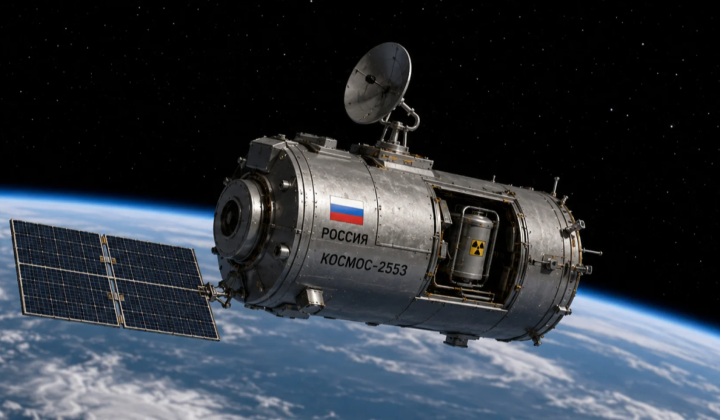
Suspicions of a Nuclear Anti-Satellite Weapon Program
According to НВ — Техно: The United States suspects that Russia may be developing a nuclear anti-satellite weapon. In February 2022, Russia launched a satellite called Kosmos-2553 into an orbit that U.S. officials believe could serve as a test platform for such a weapon's components. Russia's Defense Ministry has described Kosmos-2553 as a technology satellite designed to test instruments under radiation exposure. However, according to U.S. State Department official Mallory Stewart,
“the satellite [Kosmos-2553] is in a region that no other spacecraft uses, which was unusual.”
Historical Context and Recent Developments
The 1967 Outer Space Treaty prohibits placing nuclear weapons in orbit and is binding on 118 countries, including the United States, China, and Russia. In 2024, Washington learned that Russia might be developing a new satellite to carry nuclear weapons into orbit. In 1962, the U.S. conducted a thermonuclear weapon test at an altitude of 400 km, which disabled about one-third of all satellites in orbit at the time.
Using cutting-edge technology, MIT professor Areg Danagulyan published a study on July 8 in the journal Nature, proposing a method to detect nuclear warheads on satellites. The method relies on detecting neutrons produced when a proton strikes a uranium or plutonium atom. Danagulyan states:
“Intelligence data can be faked, but physics cannot be faked.”
The approach would use a 9U CubeSat inspector satellite. According to the scientist's calculations, the inspector could detect a nuclear warhead with 99% accuracy within a week from a distance of up to 4 km. With multiple sensors or by closing to within 1,000 meters, the verification time could be reduced to an hour.
Such developments carry serious implications for global security. Vipin Narang notes that
“if detonated, this anti-satellite weapon could potentially destroy an entire orbit of satellites critical not only to the U.S., but to the entire world.”
Danagulyan also shared his thoughts on the significance of this technology, saying, “It may sound immodest, but I believe this mission is almost as important as creating Starlink.”
Overall, the situation surrounding Kosmos-2553 and potential new Russian developments in nuclear anti-satellite weapons has raised concern among the international community, as it could shift the balance of power in space. These events underscore the need for international oversight of space technologies and compliance with existing agreements such as the Outer Space Treaty. The expansion of military capabilities in space could introduce new threats to global stability, making it essential for the international community to respond proactively and prevent potential conflicts in this domain.

Read also