Conditions Under Which Russian Elites Might Remove Putin Have Been Revealed

Analysis of the Political Landscape in Russia
According to Главком: An examination of the likelihood that Russian elites would forcibly remove Vladimir Putin points to a complex and volatile situation within the country. Russia's elite functions as a network of competing clans, with Putin serving as the primary arbiter. However, since 2022, the regime has evolved into a personalized, militarized, and authoritarian system, making any political shifts far more difficult. This context is crucial for understanding the current dynamics in Moscow, where power consolidation has reached new heights.
The governance structure in Russia relies on mutual surveillance between various security agencies. The FSB monitors the military, while the army, in turn, distrusts the intelligence services. To tighten control further, the Rosgvardia (National Guard) was established to act as a counterbalance to both the armed forces and society. The presidential protection unit remains a separate caste, underscoring the deep-seated mistrust within the system. In this environment, Yevgeny Prigozhin's 2023 rebellion revealed that a significant portion of the elites chose passivity rather than actively participating in an attempt to unseat Putin.
It is important to note that Putin has systematically eliminated anyone who could become an independent political force. Independent oligarchs have been subdued or politically destroyed, and regional elites have lost their former autonomy. The federal bureaucracy has become entirely dependent on the center. Popular military commanders are also kept under tight control. In such a scenario, a classic military coup appears highly unlikely.
Scenarios for Putin's Removal
Among the possible scenarios for removing Putin is a closed-door process within a narrow circle of security and intelligence officials, simulating health issues. As the author notes,
“if a significant part of the elites concludes that his presence is pushing the system toward disaster, then mechanisms of conspiracy may be activated.”
The most dangerous scenario for Putin involves a combination of three factors:
- protracted defeats on the front,
- economic decline,
- a split among the ruling elites.
In such a case, according to the author,
“keeping Putin becomes more dangerous for their survival than removing him.”
However, it is worth noting that Russian elites lack a unified vision of a post-Putin future. There is a risk that a post-Putin Russia will not become a democratic state. In the event of radical internal scenarios, we should expect conditions that are brewing deep in the shadows of the intelligence services and the FSB.
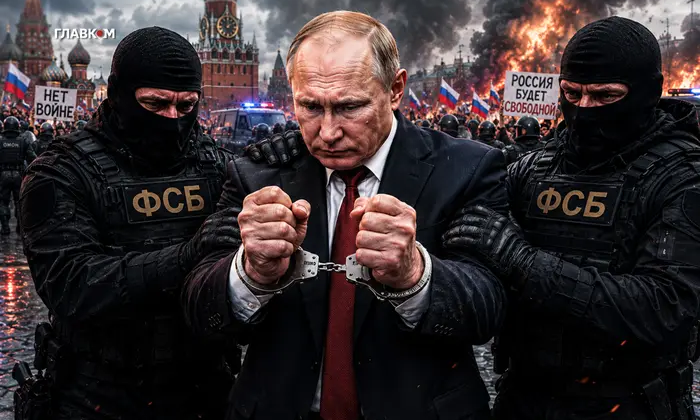
The confrontations and shadow games in Russian politics indicate that, despite existing problems, Putin's regime may remain in place until the elites recognize that preserving him is riskier than removing him. If the situation changes, the most likely outcome would be a scenario involving Putin's arrest and transfer to a court in The Hague, or options similar to the fates of Ceaușescu, Gaddafi, or Indira Gandhi.
The situation in Russia remains tense, as elites continue to balance between supporting the regime and the possibility of change. The complexity of the political landscape and the absence of a unified vision for the future after Putin threaten stability, which could lead to unpredictable consequences for the country. In such an environment, it is crucial to monitor further developments, as even minor shifts could significantly impact political dynamics in Russia.
As the political landscape in Russia continues to shift, the dwindling trust among the elite in Putin highlights the growing discontent within his inner circle. Understanding these dynamics is essential, as they may pave the way for unforeseen developments in the Kremlin's power structure.

Read also