Fading Faith in Putin: Russian Elite Loses Confidence in Their Leader

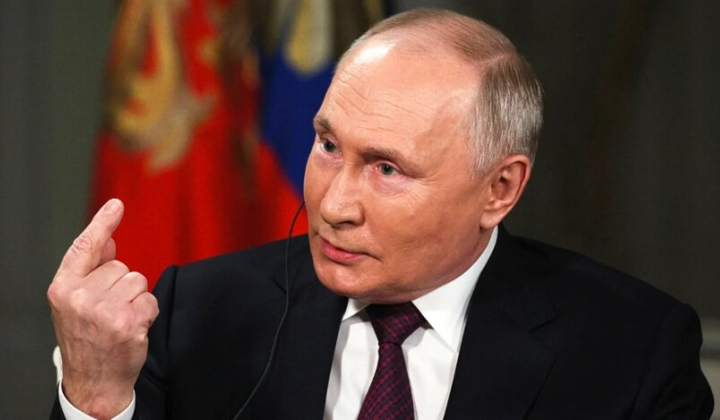
Vladimir Putin's Most Challenging Era Yet
According to ХВИЛЯ: Vladimir Putin is navigating what many consider the toughest phase of his 25-year rule. A Guardian article dated May 24, 2026, highlights growing disillusionment among Russia's elite and broader society with the president, driven by the war in Ukraine and mounting economic pressures. Despite this, Putin shows no signs of halting hostilities, convinced that Moscow can seize all of Donbas by the end of 2026. Military analysts, however, estimate a full takeover could take years.
The article draws on sources close to Putin, Russian business insiders, and Western intelligence. According to a prominent businessman, the mood among the elite has shifted:
“This year, the sentiment among the elites has definitely changed. There is deep disappointment with Putin.”
Many who once defended the president now refrain from doing so.
“No one believes everything will suddenly collapse tomorrow. But there is growing awareness that utterly senseless, self-destructive decisions are being made time and again,”
the businessman adds.
Public Discontent and Information Control
Discontent is also rising among the general population. The happiness index in April 2026 hit a 15-year low, and Putin's approval ratings have dropped to their lowest since the full-scale invasion began. “Putin closely monitors his ratings. He has been obsessively tracking polls since 1999,” notes journalist Alexei Venediktov. Meanwhile, Ukrainian intelligence believes generals are feeding Putin a distorted picture, as “fabricated reports claiming victory is imminent travel up the chain of command.”
The Kremlin continues to tighten its grip on information: by early 2026, most messaging apps had been blocked, and mobile internet in Moscow and other regions is periodically shut down. “Everyone at the table talks about the internet. We are now somewhere closer to North Korea,” comments a Kremlin insider. Despite growing isolation, Putin remains focused on his objectives, particularly the capture of Donbas.
The business elite faces billions in losses, while the year has brought higher taxes and inflation for ordinary Russians. Among oligarchs, silence prevails, as they fear speaking openly. “The business elite is playing Russian roulette. They hope the bullet hits their neighbor, not them,” says Oleg Tinkov. Most analysts agree that if a real threat to the regime emerges, it will come from within the inner circle, not the streets. Talk of an imminent coup or of former Defense Minister Sergei Shoigu as a rival to the president is considered exaggerated.
In summary, the situation in Russia points to growing disappointment with Putin, but he remains in power and continues to pursue his plans despite mounting difficulties.
This period of uncertainty and rising discontent in Russia could have significant consequences not only for the country's domestic politics but also for international relations. With a lack of trust in leadership and growing social tensions, potential shifts in the political landscape might act as a catalyst for new developments. At the same time, Putin's strategic decisions to prolong the conflict in Ukraine could deepen Russia's international isolation, further complicating its economic situation.
As discontent among Russian elites escalates, it's crucial to understand the factors contributing to this shift. The recent dissatisfaction with Putin's leadership is not only rooted in the stalled economy but also reflects a broader sentiment of uncertainty regarding military strategies and political decisions. This context sheds light on the growing rift between the president and his once-loyal supporters.

Read also