Rebuilding Ukraine's Defense: A Strategy for Reviving Aviation and Building a Drone Army

Ukraine's Defense Rebuild: A Strategy for Aviation and Drones
According to ХВИЛЯ: Ukraine's aviation sector, including the Antonov State Enterprise and the Orion plant, has suffered significant decline. Since the war with Russia began in 2022, unmanned systems have evolved into a critical component of the Ukrainian armed forces. Criticism of past management decisions, such as ordering corvettes, highlights the urgent need to rethink approaches to defense technology development. This strategic shift is seen as vital for Ukraine's long-term security and industrial resilience.
Following the collapse of the USSR, Ukraine possessed the potential to rank among Europe's top five most technologically advanced nations. However, serial aircraft production in the country has ceased, complicating any revival of the aviation industry. The destruction of the An-225 'Mriya' transport plane by Russian forces in 2022 was a further blow; this aircraft had a payload capacity of 250 tons.
Emerging Technologies in Warfare
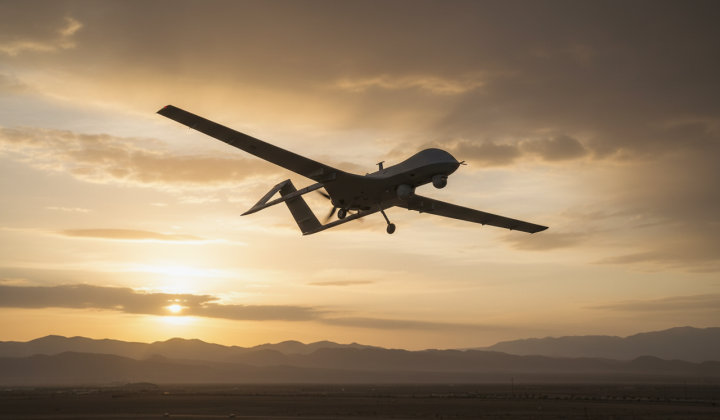
The early stages of the 2022 war demonstrated the effectiveness of Turkish-made Bayraktar TB2 strike drones, while commercial DJI Mavic quadcopters were widely adopted for tactical reconnaissance. From 2023 to 2025, low-cost FPV (First-Person View) drones, priced between $300 and $500, emerged on the battlefield. These new technologies have provided Ukrainian forces with novel capabilities for conducting operations.
The Orion plant, which once produced electronic warfare systems, military radios, and space electronics during the Soviet era, must now pivot to focus on creating new technologies. The maritime drone Magura V5, which has been used to sink Russian ships, costs approximately $250,000, underscoring the cost-effectiveness of unmanned systems in modern warfare.
This analysis was prepared by Ihor Akimov, Chairman of the Kronos Institute for Social Dynamics and Security, in collaboration with Anatolii Vovnianok, lead designer of the An-70 aircraft. Their technical proposals include:
- Utilizing L-39 Albatros trainer aircraft, which have a speed range of 170 km/h to 750 km/h and are armed with a GSh-23L cannon;
- Developing High-Altitude Pseudo-Satellite (HAPS) drones capable of operating at altitudes of 20-25 km, providing communications coverage for an area up to 200 km in diameter.
Against a backdrop of lacking UAV standardization, negative consequences such as logistical, repair, and operator training problems have arisen. The cost of Western fighter jets like the F-16 Block 70/72 exceeds $60 million, raising questions about their cost-effectiveness under current conditions.
Consequently, the recommendations call for:
- A fundamental change in procurement philosophy;
- Standardization of UAVs;
- Mobilization of scientific potential;
- Revival of 'light' aviation.
Establishing an entity analogous to the RAND Corporation would help focus efforts on technical intelligence and analysis, forming a 'vision of the future,' arbitrating procurement, and coordinating science with production. This could be a crucial step in rebuilding Ukraine's aviation industry and creating a drone army capable of effectively meeting contemporary challenges.
The restoration and modernization of Ukraine's aviation industry, coupled with the advancement of drone technology, are becoming key factors in addressing modern military threats. Given the needs of the front line and the limitations of traditional military technology, an emphasis on unmanned systems could provide Ukraine with strategic advantages. It is imperative that these initiatives receive support from the state and international partners to achieve maximum effect.

Read also