For the First Time, TESS Telescope Discovers an Exoplanet Using Microlensing

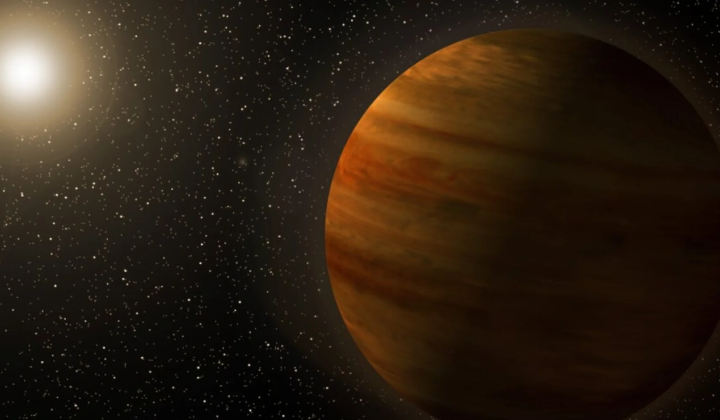
The Discovery of Exoplanet Gaia23bra b
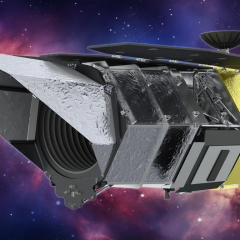
According to НВ — Техно: NASA’s TESS space telescope has achieved a milestone by detecting an exoplanet through gravitational microlensing for the first time. The newly found world, designated Gaia23bra b, is a super-Jupiter orbiting at a considerable distance from its host star. This breakthrough suggests that many more similar planets could be hiding within TESS’s archived data, waiting to be uncovered.
The exoplanet Gaia23bra b has a mass roughly 1.63 times that of Jupiter. It circles an orange dwarf star with about 80% of the Sun’s mass, and its orbital distance is comparable to Jupiter’s path around our Sun. The microlensing event that revealed this planet was first spotted in 2023 by the European Space Agency’s (ESA) Gaia space telescope, which has since been retired from service.
How Gravitational Microlensing Works
Gravitational microlensing occurs when the mass of a foreground star and its planet bends and magnifies the light from a background star. Out of over 6,000 known exoplanets, roughly three-quarters have been found using the transit method, while microlensing accounts for less than 5% of all discoveries. For context, the star Gliese 3378, which hosts the planet Gliese 3378b, lies about 25 light-years from Earth. That planet is approximately 2.3 times Earth’s mass and completes an orbit every 21.45 days.
'When TESS was launched, nobody expected it would ever find a planet of this type. This discovery means that there are likely other microlensing planets hiding in TESS data that we hadn’t considered before.' Diana Dragomir, professor at the University of New Mexico
Mallory Harris from the University of New Haven, the study’s lead author, noted that Gaia’s observations were too sparse to capture detailed information about the planet. 'TESS happened to be observing the same patch of sky during the event, and its denser time coverage revealed extra features in the light curve caused by the planet,' she explained.
Harris also highlighted the unique strength of microlensing: 'Its main advantage lies in the types of planets it can detect. Planets orbiting very close to their stars blend effectively with the star’s mass and do not produce a clear microlensing signal.' She added, 'Microlensing events happen once and then vanish-they don’t repeat. I like to joke that we’ll probably find the first Earth analog using microlensing, then wave goodbye as it drifts past, because we’ll never see it again.'
The detection of Gaia23bra b opens up new possibilities for astronomers in exoplanet research and search efforts. Gravitational microlensing allows scientists to identify planets that are difficult or impossible to spot with traditional methods. This discovery underscores the value of TESS’s archival data, which may contain other similar objects yet to be found.
With advancing technologies and observation techniques, the potential for further exoplanet studies is expanding significantly, paving the way for new breakthroughs in astronomy and astrophysics.
As astronomers continue to explore the cosmos, the discovery of a nearby Super-Earth just 25 light-years away highlights the ongoing advancements in exoplanet research. This finding complements TESS's recent achievement, indicating that the universe may harbor an even greater diversity of planets than previously thought.

Read also