A Super-Earth Discovered Just 25 Light-Years Away, Astronomers Reveal

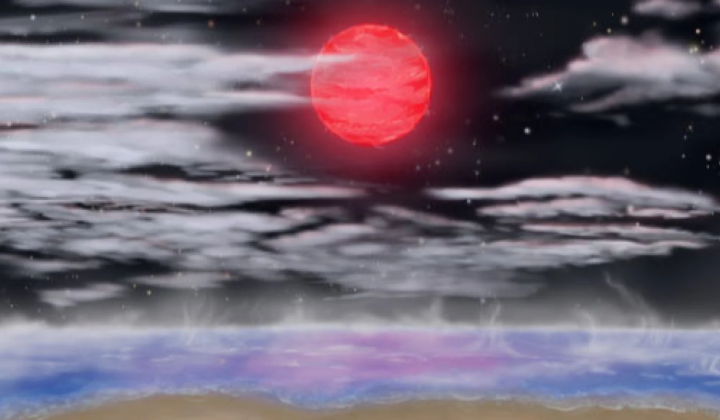
New Exoplanet Gliese 3378b Found Orbiting a Red Dwarf
According to НВ — Техно: On July 2, scientists announced the detection of Gliese 3378b, a super-Earth circling the red dwarf star Gliese 3378, located 25 light-years from our planet. This world sits within its star's habitable zone, offering fresh opportunities to investigate potential conditions for life elsewhere in the cosmos. The discovery was made using telescopes in Texas and Arizona, specifically the Habitable-zone Planet Finder instrument on the Hobby-Eberly Telescope at McDonald Observatory and the NEID spectrograph on the WIYN Telescope at Kitt Peak National Observatory.
Key Details About the Planet and Its Star
The host star, Gliese 3378, is a red dwarf-a common type of star across our galaxy. Roughly 70% of all stars in the Milky Way are red dwarfs, making them crucial targets for astronomical study. Gliese 3378 lies in the constellation Camelopardalis, and its planet, Gliese 3378b, has a mass about 2.3 times that of Earth. It completes one orbit every 21.45 days and receives roughly 90% of the radiation from its star-comparable to the energy Earth gets from the Sun.
This super-Earth receives about 90% of the radiation from its star, just as Earth does from the Sun, so it is in exactly the right spot.
Dr. Paul Robertson, astronomer at the University of California, Irvine
Studying exoplanets is vital for understanding what conditions might support life on other worlds. As Dr. Michael Endl, an astronomer at the University of Texas at Austin, noted, 'it is very important that we understand the composition of planets around these stars.' Such discoveries could aid in identifying potentially habitable worlds, reshaping our perspective on life in the universe.
The identification of Gliese 3378b marks a significant milestone in astronomy and the search for life beyond Earth. Given that red dwarfs are the most abundant stars in the Milky Way, examining planets like this one could yield fresh insights into the potential for life across various cosmic systems. This finding underscores the importance of modern astronomical technology and opens new avenues for future research in the field.
As astronomers continue to uncover new exoplanets, understanding the future of our own planet becomes increasingly important. For instance, recent studies suggest that Earth might escape being consumed by the Sun during its transition into a red giant. This finding highlights the dynamic interplay between stellar evolution and planetary survival, shedding light on the broader implications for habitability in the universe. To learn more about Earth's potential fate, you can read about how Earth may evade a fiery end.

Read also