Trump Pledges Patriot Interceptor Production for Ukraine

Setting Up Patriot Interceptor Manufacturing for Ukraine
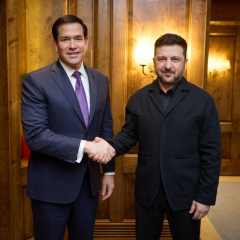
According to Главком: During a NATO summit in Ankara, U.S. President Donald Trump made a commitment to Ukrainian President Volodymyr Zelenskyy to produce Patriot interceptor missiles for Ukraine. The manufacturing is slated to take place in Germany or another European nation, with the finished systems to be transferred into Ukraine once the war ends. Experts caution that launching production could take at least a year.
Ukraine is currently facing a severe shortage of interceptor missiles. To effectively counter Russian ballistic missiles, the country would need roughly 2,400 interceptors annually. Yet, according to available data, Ukrainian forces managed to shoot down only four out of 54 Russian ballistic missiles launched this month. Russia produces between 700 and 800 Iskander and Kinzhal ballistic missiles each year, making it critical for Ukraine to find efficient solutions despite the shortfall.
Plans and Outlook
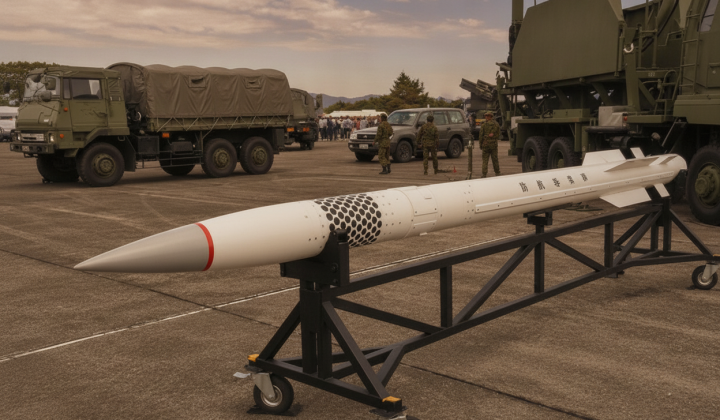
Trump has not yet discussed the production plan with Lockheed Martin or Raytheon. However, in 2024, Raytheon already reached an agreement with MBDA to manufacture GEM-T missiles for the Patriot PAC-2 system at German facilities. Initial deliveries of GEM-T missiles are expected in early 2027. Last year, Lockheed Martin produced just over 600 PAC-3 missiles, with plans to ramp up to 2,000 units per year by 2030. Meanwhile, a Ukrainian plant would only be capable of turning out 200 to 300 missiles annually.
Volodymyr Zelenskyy stated that, following agreements with Trump, Ukraine has secured the right to produce Patriot systems. However, experts warn that achieving the necessary production volumes will be extremely difficult, if not impossible.
“The impact will be very limited. I would be very surprised if production started in less than 12 months. In reality, I think it will take much longer,” said Fabian Hoffman, an expert at the Norwegian Institute for Defence Studies.
Ukraine is also exploring alternatives to the Patriot system, including the European Freya project developed by the Ukrainian company Fire Point, and the SAMP/T NG system being developed by the Eurosam consortium involving MBDA and Thales.
“The Freya project is a very risky bet. But if it works, the payoff will be huge,” believes Jack Watling, an expert at RUSI.
Serhiy Beskrestnov, an advisor to Ukraine’s Defense Minister, stated: 'I have disassembled spent PAC missiles from the Patriot system and seen exactly what they’re made of and how they’re put together. I can say with confidence: we can set up their production under a U.S. license. This is the best news. The main thing is to start the process as soon as possible.' He also stressed that 'the only problem is time. Everything could drag on for a year or more.'
This development underscores the urgency of bolstering Ukraine’s defense capabilities amid its ongoing conflict with Russia. Establishing Patriot interceptor production would mark a significant step in improving the country’s air defense effectiveness, though implementing these plans faces numerous hurdles. At the same time, exploring alternative systems like Freya and SAMP/T NG reflects Ukraine’s drive to find optimal security solutions under resource constraints.
The recent commitment by President Trump to enhance Ukraine's defense capabilities through the production of Patriot interceptors comes amid a broader strategy for collaborative missile manufacturing. This development aligns with joint efforts between the U.S. and European allies, aiming to bolster the region's security against ongoing threats. Understanding these partnerships is crucial as they may significantly impact Ukraine's ability to defend itself in the near future.

Read also