Unique Livonian Medieval Pilgrim Badge Unearthed in Finland

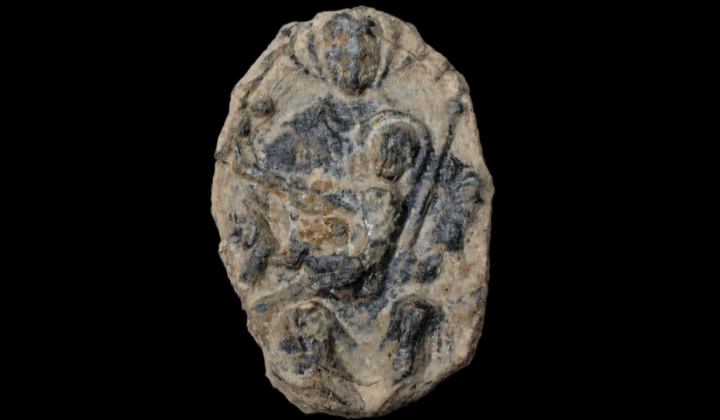
Medieval Pilgrim Badge Discovery in Finland
According to НВ — Техно: June 25, 9:00 PM
A medieval pilgrim badge, identified as originating from Livonia, has been discovered in Finland. The artifact was found on the Juvas farm field in Masku, located in southwestern Finland. Researcher Visa Immonen from the University of Bergen identified the object, with the findings published in the journal Fornvännen: Journal of Swedish Antiquarian Research. The badge dates to the late 13th or early 14th century.
This tin pilgrim badge measures approximately 3 by 2 centimeters. Its front side depicts the Virgin Mary holding the infant Christ, both figures adorned with halos. The reverse is blank, with only remnants of a fastening pin remaining. Initially resembling pilgrim badges from Rocamadour, France, this piece has distinct differences. In Rocamadour badges, Mary holds a scepter with a lily in her right hand, while in the Masku find, she holds it in her left-a gesture characteristic of Livonian pilgrim badges.
On Livonian badges, the Virgin Mary holds the scepter in her left hand, and the infant Christ holds a Greek cross. The inscription on Livonian badges includes the formula: 'Sign of Saint Mary for the remission of sins in Livonia.' Similar items are known to exist:
- two from Latvia,
- one from Sweden, and
- four from Germany.
All of these date to the late 13th or early 14th century.
Cultural Connections and Significance of the Find
Most scholars consider Riga the most likely destination for the pilgrim, as its local cathedral was dedicated to the Virgin Mary. The Juvas farm, where this badge was found, has left almost no trace in archaeological or written records. Only a single entry from 1416 is known, related to a donation to Turku Cathedral. This discovery may provide new insights into medieval pilgrimage practices and cultural connections between regions.
This find is important not only for the study of Finnish archaeology but also for understanding the role of pilgrimage in medieval Europe.
Analysis of similar artifacts can help better understand pilgrim routes, their religious beliefs, and connections between different regions. The discovery at Juvas farm could become a significant step in researching pilgrimage history, as it confirms the existence of cultural interconnections between Livonia and other parts of Europe during that period.

Read also