Pre-Aztec Altar with Evidence of Human Sacrifice Unearthed in Mexico

Grim Discovery: Archaeologists Uncover Pre-Aztec Altar Hinting at Human Sacrifice
According to НВ — Техно: July 21, 09:32
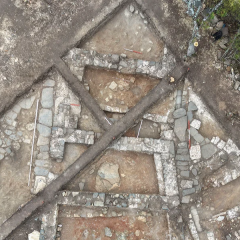
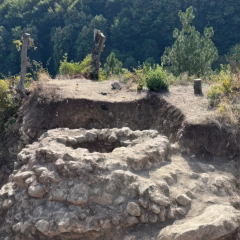
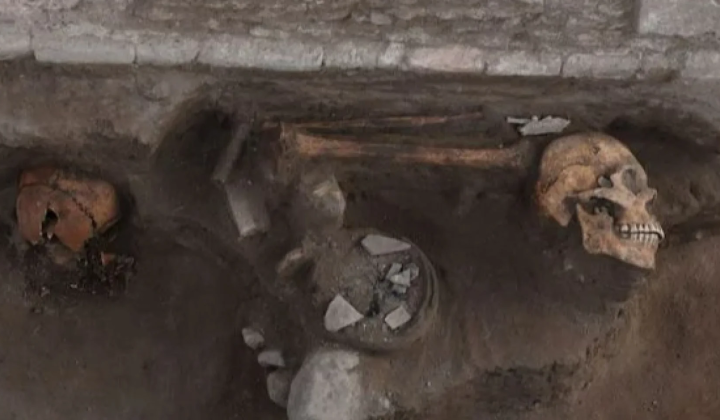
In the ancient Toltec capital of Tula-known in Nahuatl as Tollan-archaeologists in Mexico have uncovered a pre-Aztec altar, or momoztli, dating back to between 950 and 1100 CE. The excavation revealed human remains, including four skulls, one of which was still attached to cervical vertebrae. This suggests a possible ritual decapitation, pointing to sacrificial practices among the Toltecs, a civilization that thrived in central Mexico before the Aztecs rose to power.
Altar Description and Artifacts
The altar covers roughly one square meter and is built from three layers of stone:
- The base is made of quarry stone, likely andesite;
- The middle layer consists of modular blocks;
- The top layer is composed of river stones and basalt.
Two skulls were found near the altar’s base: one facing upward, the other oriented to the southwest. Beneath a layer of compacted plaster in front of the altar, the remaining two skulls were uncovered, along with what appear to be several human femurs and other artifacts.
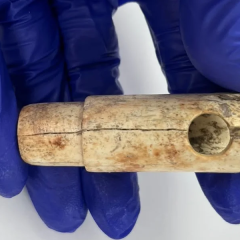
Additional finds include obsidian blades and ceramic vessels. Excavators also uncovered walls and floors, indicating the presence of a courtyard. The dig was conducted by researchers from Mexico’s National Institute of Anthropology and History (INAH) ahead of railway construction in the area.
“We know that on the outskirts of Tula, there were neighborhoods for the upper and middle classes, and farther out, areas for commoners.”
- Víctor Francisco Heredia Guillén
The researcher further noted, “Although metals were already being worked in the Postclassic period, we know that here, decapitations were still carried out with obsidian knives, leaving cut marks on the bones.”
This discovery significantly advances the study of ancient Toltec culture and its religious practices, opening new avenues for understanding their way of life.
The unearthing of a pre-Aztec altar in Tula highlights the complexity and richness of religious beliefs among Mexico’s ancient civilizations. The human remains and artifacts linked to ritual practices could help scholars better grasp the social structure and cultural traditions of the Toltecs. It also underscores the importance of archaeological research in preserving historical memory and expanding modern knowledge of ancient cultures. Ongoing excavations in the region may yield further insights into the lives and customs of the people who inhabited this area over a thousand years ago.

Read also