Skull Injuries Found on Neolithic Man in German Burial Site

Archaeological Digs in Burgenland
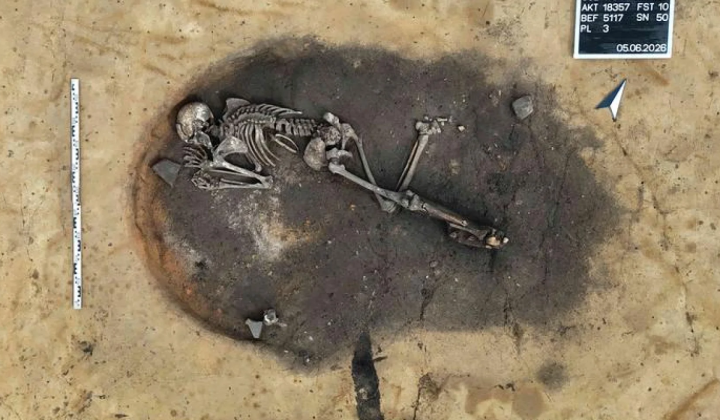
According to НВ — Техно: In the Burgenland district of Germany, a late Neolithic grave linked to the Corded Ware culture was uncovered during pre-construction surveys for the SuedOstLink power transmission line. The excavation was carried out by the State Office for Heritage Management and Archaeology of Saxony-Anhalt. This discovery dates back to approximately 2900–2050 BCE.
What the Excavators Uncovered
During the dig, archaeologists found the remains of a man around 25 years old, placed inside a two-chambered underground oven. The skeleton lay on its right side, facing south-a typical arrangement for burial customs of that era. Notably, the skull shows clear signs of trauma, sparking questions about how he died.
Currently, researchers are conducting lab tests on the bones and skull damage to determine the circumstances surrounding the young man's death. The area where the discovery was made has a history spanning roughly 6,000 years, including the Baalberg culture period, which lasted from 4000 to 3400 BCE.
This find is significant for studying the region's cultural heritage, as it reveals rituals and customs of people who lived thousands of years ago. A monumental burial mound-potentially reaching 15 meters in height-along with structures featuring triple walls and ceremonial ditches, points to complex social hierarchies and religious practices of the time. Investigations are ongoing, and researchers hope to gain deeper insights into the Corded Ware culture and its people.
The unearthed grave underscores the importance of archaeological research in understanding the social and cultural practices of Neolithic communities. Discoveries like this not only expand our knowledge of ancient civilizations but may also influence future studies and heritage preservation in the area. By grasping the rituals and traditions of past eras, modern society can better appreciate its roots and cultural identity.
This recent discovery in Burgenland adds to the growing body of knowledge about Neolithic burial practices, similar to the recent findings in Slovakia, where 77 headless bodies were discovered in a Neolithic ditch. Such archaeological sites provide valuable insights into the social and cultural dynamics of ancient communities, prompting further exploration into their rituals and customs.

Read also