Humanoid Robots Battle It Out in a Football Match in South Korea

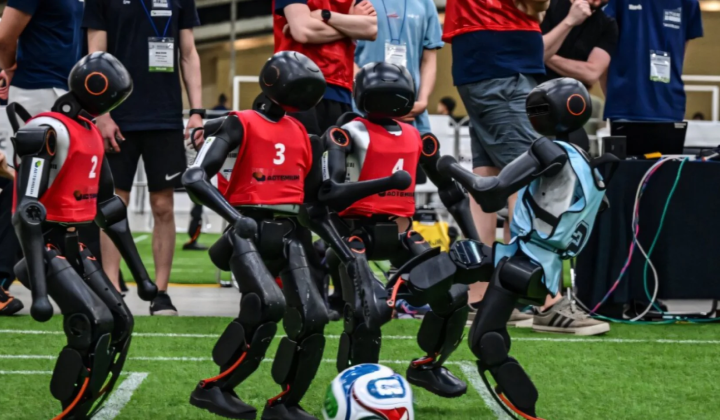
South Korea Hosts Humanoid Robot Football Match
According to НВ — Техно: On July 3, 2026, South Korea staged a humanoid robot football match as part of the RoboCup tournament. During this competition, robots dressed in red and blue jerseys play on compact fields and make decisions entirely on their own, without any referee intervention-except to stop and restart the game. Founded in Japan in 1997, RoboCup has an ambitious goal: by 2050, it aims to develop a robot team capable of defeating the FIFA World Cup champions.
Reactions from Participants and Experts
The match featured teams showcasing their autonomous control and tactical thinking abilities. Cho Woo-chul, a 45-year-old construction company employee who cheered for the blue team, shared his impressions:
'I had never seen robots play football before. It was thrilling and a lot of fun.' - Cho Woo-chul
Visitor Kim Mi-hong, aged 60, noted that robot athletes could attract devoted fans in the future.
Thomas Röfer, spokesperson for the German team B-Human from the German Research Center for Artificial Intelligence, expressed hope that robots could defeat humans by 2050, highlighting progress in artificial intelligence in sports. Shim In-wook, a professor of intelligent mobility engineering at Inha University, also pointed out the potential of robots in football:
'At the FIFA World Cup, you might have one Lionel Messi. But once you create one robot Messi, you can make thousands more.' - Shim In-wook
The RoboCup tournament is not limited to football; it has expanded into rescue, domestic, and industrial robotics. The goal for 2050 is to build a fully autonomous robot team capable of succeeding on the global football stage.
The RoboCup competition highlights the rapid advancement of artificial intelligence and robotics technologies, which are increasingly integrated into everyday life. Successes in creating autonomous systems could have far-reaching implications not only for sports but also for fields such as medicine, logistics, and rescue services. The tournament not only boosts interest in robotics but also sparks discussions about the ethical and social aspects of using artificial intelligence in society.

Read also