Remains of Ksiaz Castle's former owners found in another family's mausoleum in Poland

A Wartime Mystery
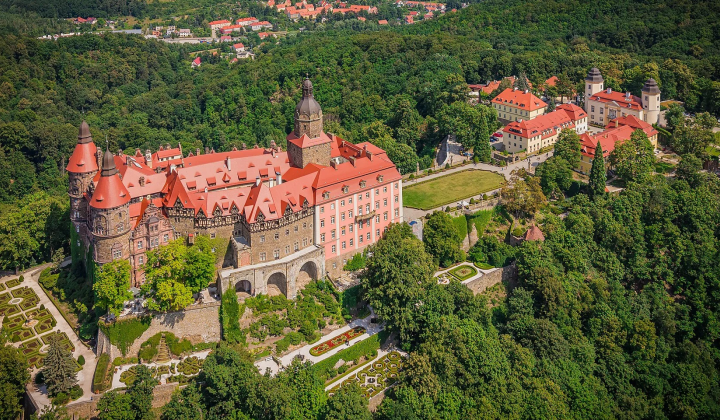
According to НВ — Техно: At a municipal cemetery in Świebodzice, Lower Silesia, researchers have uncovered 25 coffins and sarcophagi inside the von Kramst family mausoleum. Ksiaz Castle is one of Lower Silesia's most recognizable historic landmarks. The burials turned out to hold members of the von Hochberg dynasty, the historic owners of Książ Castle. According to Dr. Kamil Pawłowski of the Wrocław Provincial Heritage Protection Office's Wałbrzych branch, the interments date from the 18th and 19th centuries. Preliminary identification has confirmed eight von Hochberg family members, among them Konrad Ernst Maximilian von Hochberg, the figure behind the castle's baroque remodeling.
Why It Matters
The von Hochberg remains are placed in the upper section of the mausoleum. Exactly how they got there remains unclear; Mateusz Mykityszyn has suggested they may have been moved in early May 1945, though he stresses this is only a hypothesis. Dorota Karolewska has underlined the discovery's significance, noting that Książ Castle is undergoing its most extensive restoration in half a century, with work focused on the baroque wing created by Konrad Ernst Maximilian von Hochberg.
"This is a historic moment for all of Lower Silesia," Mykityszyn said.
The research team intends to carry out osteological and paleopathological studies to learn more about how these aristocrats lived and what health issues they suffered. Teeth and dental calculus could reveal details about diet and oral microbiome, while isotope analysis may help reconstruct eating habits and where the deceased spent their lives. If genetic material survives, DNA testing is possible, and well-preserved skulls might enable partial facial reconstructions.
Separately, at Cmielew Castle in Świętokrzyskie Province, a stone-carved board game has been found, likely from the 16th century. The playing surface is cut into a sandstone slab roughly 32 cm long and wide, with a thickness ranging from 6 to 12 cm; the game board itself measures around 13.5 cm. Archaeologist Tomasz Olszacki believes the game could have been made by the castle's builders.
These findings matter not only for Lower Silesian history but also for the broader understanding of Poland's cultural heritage. The remains may offer fresh insight into the social structures and everyday lives of Polish nobles in centuries past. As restoration of Książ Castle continues, this discovery could become a key chapter in rebuilding public memory of the von Hochbergs and their impact on the region.
The recent discovery at the von Kramst mausoleum highlights the ongoing exploration of historical sites in Poland. In a similar vein, researchers have uncovered a sanctuary in the Czech Republic that predates Stonehenge by over a millennium. This remarkable find sheds light on ancient rituals and societal structures, making it a significant addition to our understanding of prehistoric cultures. To learn more about this fascinating archaeological site, visit the details of this ancient sanctuary.

Read also