US Military Tests FD-1 Drone Interceptor in Poland During Operation Bold Fury

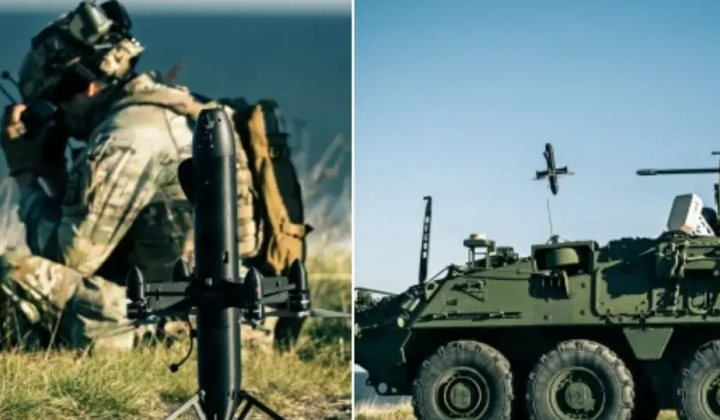
FD-1 Drone Interceptor Undergoes Field Trials
According to НВ — Техно: In November 2026, the US Army conducted field trials of the FD-1 drone interceptor developed by Mountain Horse Solutions on Polish soil. These exercises were part of Operation Bold Fury, designed to counter mass drone attacks without relying on costly air defense missile systems. The testing highlights ongoing US efforts to enhance defenses against unmanned aerial threats.
The trials took place from November 2 to 6 at the Ustka training ground in northern Poland and involved soldiers from the Tactical Integration and Employment (TIE) battery of the 5th Battalion, 4th Air Defense Artillery Regiment. Manufactured by a subsidiary of Global Ordnance, the FD-1 is a compact first-person-view (FPV) drone intended for intercepting airborne targets and striking ground objectives. It combines FPV piloting with Pixel-Lock visual tracking technology, boosting mission accuracy and effectiveness.
Performance Specs and Operator Training
The FD-1 drone can reach speeds exceeding 265 km/h and can be deployed within two minutes. Each unit is managed by a single operator, emphasizing simplicity and responsiveness in combat scenarios. Operation Bold Fury also focused on training and certifying FPV drone operators without prior experience, underscoring the military’s commitment to preparing personnel for emerging technologies.
Additionally, at the 2026 Future Forces Forum in Prague, Czech company STV Group unveiled the FPV-NG multirotor drone. Notably free of Chinese components, the FPV-NG is designed to fulfill five operational roles: strike, reconnaissance, communications relay, electronic warfare, and hybrid missions.
- Strike
- Reconnaissance
- Communications relay
- Electronic warfare
- Combined missions
The FPV-NG measures between 10 and 13 inches, weighs 2.5 kg, and can carry a payload up to 6 kg. It achieves top speeds of 150 km/h and can sustain flights of at least 30 minutes when carrying a 2 kg payload.
A July 2026 US Congressional report outlined various countermeasures against small unmanned aerial systems, including kinetic interceptors, electronic warfare tools, and directed energy weapons. These strategies highlight the increasing role of innovative technologies in modern military operations and reflect the US’s proactive stance in addressing drone-related threats.
Testing the FD-1 drone interceptor represents a broader global shift toward enhancing military readiness and integrating advanced defense technologies. - Unknown Source
Improving air defense capabilities through unmanned systems addresses the growing challenge posed by drones. Meanwhile, the development of new platforms like the FPV-NG signals intensifying competition in military drone technology, potentially influencing strategic dynamics in the region.
In addition to the advancements showcased in the recent US military trials, the introduction of the versatile FPV-NG drone by STV Group highlights the growing emphasis on innovative drone technologies. This multirotor UAV, designed for multiple operational roles without reliance on foreign components, represents a significant step in enhancing aerial capabilities in modern warfare.

Read also