Deep-Sea Coral Named After Chewbacca Discovered in the Pacific Ocean

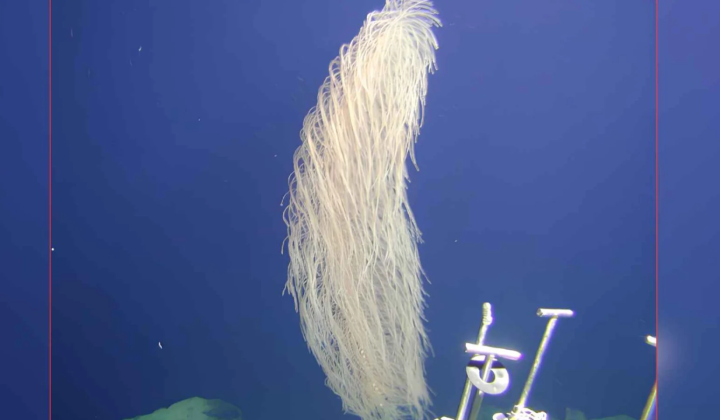
A New Coral Species Gets a Star Wars-Inspired Name
According to НВ — Техно: On June 7 at 4:30 PM, an international team of scientists announced the discovery of a new deep-sea coral species, which they named Chewbacca. The coral was found in the Pacific Ocean, specifically near Molokai and within the Mariana Trench. The study that led to this discovery identified the tropical western Hawaiian region as an evolutionary hotspot for the family of gorgonians, also known as horny corals.
Chewbacca Coral Characteristics
The Chewbacca coral, an octocoral with eight tentacles, boasts impressive dimensions: a colony near Molokai reaches 120 centimeters in height, while a specimen from the Mariana Trench stands half a meter tall with branches extending 40 centimeters in length.
Les Watling noted that while reviewing underwater footage, the coral's silhouette instantly reminded him of the legendary hairy co-pilot of Han Solo.
The research was conducted by scientists from the Chinese Academy of Sciences-Yu Xu, Zifeng Zhan, and Kuidong Xu-alongside colleagues from the University of Hawaii at Manoa. The coral samples were retrieved during a 2016 NOAA expedition that employed remotely operated underwater vehicles. The mission mapped 28,000 square kilometers of the seafloor and carried out 22 dives at depths ranging from 250 to nearly 6,000 meters.
Currently, the scientific community recognizes 14 species of the genus Iridogorgia, with 10 of those documented in the tropical western Pacific. Earlier research in 2021 described three new species discovered on local seamounts. The discovery of the Chewbacca coral represents a significant contribution to the study of underwater ecosystems and coral evolutionary biology.
This finding underscores the importance of exploring marine ecosystems that remain poorly understood, especially at great depths. Understanding the evolutionary processes at play in these environments could provide valuable insights for preserving marine biodiversity amid global climate change and human activity. The discovery may also pave the way for further investigation into other, yet-to-be-found marine species that could hold significance for science and medicine.
This discovery adds to the growing body of research highlighting the rich biodiversity of deep-sea environments. For instance, a recent study by Chinese researchers uncovered life forms thriving nearly 10 kilometers deep, showcasing the remarkable adaptability of marine organisms. To learn more about these extraordinary findings, visit the exploration of deep-sea life.

Read also