Live Grenade Found in Repatriated Soldier's Body Forces Chernivtsi Morgue Evacuation

Incident During Forensic Examination
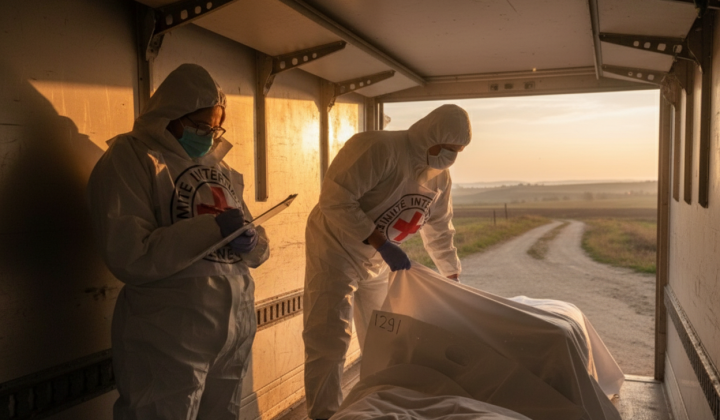
According to Главком: A live grenade was discovered inside the body of a fallen Ukrainian soldier during a forensic examination in Chernivtsi. The soldier's remains had been repatriated from the Russian Federation as part of a prisoner exchange. The incident occurred at the morgue when a medical examiner, beginning an autopsy, found the unexploded ordnance embedded under the skin of the right thigh. Medical expert Viktor Bachynskyi stated the grenade had entered the body through the abdominal cavity.
Pyrotechnics experts and law enforcement were called to the scene, evacuating everyone from the morgue building and cordoning off the surrounding area for safety. Sappers later removed and safely detonated the explosive device at a testing range. Viktor Bachynskyi noted,
"It was taken to a range and blown up there; otherwise, it could have exploded in the morgue. This is a very serious matter, but it happened that they did not immediately identify that such an explosive device was inside the deceased's body."
This alarming discovery highlights the hidden dangers that can accompany the return of war casualties, even in a controlled medical environment.
Prisoner Exchanges Provide Context
This event follows recent prisoner swaps between Ukraine and Russia on March 5th and 6th. On March 5th, a 200-for-200 exchange saw 200 Ukrainians returned. The following day, March 6th, another exchange secured the release of 300 Ukrainian defenders and two civilians. Those freed on March 6th had fought on various fronts, including:
- Donetsk
- Luhansk
- Kharkiv
- Zaporizhzhia
- Kherson
Among those liberated were officers, soldiers, and sergeants. The youngest freed prisoner was 26 years old, the oldest was 60.
This case underscores the persistent dangers of warfare, even after soldiers are returned. The presence of unexploded ordnance in the deceased indicates that the consequences of war extend beyond physical wounds to pose direct safety risks for medical personnel. Such incidents may prompt a review of body examination protocols during repatriation. Furthermore, the ongoing prisoner exchanges point to the continuing conflict and its profound human toll, a grim reality amid the sustained fighting in Ukraine.

Read also