Ukraine, Without a Navy, Has Destroyed 30% of Russia's Black Sea Fleet, Retired General Says

Analysis of Modern Warfare
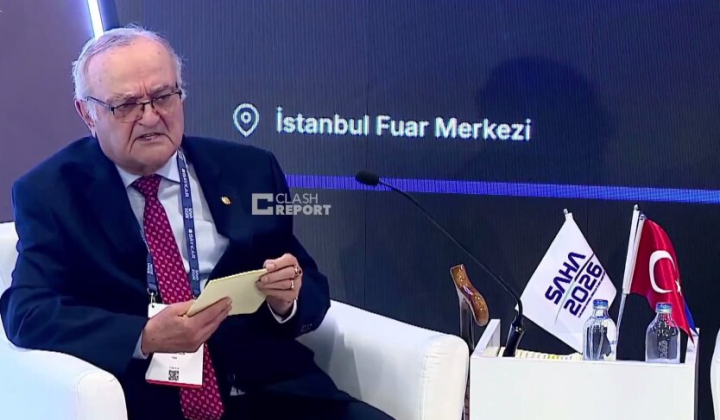
According to ХВИЛЯ: Retired Turkish general Ergin Saygun has offered a striking assessment of contemporary combat, using the Russia-Ukraine war as a key case study. He pointed out that, despite having no naval forces of its own, Ukraine has managed to eliminate roughly 30% of Russia's Black Sea Fleet-including the flagship 'Moskva'. According to the general, these achievements were made possible through the effective deployment of drones and missiles.
The Role of Drones
Saygun presented impressive figures on the scale of drone usage during the conflict. In certain months, the number of drones deployed reached 120,000 units, while Ukraine's annual drone production capacity now stands between 5 and 7 million units.
“Look at Ukraine-as you know, it effectively has no navy. Yet they have destroyed about 30% of Russia's Black Sea Fleet using drones and missiles. Among the vessels lost was the 'Moskva', the fleet's flagship. That is the scale of this transformation,” Ergin Saygun emphasized.
He also noted that the European Union is actively developing an electronic shield to defend against Russian missiles and drones, aiming to neutralize them through electronic means. “During the Russia-Ukraine war, the number of drones used in some months reached 120,000 units. Ukraine's annual drone production is between 5 and 7 million units. Now think: how do you defend against that? You can't fire Patriot missiles at every single drone,” the general remarked.
Saygun further highlighted a shift in the concept of ground warfare. “If you set aside Ukraine, how many major ground offensives have you heard about recently? Hardly any. Everyone is just launching missile strikes at each other. A war lasts exactly as long as your missile supplies hold out,” he added.
The general stressed that modern conflicts demand entirely new approaches to military training. “It is no longer enough to simply produce infantry weapons and similar systems-today, completely different capabilities are required,” Ergin Saygun concluded.
Saygun's analysis underscores the critical need to adapt military strategies to emerging conditions, particularly the growing role of unmanned technologies in contemporary conflicts. The transformation in warfare he described could have a profound impact on future military doctrine, not only in Ukraine but on a global scale. The situation in Ukraine may serve as a lesson for other nations seeking to modernize their armed forces in the face of evolving threats. The importance of novel approaches to military preparation and technology is becoming increasingly urgent in today's conflict environments.
The ongoing conflict has drawn significant attention from military analysts worldwide. For instance, Petraeus describes the Ukraine war as a testing ground for future military strategies, highlighting the unprecedented losses Russia has faced. This evolving warfare paradigm, marked by the extensive use of drones and missiles, raises questions about traditional combat methods and their effectiveness in modern conflicts.

Read also