Over 100 Historians from Ukraine and Poland Join Forces to Counter Russian Disinformation

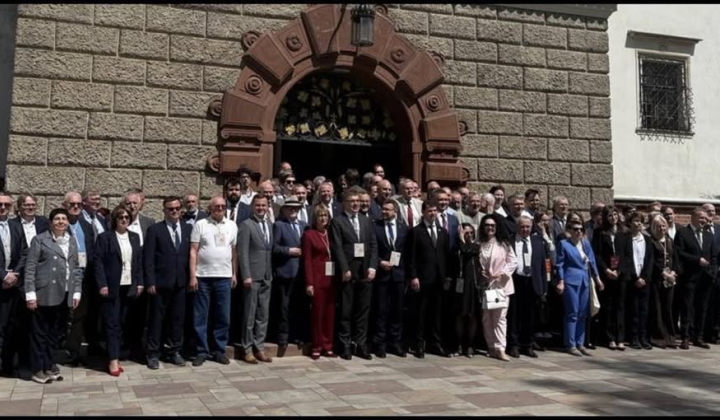
Polish-Ukrainian Congress of Historians Launches
According to МЗС: Deputy Foreign Minister of Ukraine Oleksandr Mishchenko attended the opening of the Polish-Ukrainian Congress of Historians, held from May 6 to 8 at the castle in Baranów Sandomierski, Poland. The event was organized by the Mieroszewski Centre, led by Łukasz Adamski, in partnership with the Ukrainian Institute of National Memory, headed by Oleksandr Alfiorov. The gathering brought together over 100 leading historians from both nations.
High-Level Officials in Attendance
The opening ceremony also featured several senior officials:
- Paweł Kowal, Chair of the Foreign Affairs Committee of the Polish Sejm and the Polish government's plenipotentiary for Ukraine's reconstruction;
- Marek Krawczyk, Deputy Minister of Culture and National Heritage of Poland;
- Vasyl Bodnar, Ukraine's Ambassador to Poland;
- Piotr Łukasiewicz, Poland's Chargé d'Affaires in Ukraine;
- Karol Polejowski, Deputy Head of Poland's Institute of National Remembrance.
In his speech, Oleksandr Mishchenko stressed the value of historical dialogue between the two countries. He stated that
“history should remain a domain for professional scholarly debate, while the role of politicians is to create the right conditions for it.”
The Ukrainian deputy foreign minister pointed out that Russia seeks to exploit historical topics as a tool for spreading disinformation and fueling tensions between Ukrainian and Polish societies.
“Joint work on difficult chapters of history is a key part of countering Russian hybrid threats and strengthening our common security,”
he added.
Over the course of the congress, participants will explore theoretical aspects of historical memory and various stages of Ukrainian-Polish relations, with the goal of deepening collaboration between scholars from both countries.
This congress marks a significant milestone in bilateral ties between Ukraine and Poland, especially amid current security challenges and information warfare. Scientific cooperation can help not only improve mutual understanding of each nation's history but also reinforce political and social bonds in the face of external threats. Historians' dialogue may also help resolve longstanding historical disputes and build trust, which is vital for regional stability.

Read also