10 Common Ukrainian Language Traps: From Dates to Surnames and Surzhyk

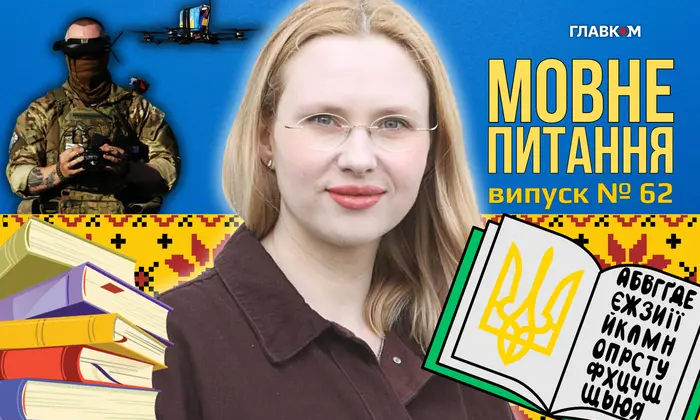
Language Matters Section
According to Главком: This edition of 'Language Matters' on the Glavcom website addresses ten reader questions about Ukrainian language usage. The topics include suffixes, date formatting, capitalization of surnames, the abbreviation PIB, and words like 'vkladen', 'layaty', and 'vidvichaty'. Spelling of 'Pennsylvania' and 'palazzo' is also examined, along with the greeting for a 'past' birthday.
Reader Inquiries
Oleh Kolodiy asked about writing dates: 'I heard that it's correct to write 03 June instead of 3 June. Is that true?' According to DSTU 4163:2020, documents require a verbal-numeric format with a leading zero, confirming his suspicion.
Tamara from Mykolaiv wondered why surnames are now written in all caps, like 'GERASYMENKO Nadiya'. The standard DSTU 4163:2020 mandates capital letters for surnames in official documents.
Yuliia Mazurok asked how to abbreviate 'surname, first name, patronymic'. The correct initial abbreviation is PIB, written without periods, following modern language norms.
Andriy Kharytonenko raised the word 'vkladen', suspecting 'vkladysh' is a Russianism. He noted that 'vkladka' exists in Russian but only 'vkladka' is used in Ukrainian. The word 'vkladen' has been recorded in dictionaries since 1928, confirming its validity.
Mykola from Kyiv questioned the phrase 'to walk on the edge of a razor', pointing out that 'razor' and 'blade' are redundant. Indeed, this idiom is a pleonasm.
Mykhailo Prysiazhniuk noted that 'layaty' meaning 'to bark' seems like a Russianism, referencing a new song by Volodymyr Dantes with 'layky'. However, this word appears in works by Taras Shevchenko and Ivan Franko, showing its Ukrainian usage.
Oleh Svitliak from Kyiv Oblast heard 'otvityty' and considered it a corruption. The word 'vidvichaty' or 'vidvityty' is rare but appears in works by H. Kvitka-Osnovianenko and M. Nomys. The form 'otvityty' is a phonetic surzhykism.
Serhiy Osoka compared spellings of 'Pennsylvania' and 'Pensylvania'. In text corpora, 'Pennsylvania' appears 2,229 times versus 1,793 for 'Pensylvania'. The online dictionary of the NASU Institute of Ukrainian Language only lists 'Pennsylvania' and 'Pennsylvanian', suggesting the first variant is standard.
Yana Holovko asked about the pants style 'palazzo', questioning if it should be spelled with one 'z' like 'pizza'. The term comes from Italian, where it is written without doubling, confirming the correct spelling.
Finally, Volodymyr Polishchuk raised the issue of greeting someone with 'past birthday', a topic that has sparked discussion. This question requires careful consideration due to its ambiguous usage.
Thus, the 'Language Matters' section continues to provide clear, well-founded answers to readers' pressing questions about Ukrainian, helping them understand and use the language correctly. Readers can send their questions to [email protected] with the subject line 'Language Matters'.
This column offers visitors a chance to get precise, evidence-based responses to complex language issues. This is especially relevant as language norms evolve and as Ukrainian society shows growing interest in linguistic culture. The questions covered here highlight the diversity of language phenomena and the need for conscious usage in daily life.
Understanding the nuances of language is crucial for effective communication. For instance, knowing when to use punctuation correctly can greatly enhance clarity. A recent discussion highlights words that never require a comma, which complements the insights shared in our latest edition on common Ukrainian language pitfalls. This connection underscores the importance of mastering language rules to avoid misunderstandings in both formal and informal contexts.

Read also