Egyptian Desert Fossil Find: Shark Teeth From the Age of Dinosaurs

Shark Fossils Discovered on Egypt's Abu Tartur Plateau
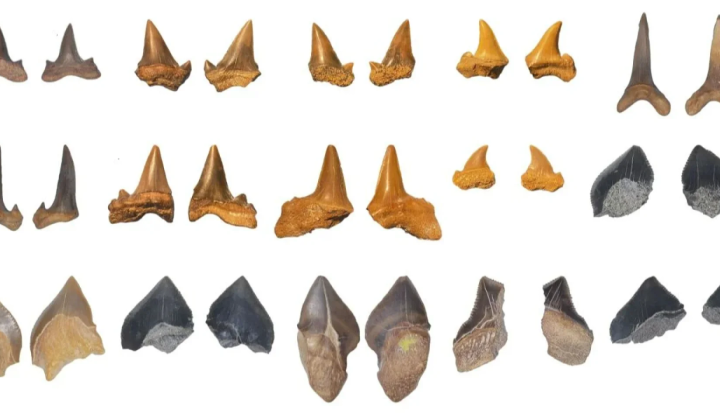
According to НВ — Техно: Fresh finds from Egypt's Abu Tartur Plateau have turned up fossilized shark teeth that point to a rich marine ecosystem in the Cretaceous Period. At least seven shark species are now represented in the Duwi Formation, and five of these are new to Abu Tartur. One of them, Scapanorhynchus cf. raphiodon, may mark the first African occurrence of its kind. The research was led by paleontologist Tarek Yassin from Cairo University.
These discoveries support the view that much of Egypt's desert was once covered by a sea lying along the northern edge of Africa. In earlier work, Yassin and his colleagues had identified two shark species from a handful of teeth. The new material - 14 additional shark teeth - adds five species previously unrecognized at the site.
The Shark Species Identified
The identified shark species are:
- Cretalamna cf. maroccana
- Scapanorhynchus cf. raphiodon
- Serratolamna cf. serrata
- Squalicorax bassanii
- Squalicorax pristodontus
All five are new to Abu Tartur, while two - Serratolamna cf. serrata and Squalicorax bassanii - are new to Egypt. The Scapanorhynchus cf. raphiodon fossil could be the first recorded in Africa and the most recent known occurrence of that shark species in the paleontological record.
Yassin's team noted that "taken together, this suite of finds indicates a nutrient-enriched, highly productive marine ecosystem along the phosphogenic shelf margin."
The researchers added that "the presence of Squalicorax may reflect coastal or inner-shelf influences, while the occurrence of Scapanorhynchus points to deeper conditions on the outer shelf and slope."
In a separate discovery, a whale fall site on the Indian Ocean floor dates back as far as 5.3 million years. Located in the Diamantina Zone, a rift valley formed when Australia and Antarctica split apart, the site extends 1,200 kilometers along the seabed. It holds 476 fossilized mammal remains and five actively decomposing whale carcasses, the deepest of which rests at 6,789 meters.
Together, the Abu Tartur fossils and the Indian Ocean whale fall site broaden our picture of ancient marine worlds and the conditions that shaped them.

Read also