A 5-Million-Year-Old Whale Graveyard Discovered in the Indian Ocean

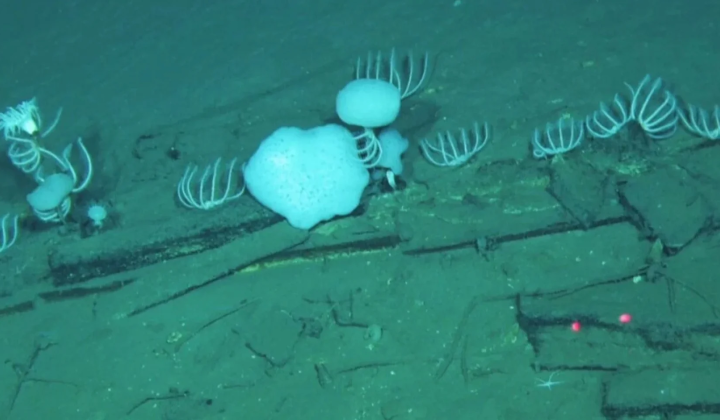
Massive Deep-Sea Whale Cemetery Unearthed
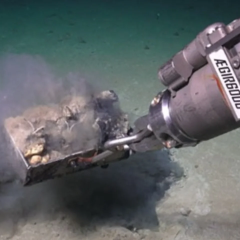
According to НВ — Техно: Scientists have uncovered a vast underwater whale graveyard in the Indian Ocean, estimated to be 5 million years old. Stretching across 1,200 kilometers of seafloor in the Diamantina Zone, this site contains 476 fossilized mammal remains alongside five actively decomposing whale carcasses. The deepest carcass lies at a staggering depth of 6,789 meters.
The Diamantina Zone is a rift valley formed by the tectonic separation of Australia and Antarctica. Most of the recovered bones belong to deep-diving beaked whales, their skulls coated in iron-manganese oxides. Researchers have identified 35 taxonomic groups of living organisms near the carcasses, though the majority remain unclassified.
New Discoveries and Their Significance
Among the findings, a new extinct whale species has been identified and named Pterocetus diamantinae. The study results were published in the journal Nature. Professor Xiaotong Peng of the Institute of Deep-Sea Science and Engineering (China) commented:
“Finding this giant whale graveyard was a complete surprise.” - Xiaotong Peng
Analysis of the collected samples is ongoing, and experts believe similar necropolises may exist in other whale habitats, such as off the coasts of South Africa and the Iberian Peninsula. Stephen Godfrey, curator of paleontology at the Calvert Marine Museum in Maryland, noted:
“Ironically, beaked whales seem rare and elusive in life. Here, after death, they are relatively abundant because the skulls of male beaked whales are very densely ossified and, as a result, survive biological and chemical degradation.” - Stephen Godfrey
The discovery of such a large whale graveyard holds significance not only for paleontology but also for understanding the ecosystems in which these mammals thrived. The research could provide new insights into whale evolution and their relationship with other marine organisms. It also highlights the importance of preserving marine ecosystems, as similar finds may emerge in other parts of the world, opening up fresh avenues for scientific exploration in this field.
In a similar vein of remarkable paleontological discoveries, researchers recently unearthed a massive dinosaur tracksite in China, featuring over 5,000 footprints. These findings not only shed light on the past ecosystems but also highlight the significance of fossil evidence in understanding ancient life forms and their behaviors.

Read also