A 1.2-Meter Robot Begins Assisting ALS Patients in Italy

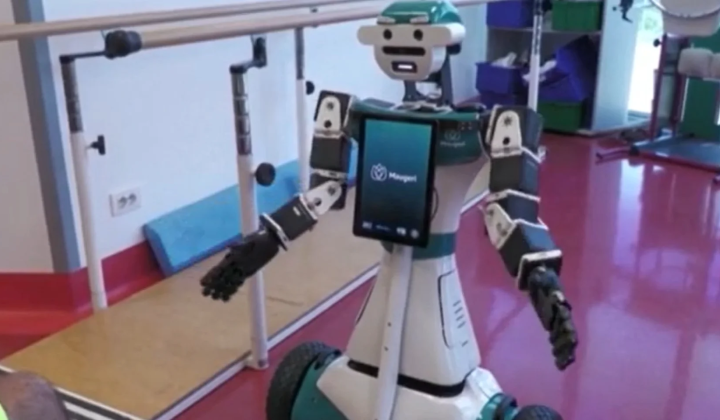
Testing the Alter-Ego Robot
According to НВ — Техно: In an Italian hospital, a 1.2-meter-tall robot named Alter-Ego is undergoing trials to support patients suffering from amyotrophic lateral sclerosis (ALS). This initiative is a collaboration between the Italian Institute of Technology and the University of Pisa. Trials kicked off in April, with the robot currently being operated remotely. Starting in July 2023, Alter-Ego is expected to function autonomously.
One of the patients participating in the study is 31-year-old Daniel Senna. He can communicate his pain level through a screen attached to the robot's chest. Neurologist Raquel Piras noted that, for now, delegating tasks like administering pills to the robot is not being considered, especially as the neurodegenerative disease progresses.
Outlook and Innovations
Project member Christian Lunetta shared initial concerns about potential negative reactions from patients:
'At first, we feared the patient might have a negative response.' - Christian Lunetta
However, he also emphasized the team's satisfaction with the results, as the robot was designed to spark curiosity. 'Its movements, or at least its functions, open up a wide range of potential applications,' Lunetta added.
Beyond the Alter-Ego robot, the research also highlights a lightweight robotic knee device weighing 0.96 kilograms. Training with this device lasted six weeks, and participants were able to stand up from a chair independently. These technological advancements are helping improve the quality of life for individuals with disabilities, marking a significant step forward in medicine.
The Alter-Ego experiment represents notable progress in the use of robotic technology in medical practice. It opens new possibilities not only for ALS patients but also for others with disabilities. Technologies that integrate communication features can greatly enhance interactions between patients and medical staff, which is crucial for delivering quality healthcare and support.
As advancements in robotics continue to unfold, the recent trial of the Alter-Ego robot in Italy is not the only example of innovative technology making waves in diverse environments. For instance, a humanoid robot successfully scaling a volcano in the Himalayas demonstrates the versatility and potential of robotic systems in challenging conditions. Such developments not only enhance patient care but also suggest broader applications in various fields, showcasing the evolving relationship between technology and human capability.

Read also