Unique 6th Century BCE Burial Complex with Chariot Unearthed in Italy

Archaeological Discovery in the Picene Region
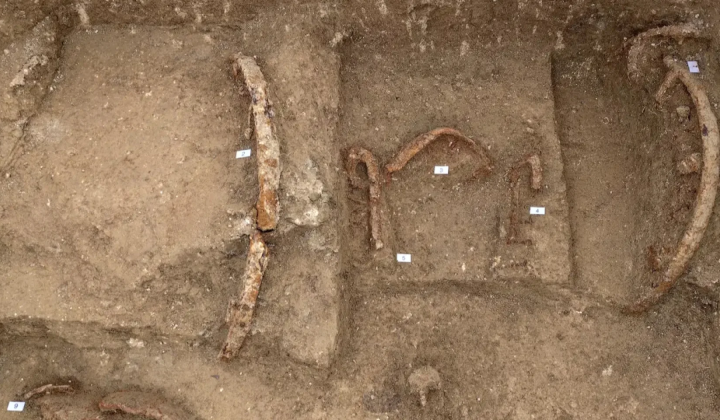
According to НВ — Техно: In the Picene region of Italy, archaeologists have uncovered a distinctive 6th-century BCE burial complex featuring a chariot (currus) interment and a female grave. Positioned at the center of a monumental circle, the site is enclosed by a round palisade-a typical feature of such archaeological finds. Excavations are being led by archaeologist Stefano Finocchi, who noted that this discovery helps reconstruct the original context of a warrior’s tomb found in 2020, placing it within a broader funerary complex.
Artifacts Found in the Burial
The chariot burial contained remnants of the currus, along with grave goods including a helmet, an axe, and other weapons. This find is part of the Picene funerary complex, offering new insights into the structure of the elites who governed the major Picene center. Among the items in the chariot tomb were several large bronze vessels sealed with ceramic lids, which held organic material, such as animal remains and pottery fragments.
Adjacent to the chariot burial, a female grave was discovered containing traces of organic materials, including textiles and footwear. The woman’s clothing and shroud were fastened with multiple fibulae, one of which-a large amber fibula-was found behind the deceased’s head. Stefano Finocchi remarked that the complex’s monumentality, the quality of the funerary inventory, and certain artifacts still under study outline the profile of ruling groups connected to a dense network of relationships across the central Adriatic.
The San Giuliano necropolis, where these finds were made, lies roughly 70 kilometers northwest of Rome. In June 2025, another undisturbed tomb was uncovered at this necropolis, highlighting the significant archaeological potential of the area.
This discovery underscores the importance of the Picene region in Italian history, providing a deeper understanding of the social structure and burial traditions of its elites. The excavations also point to the possibility of further finds that could illuminate connections between different cultures in the central Adriatic, particularly relevant for studying ancient civilizations. Archaeological work in this area may open new horizons for comprehending the development of societies that thrived thousands of years ago.
This remarkable discovery in the Picene region adds to Italy's rich archaeological narrative, echoing recent finds like a recently uncovered Etruscan tomb that remains untouched by looters. Such sites not only enhance our understanding of ancient burial practices but also reveal the intricate social structures of their time.

Read also