Roman Military Camp with Human Remains and Weapons Unearthed in Slovakia

Discovery of a Roman Military Camp in Slovakia
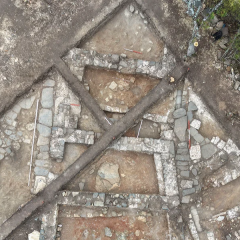
According to НВ — Техно: Archaeologists have uncovered a Roman military camp spanning 7.4 hectares near the town of Šurany in southwestern Slovakia. Dating to the latter half of the 2nd century AD-the era of Emperor Marcus Aurelius and the Marcomannic Wars-this site emerged during extensive rescue excavations tied to a future industrial park, where researchers surveyed over 150 hectares of land. Among all findings from this area, the camp stands out as the most significant.
Key Finds and Their Implications
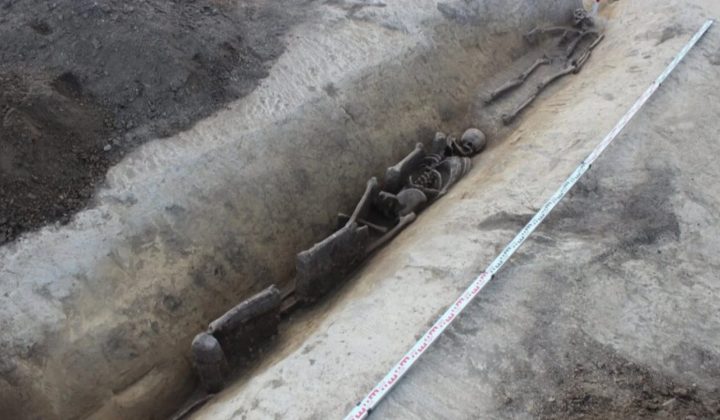
The excavations revealed ramparts, five gates, human remains, weapons, armor, coins, and traces of soldiers' footwear. Both complete skeletons and scattered bones were discovered in defensive ditches, storage pits, wells, and graves. According to Matej Ruttkay, director of the Archaeological Institute of the Slovak Academy of Sciences:
“This is the first camp of its kind found in the Nitra region.”
Unlike typical rectangular Roman military installations, this camp features an irregular, non-standard layout.
One of the camp’s entrances was protected by a clavicula-a curved ditch and rampart forcing approaching individuals to change direction while staying exposed to defenders-and this is the first such structure ever found in Slovakia. The project’s scale allowed researchers to examine nearly the entire camp, a rare feat for Roman camps typically identified only through aerial photography or geophysical surveys.
Among the recovered items are:
- spear and arrowheads
- helmet fragments
- legionary fibulae
- pieces of plate and scale armor
- coins, iron nails from caligae soles, an axe, a cutting tool, and a gaming die
These artifacts raise pressing questions about why such valuable military equipment was left near the bodies. Preliminary theories suggest many of the deceased could be Roman soldiers, though this awaits confirmation through biological analysis.
Researchers hope genetic, anthropological, and isotopic studies will clarify:
- the origins of the individuals
- their health status
- dietary patterns
- biological relationships
Analysis of injuries may also help determine causes of death, including potential combat wounds or disease. The Šurany discovery fills a key geographic gap in evidence of Roman operations north of the Danube, making it especially valuable for historical scholarship.
This find significantly advances understanding of Roman military history and its influence on modern-day Slovakia. It not only confirms the presence of Roman military camps in the region but also opens new avenues for further research. The studied artifacts could illuminate social, cultural, and military aspects of Roman legionaries’ lives, deepening knowledge of interactions between the Roman Empire and local populations.

Read also