Yale Engineers Develop Artificial Leaf That Turns Sunlight Into Fuel

Breakthrough in Photosynthesis Technology: Yale's Artificial Leaf Device
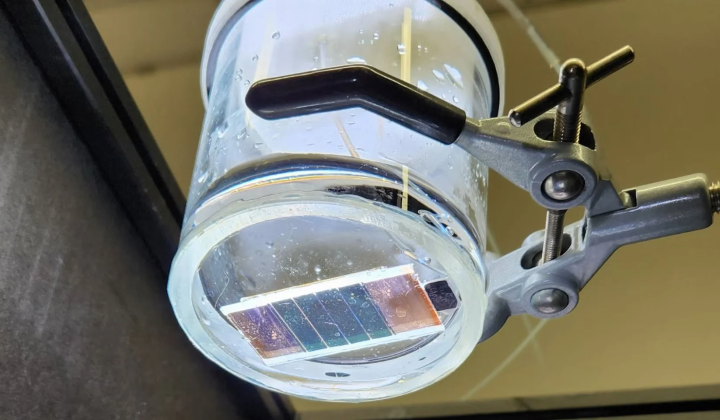
According to НВ — Техно: A groundbreaking artificial leaf device, developed by Yale University in partnership with a consortium of researchers, was unveiled on June 5 at 10:30 PM. Operating on the principles of artificial photosynthesis, this system can convert sunlight into methanol without requiring any connection to the power grid or external batteries. Beyond fuel generation, the technology also captures CO2 from the atmosphere and transforms it into liquid fuel.
Research Collaboration and Technology Potential
The project is led by a consortium that includes Yale University, the University of Pennsylvania, North Carolina State University, and specialists from Chapel Hill. All partners operate under the umbrella of the Federal CHASE Center, which focuses on converting solar energy into liquid fuel. The device produces methanol, a fuel that can be stored in tanks for years. Methanol is gaining popularity as the global shipping industry increasingly adopts methanol-powered engines to reduce toxic emissions.
Professor of Chemistry Hailiang Wang remarked: 'Conceptually, we are doing exactly what ordinary trees do in a forest. When the first stable results came in, the entire team was over the moon with joy.'
However, according to Bo Shang, at the project's outset, 'almost none of my colleagues believed an autonomous device was possible. They thought the system would simply shut down without external power.'
This technology holds promise not only for reducing CO2 emissions but also for advancing new, clean energy sources. The development of artificial leaves could represent a major step in combating climate change and accelerating the transition to sustainable energy.
Yale's artificial leaf innovation could significantly reshape the energy sector by offering an alternative to traditional fossil fuels. With its unique capabilities, this technology addresses energy independence while also cutting greenhouse gas emissions-a critical goal in global climate action. As interest in methanol as a fuel continues to rise, such innovations could lay the groundwork for future breakthroughs in clean energy.

Read also