Two New Howler Monkey Species Discovered in the Amazon, Alongside a Newly Identified Colobus Monkey in Congo

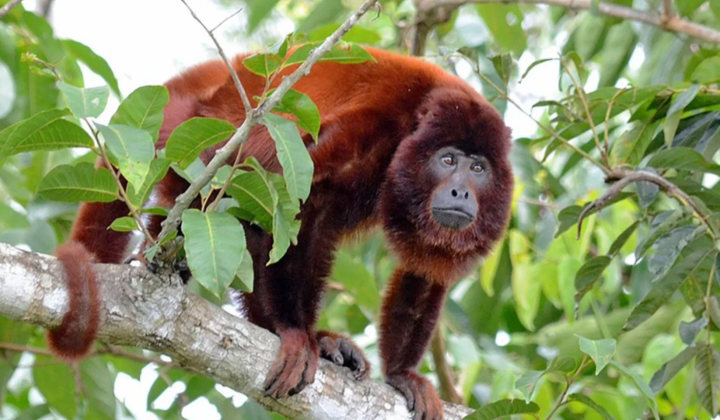
Breakthrough in Howler Monkey Discoveries
According to НВ — Техно: Researchers have successfully sequenced the DNA of howler monkeys in South America, leading to the identification of two previously unknown species in the Amazon rainforest: Alouatta iroi and Alouatta matogrossensis. This study revealed that much of the diversity within the Alouatta genus has emerged within the last few million years. Genetic data from 86 individuals representing 11 of the 13 recognized species of these primates were analyzed to reach these conclusions.
Details of the Newly Identified Species
Alouatta iroi, commonly called the Pantepui red howler, inhabits northwestern Amazonia, specifically the region between the Rio Branco, Rio Cauaburi, and the confluence of the Rio Negro and Rio Branco rivers. The holotype specimen was collected in 2005 near the Araca Tepui ridge in Amazonas state, Brazil. This species differs from Alouatta macconnelli primarily by its fur coloration, with dorsal hair ranging from bright yellowish-brown to a lighter golden-brown shade. Genetic divergence between Alouatta iroi and its closest relatives occurred less than one million years ago.
Alouatta matogrossensis, known as the Mato Grosso red howler, is found in southern Amazonia, between the Madeira and Telés-Pires rivers in Brazil. It is closely related to Alouatta sara from Bolivia and Peru but can be distinguished by its unique fur colors, skull structure, and throat bones. The split between Alouatta macconnelli and Alouatta iroi is estimated to have taken place around 700,000 years ago, likely influenced by the Rio Branco acting as a geographical barrier.
In addition, scientists from the Lukuru Wildlife Research Foundation discovered a new colobus monkey species in the Democratic Republic of Congo during the summer of 2026. Named Colobus congoensis, this primate features striking black fur with a distinct orange patch around its mouth and bare grey skin on its cheeks.
Howler monkeys are renowned for their loud calls, which can carry for several kilometers thanks to their enlarged hyoid bone. Their diet mainly consists of leaves, supplemented by fruits, flowers, and other plant matter. These primates inhabit a variety of Neotropical environments, including tropical rainforests, dry forests, gallery forests, and open wooded landscapes like the Cerrado, Chaco, Pantanal, Gran Sabana, and Caatinga. In the Amazon, howler monkeys also serve as an important source of bushmeat for indigenous communities.
Howler monkeys rank among the most widespread and adaptable New World monkeys, thriving across diverse ecosystems throughout the Neotropics.
Romina Batista
The discovery of these new howler monkey species highlights the critical role of genetic research in unraveling the evolutionary history and biodiversity of the Amazon. It also underscores that even regions as extensively studied as the Amazon rainforest may still harbor undiscovered species, emphasizing the urgency of conservation efforts. Understanding these primates better can aid in developing targeted strategies to protect ecosystems and manage natural resources sustainably.
In addition to the remarkable findings on howler monkeys, the rich biodiversity of primates in Central and South America continues to be unveiled. A recent genetic study has confirmed the existence of a new butterfly species within the Colobura genus, highlighting the ongoing discoveries in this region's fauna. Such advancements not only deepen our understanding of these ecosystems but also emphasize the importance of conservation efforts. To learn more about this new butterfly species, visit the latest genetic confirmations in Central and South America.

Read also