Ukraine's Supreme Court Upholds Ban on Wartime Elections in Dubinsky Case

Appeal Dismissed by Supreme Court
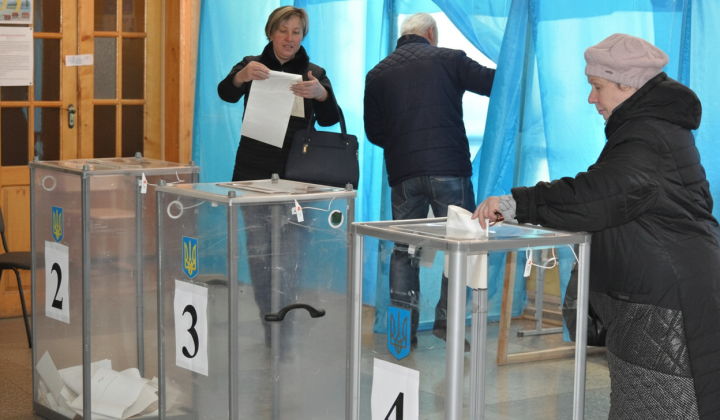
According to Главком: The Grand Chamber of Ukraine's Supreme Court has rejected an appeal by Member of Parliament Oleksandr Dubinsky, who sought to compel the scheduling of a presidential election during the ongoing state of martial law. The court upheld the original ruling, citing constitutional provisions, the Electoral Code, and the 'On the Legal Regime of Martial Law' statute, which permit the restriction of certain rights, including a prohibition on holding elections under martial law. This ruling solidifies the legal framework for suspending electoral processes during the nation's defense against a full-scale invasion.
Dubinsky, who faces charges of state treason, had appealed a Supreme Court decision from December 13, 2024. His appeal challenged the parliament's inaction regarding the failure to schedule a presidential election for March 31, 2024. A panel of 18 judges from the Grand Chamber heard the case, and the final ruling was published on March 10, 2026.
Parliament's Stance and Legal Justification
The presidential decree enacting martial law, dated February 24, 2022, states that national defense and security are the paramount priorities. Article 64 of the Ukrainian Constitution allows for the restriction of rights and freedoms under martial law. Furthermore, Article 20 of the Electoral Code and Article 19 of the 'On the Legal Regime of Martial Law' statute explicitly prohibit holding elections during this period.
The Verkhovna Rada, Ukraine's parliament, argued that conducting elections under martial law would disenfranchise citizens unable to exercise their voting rights. Large-scale enemy attacks would prevent Ukrainian defenders from voting, while missile strikes would endanger the lives of civilians attempting to reach polling stations.
"Scheduling and holding elections to their detriment would not serve the legitimate purpose of democracy." - Court Ruling
The court also noted that throughout the full-scale war, the Constitutional Court has not found any norm of the law banning wartime elections to be unconstitutional. The Grand Chamber's decision is final and cannot be appealed. Earlier in March, President Volodymyr Zelenskyy stated that elections in Ukraine would take place after the war ends, noting that 90% of Ukrainians oppose holding them now. Sociologist Volodymyr Paniotto added that any potential referendum on a peace agreement would likely be held concurrently with presidential elections, with both votes being interconnected. This legal precedent underscores the extraordinary measures required to maintain state stability during an active, large-scale conflict.
The Supreme Court's decision emphasizes the critical importance of adhering to constitutional norms and legal principles during martial law, which is vital for state stability amid conflict. The restriction of electoral rights during this difficult period is linked to citizen safety and the preservation of democratic foundations, which could be jeopardized by holding elections. Consequently, the question of when to hold elections remains open and will be considered in the context of the future situation in the country.

Read also