War in Ukraine and Misconceptions About Israel's Neutrality - Mark Regev

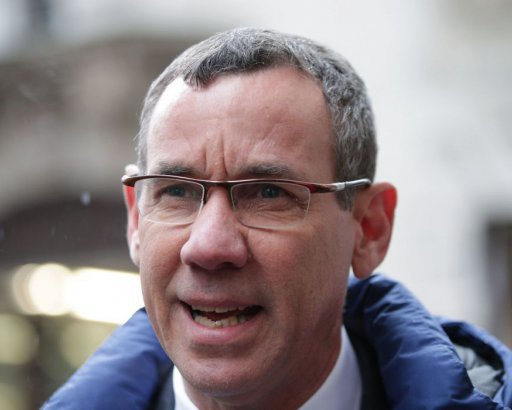
Opinions in the Israeli publication The Jerusalem Post by writer, former advisor to Prime Minister Benjamin Netanyahu, and head of the Abba Eban Institute of Diplomacy at Reichman University Mark Regev
In the past 10 months, doubts have been expressed about Israel's position regarding the war in Ukraine. Even some of Israel's closest friends have felt uncomfortable about the supposed impartiality of the Jewish state between a brutal aggressor and a democratic defender. Jerusalem is accused of breaking with its Western partners and failing to uphold the democratic values that it espouses.
Is it fair to say that Israel will remain neutral in this war?
READ ALSO: 'Putin is preparing for a major escalation' Alexander Danilyuk
Since Russia's invasion in February, Israel's position has been far from impartial. At the beginning of the conflict, Foreign Minister Yair Lapid stated: 'The Russian attack on Ukraine is a serious violation of the international order. Israel condemns it and is ready to offer humanitarian assistance to the citizens of Ukraine.'
This condemnation has been reiterated by Israeli leadership and has found expression in Israel's multiple votes at the United Nations. From the outset, Jerusalem has emphasized its support for the 'territorial integrity and sovereignty' of Ukraine.
READ ALSO: 'We struck the most protected nuclear facility of the Russian Federation' - Valery Ryabykh
At the same time, Israel has provided significant humanitarian assistance, opened a field hospital in western Ukraine, sent 100 tons of essentials, including medications, water purification equipment, tents, and blankets, accepted 15,000 refugees, sent 25,000 food packages to Kharkiv, and is treating Ukrainian wounded soldiers and civilians in Israeli hospitals. This week, Jerusalem announced that it would send about 20 generators to help Ukraine cope with Russian missile strikes on its energy system.
Much of the international condemnation of Israel's behavior is linked to Jerusalem's refusal to supply Ukraine with weapons. However, by refraining from doing so, Jerusalem has provided Kyiv with means of protection such as helmets, bulletproof vests, gas masks, and anti-mine suits.
Israel provides Ukraine with intelligence on Iranian drones and technology to protect against them
Israel supplies Ukraine with intelligence on Iranian drones used by Russian forces and on technology to defend against them.
One contentious issue is Israel's refusal to provide Kyiv with the Iron Dome missile defense system. The reluctance stems from two security considerations. First, with Iran, terrorist groups Hezbollah and Hamas on its borders, the reserve of batteries and intercepting missiles is needed at home to counter threats. Second, there are concerns that the supply may jeopardize advanced secret technologies of the system. Until now, it has only been used by one country besides Israel - the USA. They are partners in the development of the system.
Other countries are also imposing restrictions on the supply of equipment to Ukraine. Although the USA, UK, and EU have provided Kyiv with generous military support, they have not supplied certain modern weapons - NATO-standard tanks and fighter jets, some advanced missile defense systems. NATO countries are also increasingly concerned about the depletion of their defense stocks.
According to Jerusalem's assessment, supplying offensive Israeli means to Ukraine, among the many western equipment already supplied, will not change the rules of the game on the battlefield. However, it fears that such a step could have dramatic consequences for the current non-interference of Russia in Israeli strikes in Syria against Iranian and Hezbollah targets, which are often located close to Russian military positions.
Jerusalem is concerned that deteriorating relations with Moscow could undermine hard-won agreements on conflict resolution
Jerusalem is concerned that the deterioration of relations between Jerusalem and Moscow could undermine the hard-won agreements with the Kremlin on conflict resolution, and even accelerate a direct confrontation between the Israeli and Russian air forces, as occurred half a century ago over the Suez Canal.
On July 30, 1970, during the war between Israel and Egypt, IAF Phantom and Mirage planes engaged in aerial combat with Soviet MiG fighters. By the end of the air battle, five Russian planes were shot down with no losses for Israel. At that time, Israel celebrated the success of its pilots but feared an escalation into a full-scale conflict with the USSR.
Given the hostility of the USSR, such fears have been repeated for decades. During the Sinai Campaign of 1956, the Six-Day War of 1967, and the Yom Kippur War of 1973, Israeli leadership had to seriously consider the possibility of a Russian attack on the Jewish state on behalf of the Arabs.
READ ALSO: 'Russia will lose but will not want to sign any peace agreement' - Valentin Krasnopеров
Since the collapse of the USSR in 1991, successive Israeli governments have attempted to build less belligerent relations with the RF. Although Israel has remained unequivocally aligned with the USA and the West, its relations with Russia have noticeably improved.
So much so that when on March 5, former Prime Minister Naftali Bennett flew to Moscow for negotiations with Vladimir Putin, he did so at the request of Vladimir Zelensky and German Chancellor Olaf Scholz. The latter wanted to use Israel's good ties with the Kremlin to mediate a ceasefire and the withdrawal of Russian troops. Bennett's three-hour meeting in the Kremlin did not lead to a breakthrough, but the Jerusalem-Moscow channel remains open.
In his interview, current Prime Minister Benjamin Netanyahu mentioned Bennett's unsuccessful peacekeeping efforts and volunteered 'in as much as I can help end this horror.' Netanyahu, who has established relations with Putin during their numerous meetings, appears to occupy a unique position among Western leaders to advance solutions.
Jerusalem seeks to support Kyiv within parameters that prevent the destruction of communication channels with the Kremlin
Israel's policy has nuances, but it cannot be described as neutral. Jerusalem seeks to support Kyiv within parameters that prevent the destruction of communication channels with the Kremlin. This strategy is aimed at safeguarding Israel's national security interests but also serves the common good.
The ongoing Ukrainian bloodshed could last for years, and neither side will be able to impose its will on the other. It is assumed that stopping the war will require some form of high-level diplomacy.
Although Israel's decision to provide Kyiv with offensive means will likely have a negligible impact on the Ukrainian battlefield, it may simultaneously undermine Jerusalem's ability to facilitate an agreement when the time comes. Are the West and Ukraine not interested in retaining this option for mediation?
Translation by Gazeta.ua

Read also