Refining the Argon-Argon Dating Technique Using the 79 AD Vesuvius Eruption as a Benchmark

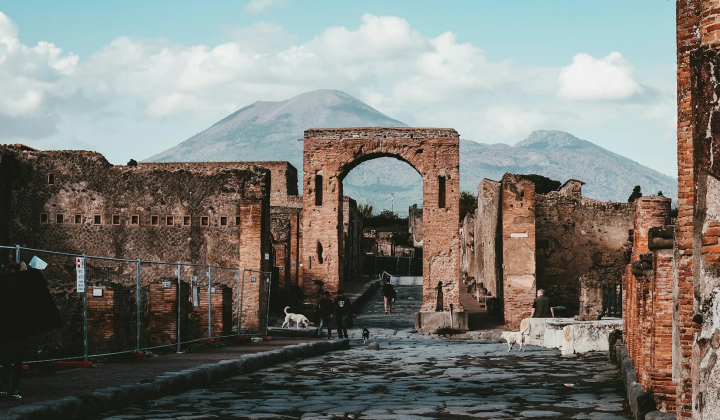
The Historic 79 AD Eruption of Mount Vesuvius
According to НВ — Техно: The catastrophic eruption of Mount Vesuvius in 79 AD, famously chronicled by Pliny the Younger, has served as a crucial reference point for enhancing the precision of geological dating methods. A collaborative team from the Berkeley Geochronology Center, University of California Berkeley, and the University of Padua in Italy has advanced the argon-argon dating technique by analyzing sanidine mineral samples taken from Vesuvius, combined with the well-documented eruption date. This breakthrough improves the accuracy of geological timelines and enables more reliable reconstructions of volcanic events, while also providing a means to validate other dating approaches.
This eruption, which tragically claimed the life of Pliny the Elder, marks a significant historical event. The researchers worked with pumice samples collected in 1998 from the ancient Roman settlement of Oplontis. Early in the eruption, potassium-rich magma was expelled and settled near the base of the pyroclastic deposits. Utilizing state-of-the-art mass spectrometry, the team achieved dating precision within a few decades-an unprecedented level of accuracy for events occurring within human history.
Advancements in Argon-Argon Calibration
The revised calibration of the argon-argon method now allows for improved cross-verification of radiocarbon and uranium-lead dating techniques. By anchoring volcanic chronologies to the 79 AD eruption, scientists can more accurately track volcanic activity in high-risk regions such as Naples, Mexico City, and Jakarta. Published in the journal Science Advances, this study opens new avenues for geochronology and the analysis of volcanic hazards worldwide.
Enhancing volcanic event dating carries important implications for forecasting eruptions and safeguarding populations living near active volcanoes. Given Vesuvius' status as one of the world's most active volcanoes, these refined dating methods provide valuable data for early warning systems and emergency response planning. This research lays the groundwork for future scientific investigations aimed at deepening our understanding of volcanic processes and their environmental impacts.

Read also