Uncovering Unexpected Heat Patterns in Papua New Guinea’s Subduction Zone, New Study Reveals

Uneven Thermal Conditions: Ancient Rock Samples Expose an Unusual Temperature Anomaly Deep Beneath the Earth
According to НВ — Техно: Published on October 15, 19:03
Geologists have examined a rare piece of mountain rock from Papua New Guinea that was pushed down to depths exceeding 90 km around 4.4 million years ago. Their investigation revealed an irregular temperature distribution within the Earth’s interior, shedding light on the complex heating mechanisms operating in subduction zones. This groundbreaking research was carried out by Australian scientists at Curtin University in collaboration with researchers from the University of Göttingen in Germany, and their findings were published in the journal Nature Geoscience.
Insights from Eclogite Samples
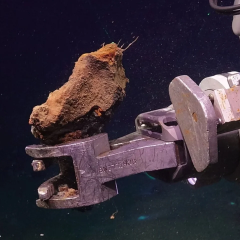
The rock sample, identified as eclogite, was collected on Goodenough Island in eastern Papua New Guinea. Eclogites form under extremely high-pressure conditions, typically found at the interface where tectonic plates collide and one plate is forced beneath another. At roughly 45 km depth, the rock’s temperature reached about 700 °C. Surprisingly, as the rock sank deeper-from 45 km to over 90 km-the temperature only increased by about 100 °C.
Minerals such as coesite and zircon were detected within the sample. Coesite forms under immense pressure deep within the Earth, while zircon crystals help date geological events. The researchers proposed two main explanations for this unusual thermal pattern:
- significant friction between tectonic plates at shallow depths;
- a relatively young subduction system that has not yet cooled down.
These findings suggest that temperature variations in tectonic collision zones are more dynamic and complex than previously recognized. This new perspective opens avenues for better understanding the geological processes shaping our planet’s interior.
Studying temperature anomalies in subduction zones is crucial for geology, as it improves predictions of volcanic eruptions and earthquakes. Gaining insight into the underlying mechanisms of these anomalies could transform our understanding of how energy is distributed inside the Earth, influencing the models used to forecast geological hazards worldwide. These discoveries are expected to inspire further research, enhancing our ability to prepare for natural disasters.

Read also