PNP for Real Estate Purchase: Countries and Conditions


Obtaining a PNP is a complex process, but it has many advantages for the future. Essentially, it is an investment program that allows the purchase of real estate, including abroad.
How PNP Programs Work through Real Estate Purchase
Buying real estate abroad can sometimes be a basis for obtaining a residence permit, but the mere fact of purchasing an apartment, house, or other object does not mean automatic issuance of a PNP. Each country has its migration regime that defines the permissible type of investment, minimum amount, requirements for the object, sources of funds, duration of ownership, and the document set. Furthermore, the rules change regularly, so the conditions that were in place several years ago cannot be automatically applied to applications submitted in 2026.

Investment programs related to real estate can be conditionally divided into several models. In the first case, it is sufficient to purchase an object for a specific amount established by law, after which the owner gains the right to apply for an investment residence permit. In the second case, real estate is just one of the possible ways of investing, alongside funds, company capital, or other financial instruments. The third option involves not just the purchase of property but the fulfillment of additional requirements: maintaining the investment for a certain period, proving financial capability, insurance, having no criminal record, and passing checks.
It is important to distinguish between PNP, permanent residency, and citizenship. A temporary or investment residence permit provides legal rights to stay in the country according to the specific program's conditions, but does not equate to a passport. In some states, the investment program may be linked to long-term or permanent status, while in others, transitioning to permanent residency requires meeting separate conditions regarding duration of stay, income, integration, and other circumstances.
As of 2026, among European countries where real estate investments may be linked to the right to reside, Greece, Cyprus, and Malta are especially worth considering. Meanwhile, some previously popular destinations no longer allow obtaining PNP solely through the purchase of real estate. For example, Portugal has abolished the residency permits for investments in real estate, and Spain has ceased issuing Golden Visas related to the purchase of real estate since April 3, 2025.
The mechanism for investment PNP is based on the fact that the state establishes a certain economic criterion for a foreigner who wishes to obtain residency rights. In this case, real estate is viewed as a form of investment, but showing a purchase agreement alone is not sufficient for a positive decision. The migration authority examines whether the transaction meets the legal requirements.
The first significance is the cost of the object. Legislation may define a minimum investment amount, which sometimes depends on the region, type of real estate, or method of acquisition. For instance, in Greece, after the reform of the program, the investment threshold for some of the most sought-after markets is 800,000 euros, for other areas - 400,000 euros, and for certain categories of objects, including some renovation projects, there remains the possibility of applying the threshold of 250,000 euros.
Equally important is the legal origin of funds. The applicant must be able to explain where the money for purchasing the property came from. Bank documents, contracts, tax documents, income confirmations, or other materials can be used to establish the funding source. In some jurisdictions, this verification is part of the overall due diligence procedure.

Typically, it is also necessary to confirm the ownership rights. A preliminary agreement or an agreement with the seller alone is not always sufficient. A document confirming the completion of the transaction and registration of the ownership rights in the state registry may be required. For example, in Turkey, the right to property is transferred through registration in the land registry authorities, and a preliminary agreement by itself does not imply the transfer of ownership rights.
Typical conditions of programs may include:
- purchasing real estate for a specified minimum amount;
- confirmation of the legal origin of funds;
- absence of unresolved criminal convictions;
- availability of medical insurance;
- confirmation of sufficient funds for living;
- documentary confirmation of ownership rights;
- compliance with the ownership duration requirements;
- payment of state and administrative fees;
- passing of security and suitability checks.
At the same time, the specific list of conditions depends on the country. That is why a universal scheme cannot be used for all investment programs.
In Which Countries Can You Obtain PNP for Investments in Real Estate
As of 2026, one of the most well-known European destinations remains Greece. Its Golden Visa provides the possibility of obtaining a permanent residence permit for the investor, provided that the established investment criteria are met. After changes in the rules, the required investment amount depends on the location and category of the real estate. In the most popular areas, which include parts of the Athens and Thessaloniki agglomerations, Mykonos, Santorini, and certain islands, a threshold of 800,000 euros is applied. For other regions, a threshold of 400,000 euros is established, while for certain special cases, an investment of 250,000 euros is required. For some objects acquired under the program, there are also requirements regarding the area and method of use.
Cyprus uses a different model. For the investor, a permanent residence regime for investments is available, one of the options of which is to purchase real estate. Official rules provide for a minimum investment of 300,000 euros. If it concerns a house or an apartment from a developer, such real estate must comply with the established rules regarding the first sale, and the cost must be at least 300,000 euros plus VAT. For other categories of real estate, it is permissible to purchase an object that is not necessarily new, provided that the program criteria are met.
A separate direction is Malta. Here the Malta Permanent Residence Programme operates, which differs from the classic temporary PNP in that it provides for permanent residence conditional on meeting a complex of requirements. One of them is the purchase of qualified residential real estate with a minimum value of 375,000 euros or the rental of a corresponding object at an established annual rate. When purchasing, a government contribution, administrative fee, charitable donation, and other conditions are also expected.
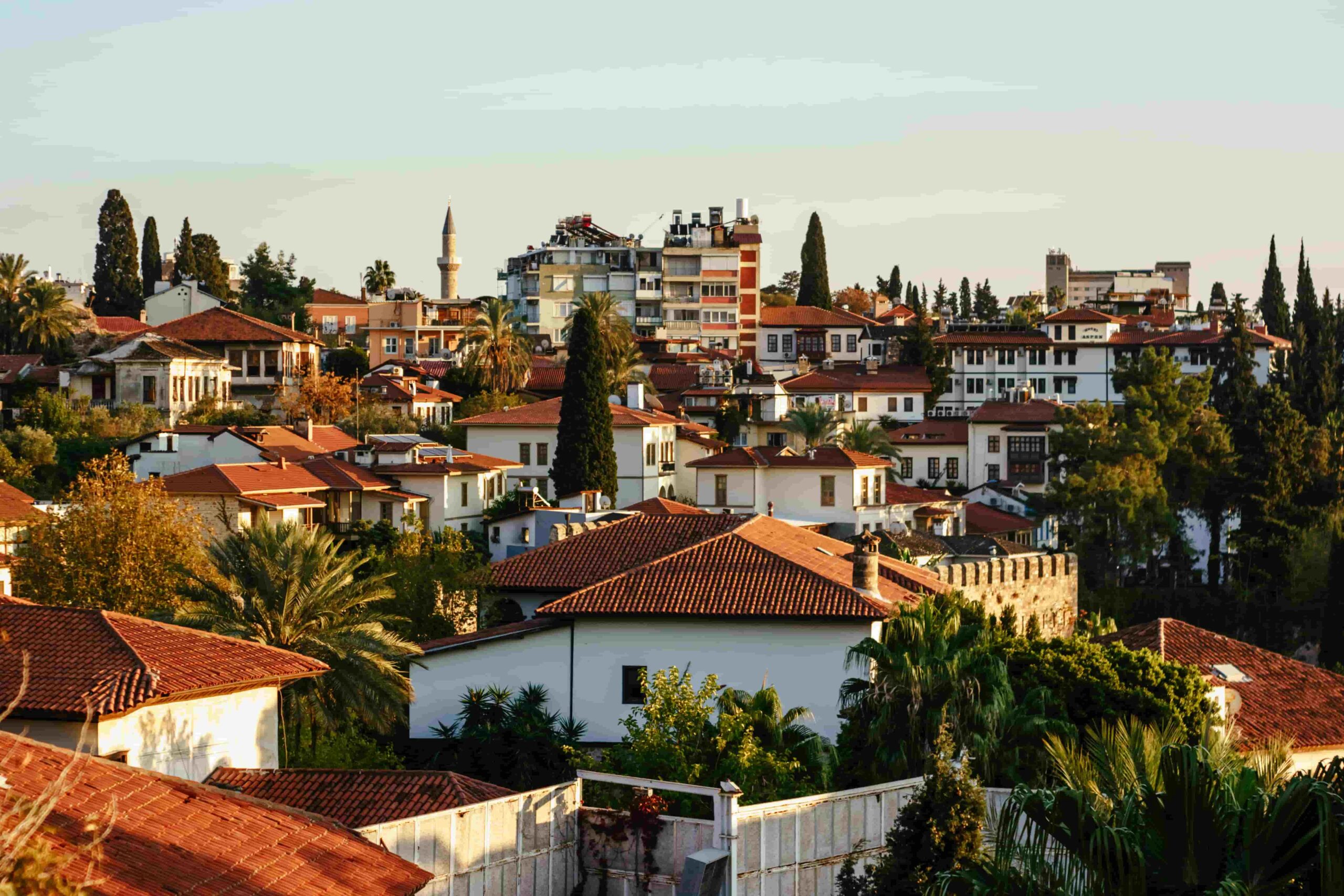
Turkey has a system different from the Greek or Maltese. A foreign owner of real estate can apply for a short-term residence permit, subject to compliance with migration requirements. In this case, the purchase of ordinary real estate does not equate to a citizenship program. A separate requirement is established for the investment threshold related to the right to apply for citizenship: the purchase of real estate worth at least 400,000 dollars with a prohibition on transfer for three years.
It is important not to include in the current list countries where programs have already changed or been canceled. Portugal, after the approval of Law No. 56/2023, abolished the possibility of obtaining a residence permit for investments in real estate. Spain has also ceased issuing Golden Visas tied to investments in real estate since April 3, 2025. Therefore, mentions of Portugal or Spain as countries where in 2026 it is enough to buy housing for a new PNP are outdated.
It is also important not to automatically attribute Hungary to this category. In 2026, the Hungarian guest investor program requires an investment of at least 250,000 euros in a designated real estate fund or a donation of 1 million euros to a relevant higher education institution. Directly purchasing an apartment is not an established way to obtain such a permit. Real estate may confirm the investor's place of residence, but this serves a different legal purpose for the property.
Minimum Cost of Real Estate in Different Countries
The minimum investment amount is one of the first criteria that potential applicants check. At the same time, it is not enough to compare just the numbers. One program may require only real estate acquisition, while another may require additional contributions to the state, donations, capital confirmation, or fulfillment of other financial conditions.
For orientation in 2026, the following parameters can be highlighted:
- Greece — from 250,000 euros for some special categories of objects provided by the program, 400,000 euros in many other regions, and 800,000 euros in defined high-demand areas;
- Cyprus — from 300,000 euros for the corresponding investment category, with separate requirements for the first sale and VAT applied to new homes or apartments;
- Malta — from 375,000 euros for the purchase of qualified real estate within the MPRP, but this amount is not the total budget for participation, as additional government contributions, administrative fees, donations, and other costs are provided;
- Turkey — buying real estate for no less than 400,000 dollars is associated with a separate procedure for obtaining citizenship by investment and a three-year restriction on sale; for ordinary short-term PNP for the property owner, a different regime applies.
In Greece, special attention should be paid not only to the cost but also to the location of the object. The previously widespread figure of 250,000 euros in informational materials cannot be applied to any apartment in any region. After changes to the program, the geographic factor has become one of the key aspects. Additionally, special usage rules apply to certain categories of objects.
In Cyprus, the figure of 300,000 euros must also be considered along with other financial criteria. Official rules explicitly state that the investment funds must come from outside Cyprus and were not obtained through internal borrowing. For residential real estate, the number of bedrooms is also taken into account if the object is to serve as accommodation for the investor's family members.
In Malta, the acquisition cost is 375,000 euros, but for the MPRP, the overall financial structure of the program must be considered. In addition to real estate, the applicant must meet asset requirements: at least 500,000 euros in capital assets, of which at least 150,000 euros must be financial assets, or 650,000 euros in capital assets, of which at least 75,000 euros are financial. Administrative fees, government contributions, donations, and medical insurance are also established.
Turkey differs in that the property owner's right to a short-term residence permit should not be equated with the threshold of 400,000 dollars. This sum is particularly significant for the investment mechanism that allows for citizenship claims. For the property owner applying for a short-term PNP, essential factors are the documents for the property, sufficiency of funds for living, and medical insurance.

Thus, when planning the budget, one should consider not only the price of the apartment or house. Total costs may include acquisition taxes, notary services, registration fees, legal support, translations and legalization of documents, insurance, state fees, and payments within the investment program itself.
What Documents Need to Be Prepared
The documents depend on the specific state and category of permit, but the basic package usually revolves around the applicant's identity, source of funds, real estate, and the fact of meeting the investment requirement.
Firstly, a valid passport or another identity document is needed. If the documents are not issued in the language accepted by the respective authority, an official translation may be required. In some cases, documents must also be apostilled or consular legalized.
A separate block consists of documents related to the real estate. This may include the purchase agreement, a document registering the ownership rights, cadastral data, payment confirmations, and certificates confirming the absence of burdens. In Greece, the official list of documents for the Golden Visa includes, among others, confirmation from the notary regarding the transaction and a document certifying the absence of burdens on the real estate.
Financial documents must confirm not only the existence of the required amount but also the possibility of legally funding the purchase. These may include bank statements, income certificates, documents for the sale of other properties, tax documents, contracts, or other materials that explain the source of funds. If the money was transferred through several accounts or between different countries, additional confirmation of the payment chain may be required.
Typically, a certificate of no criminal record is also needed. Its purpose is to confirm that the applicant meets security and suitability requirements. This document may be required not only for the main applicant but also for adult family members included in the application.
Medical insurance is another common element of the package. For example, Greek rules for investors require a private insurer's policy that meets the established legal coverage criteria.
In different countries, the following may be required:
- passport and copies of the document pages;
- photos of the established format;
- certificate of no criminal record;
- real estate purchase agreement;
- document confirming the registration of ownership rights;
- confirmation of full payment;
- bank documents;
- confirmation of the source of funds;
- medical insurance;
- confirmation of residence address;
- documents about family composition;
- marriage and children's birth certificates;
- translations and documents for legalization;
- confirmation of payment of state fees.
For Cyprus, official rules explicitly require submission of a document on ownership rights or a registered purchase agreement, payment confirmation, and proof that the investment funds have come from abroad.
In Malta, the applicant additionally undergoes a multi-level suitability check, and the program requires confirmation of financial assets, stable resources for maintaining oneself and dependents, absence of legal issues, medical insurance, and compliance with other criteria of the MPRP.
How the PNP Issuance Procedure Proceeds
The procedure begins with identifying the program that corresponds to the applicant's goals and the type of planned investment. At this stage, it is necessary to check not only the minimum amount but also the requirements for the type of real estate, the region, ownership duration, source of funds, and family composition.
After selecting the program, a legal check of the object is conducted. For a foreign buyer, it is important to establish whether the acquisition of a specific property is permitted, whether there are any burdens, arrests, or other legal issues. It must also be verified whether the object meets the criteria of the specific migration program.
The next stage involves concluding a contract and making payments in compliance with the country's legislation. Payments are preferably made transparently through bank accounts so that the origin and movement of investment funds can be confirmed later.
After the transaction is concluded, the ownership rights are registered. At this stage, the main evidence that the investment criterion is fulfilled is formed. In some programs, the applicant may submit documents after concluding the deal and confirming the corresponding payment, but the specific procedure depends on the legislation.
Next, a migration file is formed. Documents are translated, legalized as necessary, questionnaires are filled out, and the required fees are paid. The application is submitted to the competent state authority or through a special electronic system, if provided.
In the process of consideration, the applicant's identity, documents, source of funds, ownership rights, and compliance with the program conditions are checked. The migration authority may require additional documents if the submitted package does not allow for a full understanding of circumstances.
For instance, in Greece, confirming that the real estate remains in the applicant's ownership or that relevant rental agreements continue to be in effect is essential for extending the investment permit.

In Cyprus, the applicant must also document the fulfillment of the investment criterion and the source of funds. For residential real estate, requirements regarding cost, purchase nature, and suitability of the residence for family needs are taken into account.
In Turkey, the application for a short-term permit for the property owner is submitted through the e-Residence system, after which the applicant must provide, among other documents, the application form, passport, photographs, proof of financial capability, ownership document, and medical insurance.
The Maltese MPRP has a distinct feature: an application is submitted through a licensed agent. The program involves comprehensive verification of the applicant and family members, and after meeting the requirements, a permanent resident status is granted.
After a positive decision, a document confirming residency rights is issued. The validity period and renewal conditions depend on the program. In some countries, the investment status is extended provided that the investment is maintained, while in others, permanent status is initially granted.
What Rights Does a PNP Holder Obtain
The main right of a PNP holder is legal residence in the state for the duration and under the conditions specified in the issued document. This distinguishes a residence permit from a tourist stay, as the resident status has a different legal basis.
The scope of rights depends on the specific type of PNP. An investment permit does not automatically grant the right to work for hire. In one country, an investor may have broad access to employment and entrepreneurial activities, while in another, a separate status may be required for employment.
For example, the Hungarian guest investor permit, although not based directly on the purchase of real estate in 2026, allows for the possibility to work without restrictions within the established status. This example well demonstrates how important it is to look not just at the name of the program but also at the specific list of rights established by law.
A PNP holder can typically:
- legally reside in the country;
- rent or use housing;
- access public and private services provided by law;
- open bank accounts, subject to compliance with banking requirements;
- conduct permitted financial and property operations;
- travel within the rules applicable to the status;
- include family members in the program under defined circumstances.
At the same time, a PNP does not mean automatic acquisition of all the social rights of a citizen. Access to social security, medical services, education, assistance, and other systems may depend on the type of permit, insurance status, tax residence, and national legislation.
It should not be assumed that a PNP from one state automatically grants the right to permanently live or work in another European Union country. The right to short trips and the right to reside are different legal concepts. This is particularly significant for investors who consider a residence permit as an opportunity to move to another EU state.
The Maltese program explicitly provides for the right to permanent residence in Malta and the possibility of visa-free short trips within the Schengen area under the general rules of 90 days within a 180-day period. However, this does not mean automatic rights to settle or work in any other Schengen state.
Can Family Members Be Transferred
Many investment programs allow the inclusion of close family members in the application. This mechanism is an important component of the investment PNP, as the primary goal of the applicant is often not just personal residence but also family relocation.
Typically, a family application may include a spouse and minor children. In some programs, the list is broader and may cover adult children who are dependents or parents under certain conditions.
In Cyprus, housing requirements are directly related to family circumstances. If the number of bedrooms in the investment property does not meet the needs of dependents, the applicant may indicate another dwelling that will be used by them as a residence.
The Maltese MPRP also allows for the inclusion of family members. The program permits a family application and provides for separate payments for dependents. Official rules also set requirements for the financial resources of the applicant sufficient to support themselves and dependents without resorting to social assistance.
For family processing, documents confirming the family relationship need to be prepared. These may include marriage certificates, birth certificates, adoption documents, or other official confirmations of dependency. Foreign documents must be translated and legalized according to the specific state's requirements.
It is important to consider the children's age. If the program allows for including minors, upon reaching a certain age, their status might require reassessment. For adult children, additional criteria regarding education, financial dependence, or marital status often apply.
Different programs may have different document validity periods for the main applicant and family members. Therefore, it is necessary to check not only the right to family reunification but also the conditions for each family member's status extension before submitting the application.
Does PNP Lead to Permanent Residency and Citizenship
PNP by investment and citizenship are different legal procedures. Purchasing real estate alone usually does not mean automatic acquisition of a passport. Even if the investment program has the potential for permanent residence or naturalization, separate rules apply for each subsequent status.
In some countries, the investment program immediately provides for permanent status. An example is Malta, where the MPRP is explicitly defined as a permanent residence program. However, the agency separately emphasizes that the MPRP is distinct from the legislative provisions regulating citizenship. Thus, permanent residence under the investment program should not be equated with automatic citizenship acquisition.
In other states, the investment permit is temporary or renewable. Transitioning to permanent residency may require a certain duration of legal stay, actual presence in the country, income confirmation, absence of migration law violations, language knowledge, or adherence to other integration criteria.
Turkey has a separate mechanism whereby acquiring real estate worth 400,000 dollars may create a basis for applying for citizenship through an exceptional procedure. However, special conditions are set for this, including a prohibition on selling the purchased object for three years. Thus, the Turkish model differs from programs where real estate merely creates a basis for PNP.
In Greece, the investment program provides for a residence permit for the investor, not automatic naturalization. Separate provisions of Greek law apply for obtaining citizenship. The presence of real estate or an investment permit does not replace the citizenship acquisition procedure.
Cyprus also distinguishes between permanent residence and citizenship. Meeting the investment criteria for permanent residence does not mean automatic passport issuance. Citizenship issues are governed by separate rules and have their own criteria.
Therefore, before purchasing real estate, it is advisable to clearly define the ultimate goal: temporary residence, permanent status, the possibility of relocating family members, or potential naturalization. This decision will influence the choice of country, investment amount, duration of actual stay, and the period for which real estate must be retained.
It is especially crucial to verify the current rules directly before making an investment. The examples of Portugal and Spain illustrate that states can change or completely stop programs that previously allowed obtaining residence status through real estate. The Portuguese Law No. 56/2023 abolished residence permits for investment activities in real estate, while in Spain, the cessation of the Golden Visa came into effect on April 3, 2025.
Conclusion
PNP for the purchase of real estate in 2026 remains available not in all countries and not under identical schemes. Greece, Cyprus, Malta, and Turkey employ various models, meaning that the same investment amount can have entirely different legal consequences. In Greece, the size of the investment depends on the region and category of the object, Cyprus has a threshold starting from 300,000 euros for the relevant program, Malta combines the real estate acquisition with additional financial requirements, and Turkey distinguishes regular PNP for property owners from the investment mechanism linked to citizenship.
When selecting a program, one must consider not only the cost of the property but also additional contributions, taxes, processing costs, requirements regarding the source of funds, rules concerning the preservation of investment, possible family relocation, and prospects for transitioning to permanent status. It is also necessary to check whether the purchase of real estate is indeed a basis for PNP in a specific country in 2026, as old programs and amounts often continue to appear in outdated materials.
For a potential investor, the legal status of the specific program at the time of application submission is crucial. Having an apartment or house abroad does not in itself create a universal right to reside. It is necessary to fulfill the entire complex of conditions established by the laws of the country, and after obtaining the status, to adhere to the rules for its preservation and extension.
In general, this issue should be considered more thoroughly for each specific situation. After all, it also represents a complex material challenge that requires good preparation.

Read also